By El Ghali Bennis · Published
How to Start a Coffee Subscription Business in 2026
A practical guide to launching a coffee subscription: pick a model, price it so it earns, ship fresh, and keep churn low. Built for roasters.
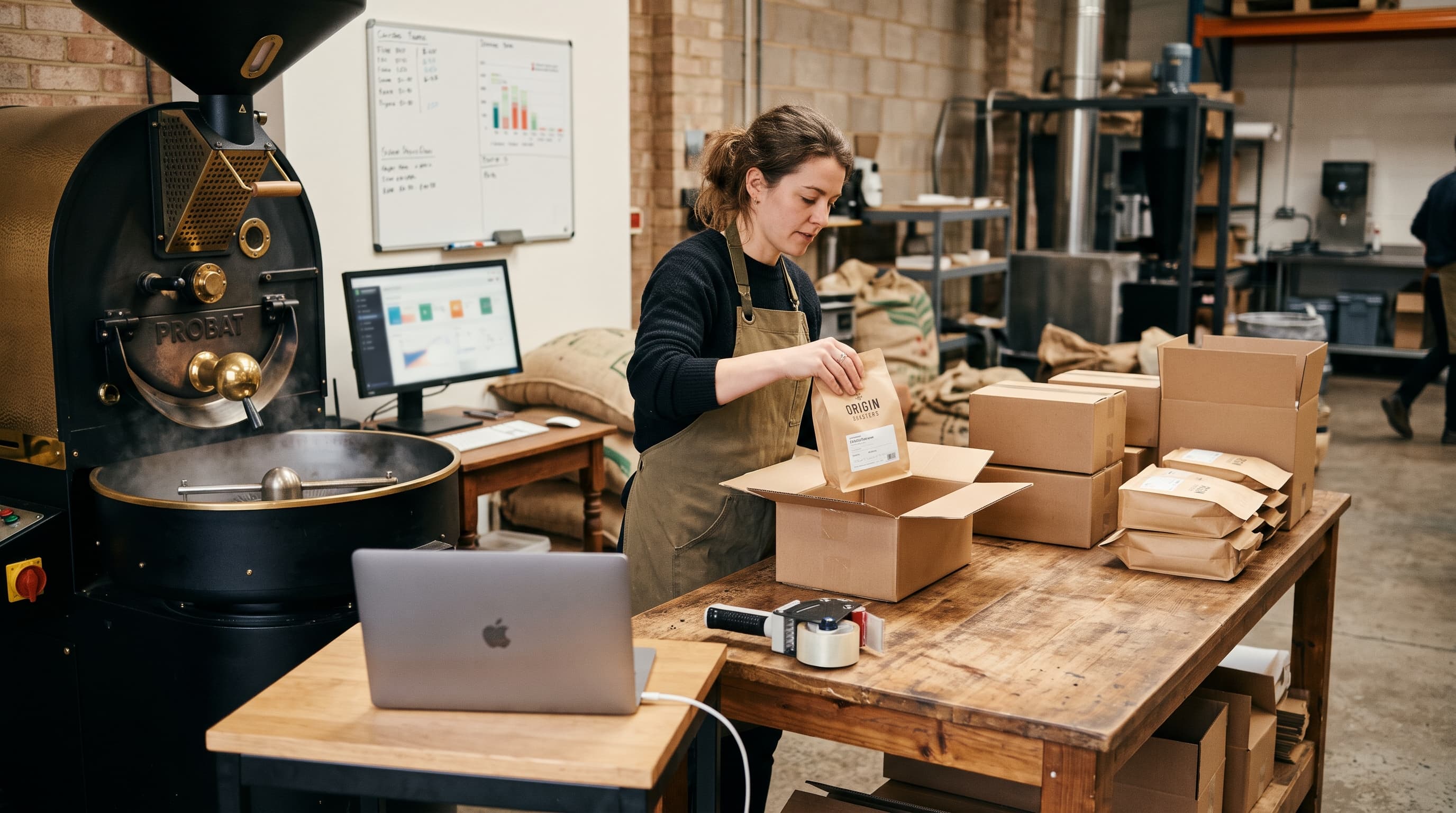
To start a coffee subscription business, pick one model (fixed recurring orders or a rotating coffee-of-the-month club), price each shipment to keep a 55-65% gross margin after packaging and postage, set up recurring billing on your own online store, and ship within days of roasting. Then spend your energy on retention, because churn decides everything.
Coffee is one of the few products people finish on a predictable schedule. A household drinking two cups a day burns through a 12-ounce bag in about two weeks. That rhythm is why recurring coffee orders work so well, and why a coffee subscription box business can become the steadiest revenue line a roaster owns. This guide walks through the models, the math, the setup, and the retention work that keeps subscribers around.
Which coffee subscription model should you start with?
Start with the model that matches your roasting capacity: a subscribe-and-save plan for your best-selling coffees, or a coffee of the month club if you roast many small lots. Don't launch both on day one. One clean offer converts better and is easier to fulfill.
Subscribe and save coffee (fixed recurring orders)
The customer picks a coffee, a bag size and a frequency (every 1, 2 or 4 weeks). You give a discount of 10-15% for committing. It's the simplest setup, and it suits roasters with two to six core coffees. Subscribers get what they already love, so satisfaction stays high.
Coffee of the month club (curated and rotating)
You choose the coffee. Each month ships a different origin, roast or limited lot. This model sells discovery and story, so it works for roasters with a strong brand and a rotating menu. The tradeoff is operational: you must plan roasts ahead and photograph, describe and write tasting cards for every release.
Which model fits you?
| Model | Best for | Typical discount | Main risk |
|---|---|---|---|
| Subscribe and save | Roasters with core bestsellers | 10-15% | Lower margin per bag |
| Coffee of the month club | Roasters with rotating lots | Often none (premium positioning) | Planning and content workload |
| Build-your-own (hybrid) | Established brands with 8+ coffees | 5-10% | Complex fulfillment |
| Gift subscription (3, 6, 12 months) | Seasonal peaks, new audiences | None | Lower renewal rate |
If you're still deciding whether subscriptions fit your overall plan, the broader guide to starting a subscription box business covers the fundamentals that apply beyond coffee.
How much should you charge? Coffee subscription pricing
Price each shipment so that gross margin lands between 55% and 65% after green coffee, shrink, packaging, and shipping. Coffee subscription pricing fails most often because founders count the beans and forget the postage.
Here's a worked example with illustrative numbers. Your own costs will differ, so replace them with real quotes.
| Line item (12 oz bag) | Illustrative cost |
|---|---|
| Green coffee (with ~15% roast loss) | $4.20 |
| Bag, valve, label | $0.70 |
| Roasting labor and energy | $0.90 |
| Shipping (USPS Ground Advantage, 1 bag) | $5.50 |
| Payment processing (~3%) | $0.55 |
| Total cost | $11.85 |
| Subscription price (incl. shipping charged) | $21.00 |
| Gross margin | about 44% |
That 44% is thin. Three fixes move it. Sell larger bags (a 2 lb bag barely costs more to ship than 12 oz). Offer free shipping only above a threshold, such as two bags. Or raise the price by $2-3, since specialty buyers compare you to other roasters, not to supermarket coffee. For a fuller picture of roaster economics, see coffee roasting business profit margins.
Discounts that don't wreck your margin
- Keep the subscribe-and-save discount at 10% or less unless the bag is a high-margin one.
- Reward loyalty with a free bag after month 6 instead of a bigger upfront discount.
- Skip discounting limited lots entirely. Scarcity sells them.
How do you set up a coffee subscription for roasters?
You need five pieces: a store that handles recurring billing, a clear subscription product page, a roast-to-ship schedule, shipping rates and packaging that protect freshness, and customer self-service so subscribers can skip, pause or swap without emailing you.
1. Choose where you sell coffee subscriptions online
To sell coffee subscription plans online, own your storefront. Marketplaces control the customer relationship and take fees, and you want the email address and the repeat order. Weigh the options on three things: the cost of recurring billing, the customer portal, and how many add-ons you'll pay for. On Shopify, for example, subscription tools typically come from paid apps on top of the base plan, according to Shopify's pricing page and its app listings. Compare total monthly cost, not just the headline plan price. If you also sell wholesale, coffee wholesale vs direct to consumer helps you decide how much capacity to give each channel.
2. Build the subscription product page
Your page should answer five questions in seconds: what arrives, how often, how much, how to cancel, and when it ships. Include roast date promises ("roasted within 48 hours of shipping"), grind options, and a plain statement that subscribers can skip or pause anytime. Hiding cancellation hurts trust and invites chargebacks.
3. Set a roast-and-ship calendar
Pick fixed ship days, such as Tuesday and Thursday. Roast the day before, rest the coffee a day or two, pack, and ship. Batching by ship day lets you roast efficiently and keeps freshness consistent. For packaging and rates, read how to ship coffee beans.
4. Handle payments and failed charges
Recurring billing means cards expire and charges fail. Use a processor that retries failed payments automatically and emails the customer. Stripe documents this under its Billing and retry features at stripe.com/billing. Recovering even a portion of failed payments is free revenue.
5. Give subscribers a portal
Let customers change frequency, swap coffees, update the address and skip a shipment themselves. Every support email you avoid is time back in the roastery. A skip option also cuts cancellations, because someone with too much coffee at home can pause instead of quitting.
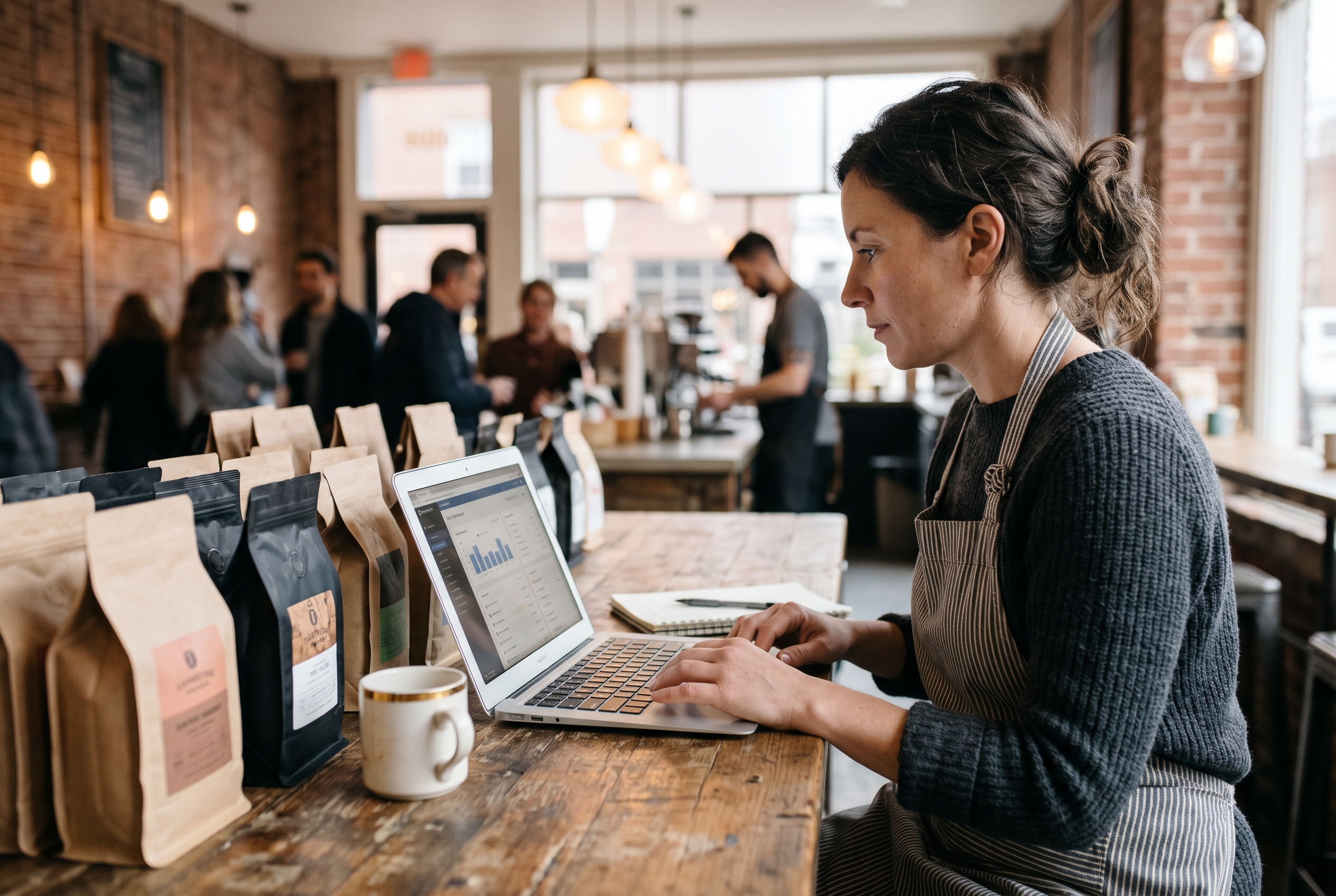
If you'd rather not stitch together billing, portal, and email tools, this is where a platform with the pieces built in helps. Rovela, for example, builds a full store with Stripe checkout, abandoned cart, customer accounts and marketing automations from a plain-language description, and a new store goes live in hours. You can check the details at Rovela's pricing page.
How do you reduce coffee subscription churn?
Reduce coffee subscription churn by fixing the first 60 days, giving subscribers flexibility to skip or swap, and making every box feel personal. Most cancellations happen early, when the customer hasn't built a habit or has too much coffee at home.
Watch the numbers that matter
Track monthly churn (cancellations divided by active subscribers at the start of the month), first-order-to-second-order rate, and average months retained. As a rough rule, if your monthly churn is 10%, the average subscriber stays about ten months (1 divided by 0.10). Cut churn to 6% and that average life jumps to roughly 17 months. That's the whole business case for retention work.
Tactics that work for coffee
- Onboarding email series. Send brew guides for the coffee they ordered, grind advice and a "how's it tasting?" check at day 10.
- Frequency matching. Ask at signup how many cups they drink. A solo drinker on a weekly 12 oz plan will cancel with a pantry full of beans.
- Skip and swap, not just cancel. Offer "pause for a month" and "switch to decaf" as the first options on the cancel screen.
- Tasting cards and origin stories. A short card about the farmer or lot turns a commodity into something people want to keep.
- Win-back emails. Reach lapsed subscribers 30 and 60 days after cancellation with a new release, not a generic discount.
- Reviews and referrals. A free bag for every friend who subscribes grows the base and ties existing customers in.
Common mistakes
- Launching with eight coffees and no clear bestseller.
- Roasting to order but shipping late, so freshness promises break.
- Locking people in with annual commitments before you've earned trust.
- Ignoring failed payments, which quietly counts as involuntary churn.
How do you find your first subscribers?
Your first 50 subscribers almost always come from people who already buy from you: café customers, farmers market regulars, wholesale accounts' staff and your email list. Convert them before you spend a cent on ads.
Start with the people in front of you
Put a QR code on every bag, receipt and counter card pointing to the subscription page. Offer a first-bag discount rather than a permanent one. If you run a physical café or stall, selling online from a physical store explains how to move walk-in customers online, and adding your store link to Google Business Profile catches local searches.
Then widen the circle
- Email list: Announce the launch to everyone who's ever bought, with a founding-member perk such as a free brew guide or a limited lot.
- Instagram and short video: Show roasting days, bagging, and the exact box that arrives. Real process content beats polished ads for small roasters.
- Gift subscriptions: Push 3-month gifts before holidays. They bring new customers who may convert to paid recurring plans.
- Local partnerships: Offices, gyms and co-working spaces make good recurring buyers, and local delivery can sweeten the deal. See online store local delivery setup.
A realistic launch timeline
- Week 1: Pick your model, cost out one bag, set pricing.
- Week 2: Build the store and subscription page, test checkout with real cards and a refund.
- Week 3: Photograph the product, write onboarding emails, soft-launch to 20 friendly customers.
- Week 4: Fix what they flag, then announce to your full list.
Common questions about starting a coffee subscription
Is a coffee subscription business profitable?
It can be, if you control shipping cost and churn. With a 55-65% gross margin and monthly churn under 8%, a subscriber is worth several times the first order. With a 40% margin and 15% churn, you'll struggle to cover acquisition costs.
How much does it cost to start?
If you already roast, startup costs are mostly packaging stock, a store, and some photography. Many roasters launch for a few hundred dollars. If you're starting from scratch, see how to sell coffee beans online and what it costs to start an ecommerce business.
Do I need to roast my own coffee?
No. Some founders partner with a roaster on a private-label basis and focus on brand and curation. The tradeoff is lower margin and less control over freshness, so negotiate roast-to-ship timing in writing.
How often should subscribers receive coffee?
Offer weekly, every two weeks, and monthly. Most households fit the two-week or monthly cadence. Let customers change it freely.
Start small, ship fresh, and protect retention
A good coffee subscription starts with one clear offer, margin math you've checked against real shipping quotes, and a promise about freshness you can actually keep. Then you work on the part that compounds: onboarding, flexibility and win-back. Do those well and recurring coffee orders become the base your roastery stands on.
If you want a store ready to take subscriptions without piecing together apps, Rovela builds a complete store from a conversation, with checkout, customer accounts, abandoned cart and email automations included in one flat subscription. Take a look at Rovela and see how fast your coffee brand can go live.