By El Ghali Bennis · Published
Coffee Wholesale vs Direct to Consumer: Which Wins?
Coffee wholesale vs direct to consumer, with margin math per pound, cash flow terms and a plan to run both channels from one store.
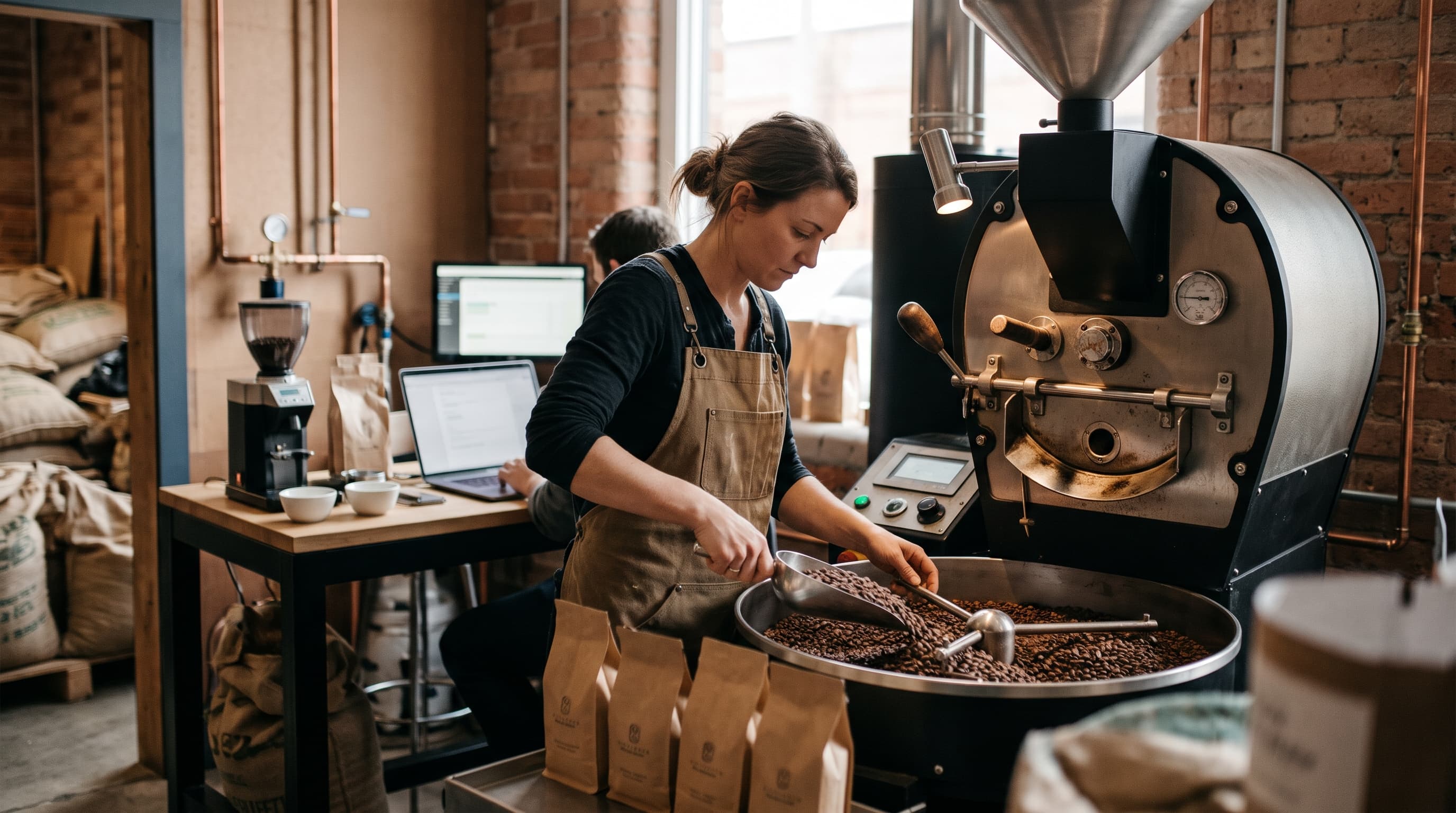
In the coffee wholesale vs direct to consumer debate, direct to consumer wins on margin and customer data, while wholesale wins on volume and predictable orders. Most roasters do best with both: wholesale to cafes for baseline revenue, and online retail to build margin and a loyal customer list.
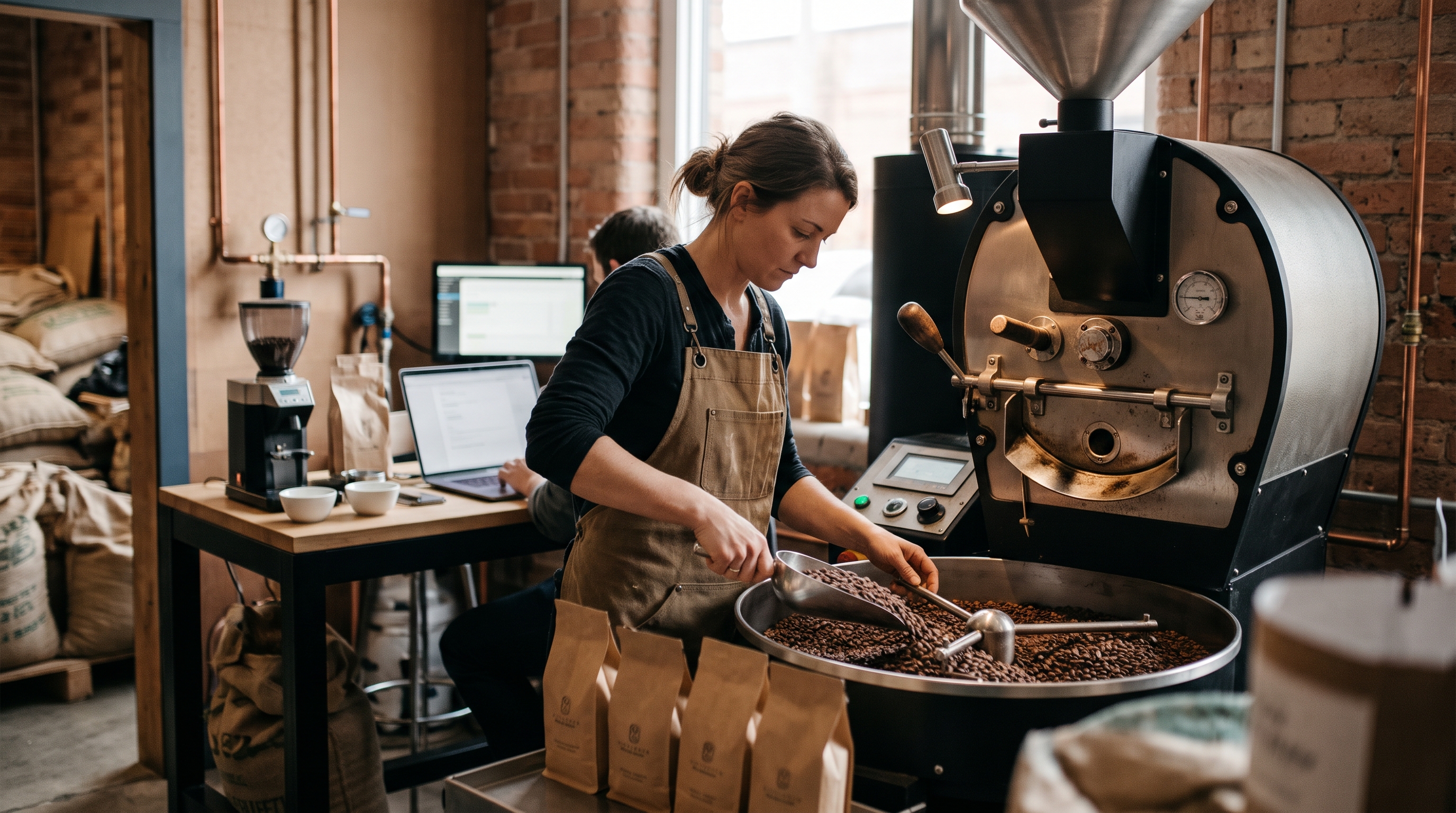
That's the short answer. The useful answer depends on your roaster size, your local market, and how much time you can spend on sales versus roasting. This guide breaks down the economics of each channel with example numbers, the work each one demands, and a practical way to combine them without doubling your admin load.
Coffee Wholesale vs Direct to Consumer: The Core Difference
Wholesale means you sell bulk coffee at a lower price per pound to cafes, restaurants, offices, and retailers who resell or serve it. Direct to consumer (DTC) means you sell bags straight to drinkers through your website, subscriptions, or a retail counter at full price.
A wholesale coffee roasting business trades margin for volume. A cafe ordering 40 lb a week (a plausible figure for a busy single-location shop) is worth more than dozens of casual online buyers, but you give up price per pound and rarely learn who drinks your coffee.
A direct to consumer coffee brand flips that. Each bag earns more, you own the customer relationship, and you can email people who liked your Ethiopian natural when the new lot lands. The tradeoff is that you carry the marketing, shipping, and customer service.
Quick comparison
| Factor | Wholesale | Direct to consumer |
|---|---|---|
| Price per pound | Lower (volume pricing) | Highest (retail price) |
| Order size | Large, repeating | Small, 12 oz typical |
| Cash flow | Often net-15 or net-30 terms | Paid at checkout |
| Customer data | Owned by the cafe | Owned by you |
| Acquisition effort | Sales calls, samples, tastings | Ads, content, email, SEO |
| Shipping cost | Pallet or bulk, low per lb | Parcel, high per lb |
| Risk | Concentration in few accounts | Ad costs and churn |
Coffee Wholesale vs Direct to Consumer Margin Math
Here is an illustrative example. The numbers are hypothetical, so swap in your own costs. Say green coffee costs $6.50 per lb. With about 15% roast loss, each roasted pound costs about $7.65 in green alone. Add roughly $1.50 for labor and gas and $0.75 for packaging, and your cost is about $9.90 per roasted pound.
- Wholesale at $14.50 per lb: gross profit of about $4.60 per lb, or roughly 32% margin. Shipping on a bulk order is small, perhaps $0.30 per lb.
- Retail at $20 per 12 oz bag (about $26.70 per lb): the bag costs about $7.40 to produce. Add $5 to $6 in parcel shipping and about $0.90 in payment fees, and gross profit is roughly $6 per bag. That is about 30% if you charge shipping separately, and higher if customers pay it.
The point: DTC margin only beats wholesale when shipping is recovered, through free-shipping thresholds, subscriptions with multiple bags, or shipping charged at checkout. Per bag, DTC is more profitable, but per hour of your time wholesale can win, since one 40 lb order takes about the same effort to pack as three or four retail orders.
Cash flow, minimums and private label
- Cash flow: DTC pays at checkout. A $1,200 monthly wholesale account on net-30 terms means you fund about a month of coffee before payment arrives. Consider requiring card on file or a deposit for new accounts.
- Minimums: Many roasters set a 5 lb minimum per order or a flat delivery fee below it, so tiny orders don't eat your margin.
- Private label: Roasting under a cafe's own brand can lock in volume, but it removes your name from the cup. Price it higher and require longer commitments.
How Wholesale Coffee Pricing Works
Wholesale coffee pricing is usually set as a markup over your landed cost (green coffee, roasting loss, labor, packaging), then discounted by volume tiers. There's no universal number, but the logic is consistent.
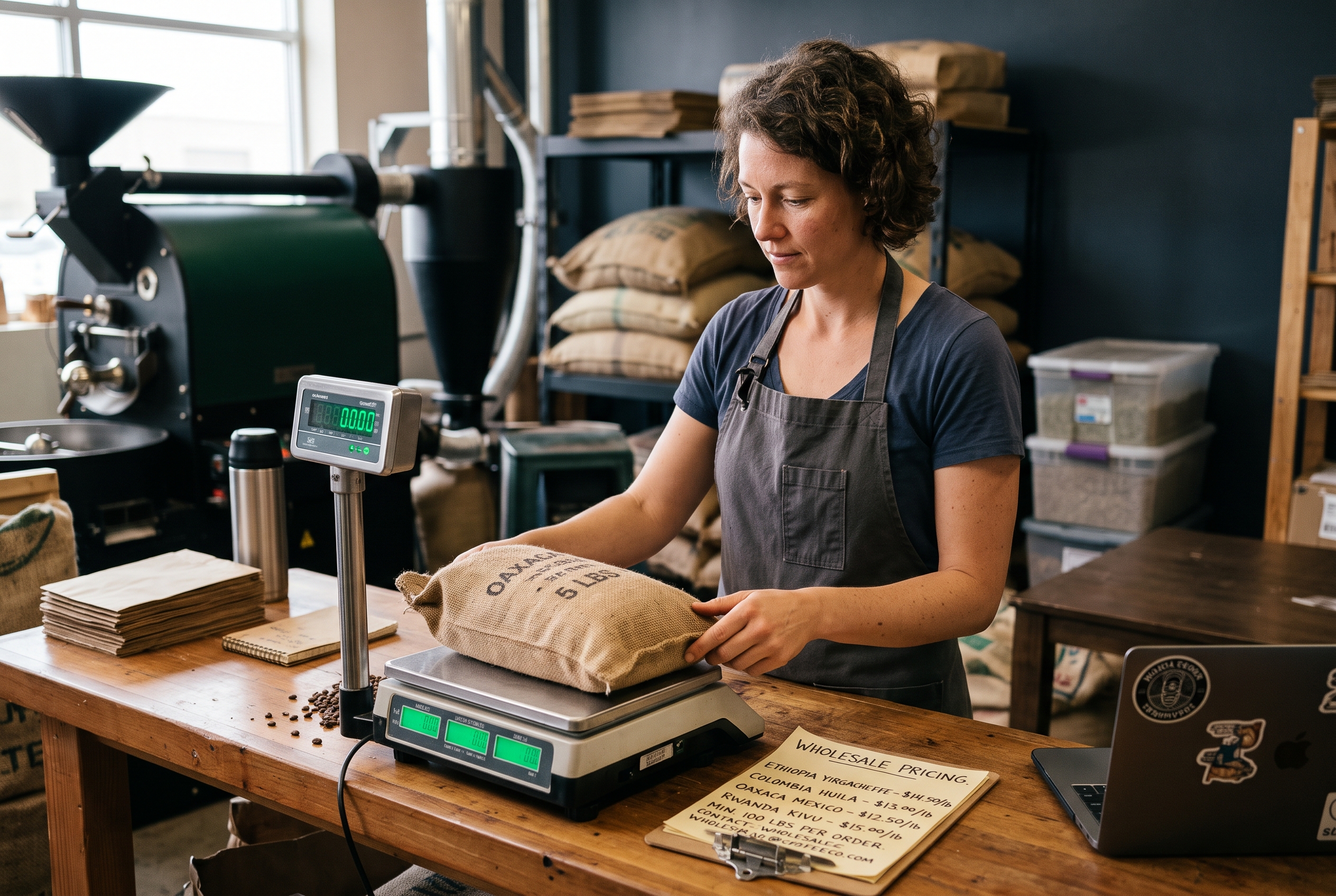
Roasting typically loses about 12-20% of weight as moisture burns off, so 100 lb of green coffee yields roughly 80-88 lb of sellable product. This is widely cited across roasting education, including by the Specialty Coffee Association. If you price on green weight, you'll undercharge. Always price on roasted pounds.
A simple pricing framework
- Calculate cost per roasted pound. Green cost divided by yield, plus labor, gas, packaging, and freight.
- Set a floor. Wholesale should still clear a healthy gross margin after all of that. If it doesn't, you're subsidizing your customers' cafes.
- Build tiers. For example: 5-19 lb per order, 20-49 lb, 50+ lb per week. Each tier drops the price a little.
- Publish it. A visible price list saves you dozens of back-and-forth emails.
Be careful with discounting beyond tiers. A cafe that gets a special rate talks to other cafes, and your price list becomes fiction fast.
How to Sell Wholesale Coffee to Cafes
To sell wholesale coffee to cafes, lead with samples, consistency, and service rather than price. Cafes switch roasters when deliveries are late or flavor drifts, not just when someone is cheaper.
Here's what tends to work for coffee roaster customer acquisition on the wholesale side:
- Walk-in tastings. Bring a cupping kit and two coffees to independent cafes within 20 miles. Go mid-morning, never during rush.
- Equipment and training. Offer to dial in their espresso grinder and train baristas. It's often the biggest reason accounts stick.
- Reliable ordering. A reorder link that works at 9 p.m. beats a phone tree. Cafes forget to order until they're almost out.
- Co-branding. Offer a menu card with your name and origin. It markets you to every customer who orders a latte.
- Offices and restaurants. These are lower-touch accounts that order steadily and rarely churn over small price differences.
Expect long sales cycles. A cafe might take three visits and two samples before switching. Once they do, accounts often last years, which is why wholesale gives you a steady floor of revenue.
The risks of wholesale
Concentration is the big one. If a single cafe group makes up 30% of your volume and they're bought out or change suppliers, you feel it immediately. Late payments are the second, as the cash flow example above shows.
Building a Direct to Consumer Coffee Brand
DTC works best when you give people a reason to buy from you instead of the grocery shelf: freshness, story, and convenience. Subscriptions are the engine, because coffee is a consumable people reorder.
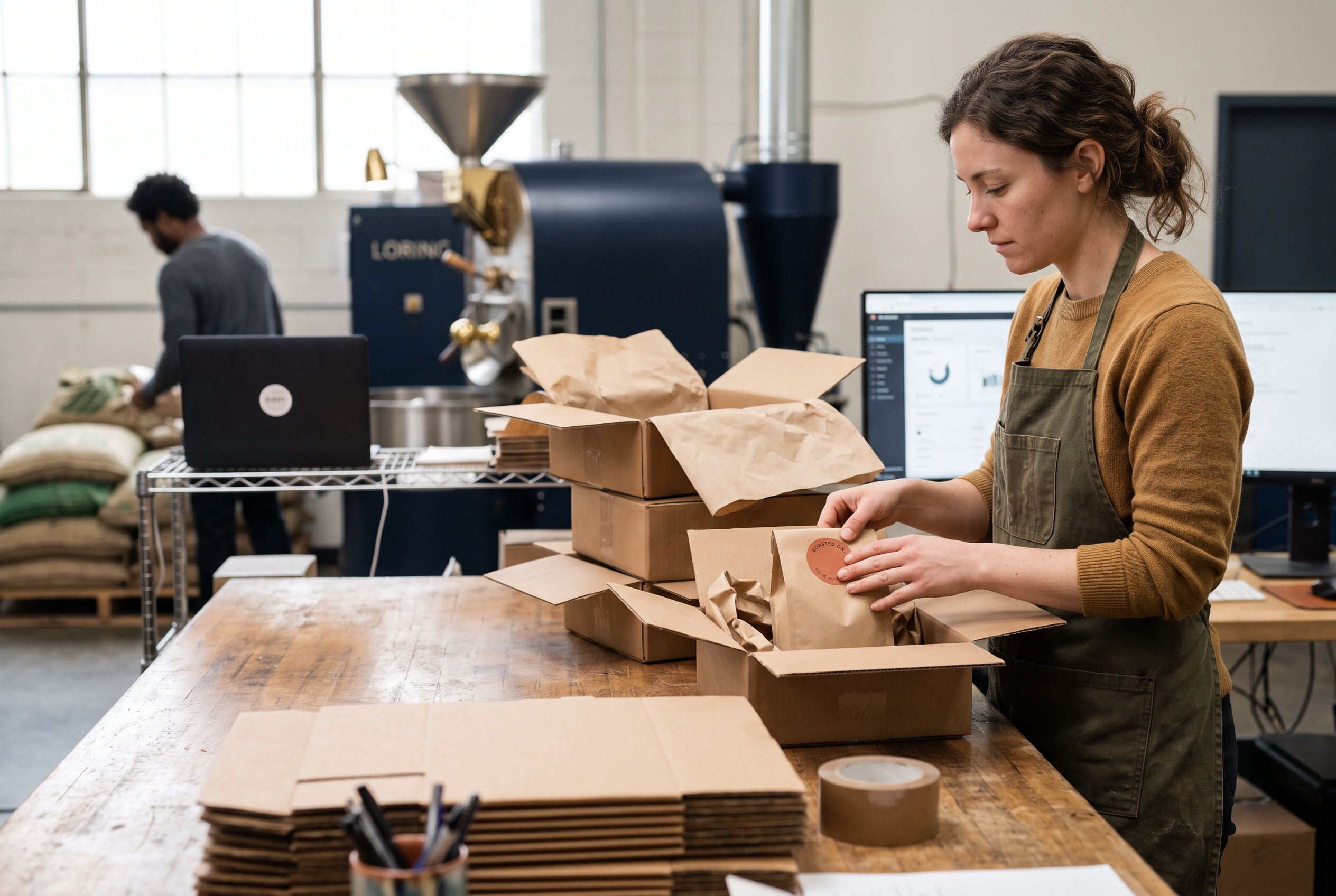
A subscription customer who orders every two weeks is worth far more than a single purchase. If you want to go deeper on the mechanics, our guide on building a recurring revenue store covers pricing, pausing, and churn. For the step-by-step of launching the retail side, see how to sell coffee beans online.
What DTC demands from you
- Marketing. Search, Instagram, email, and reviews. Paid ads get pricey, so email and SEO matter.
- Fulfillment. Roast-to-order batches, packing, and parcel shipping every week.
- Customer service. Late packages, wrong grind, paused subscriptions.
- Retention tools. Abandoned cart emails, loyalty points, and reviews do real work here.
The payoff is margin and data. You know who buys, what they reorder, and when they're about to lapse. That knowledge makes every new roast launch cheaper to sell.
Why Most Roasters Should Run Both Channels
For most small and mid-size roasters, the strongest model is a hybrid: wholesale covers fixed costs and keeps the roaster busy, while DTC lifts blended margin and builds an audience you own. Neither channel alone is as stable.
An example hybrid roaster
Picture a hypothetical two-person roastery with a 15 kg machine. It roasts three days a week for six cafe accounts averaging 25 lb weekly (150 lb), then runs two more days for 120 online orders averaging 1.5 bags. Using the margin figures above, wholesale brings in roughly $690 gross profit weekly and DTC roughly $720 after shipping. Neither channel alone fills the machine and the calendar as profitably. This is an illustration, not a benchmark, so build your own version from real costs.
A practical split to start with
There's no magic ratio. A starting point of around 60% wholesale and 40% DTC by volume is a rule of thumb, not a studied benchmark. Shift toward DTC as your email list and subscriber base grow. Revenue share leans further toward DTC than volume share, since each pound earns more. Track margin per channel monthly so you see the real picture instead of guessing.
Wholesale and retail on one store
Running wholesale and retail on one store is the cleanest way to avoid a second system. You'd want:
- A retail storefront with subscriptions and one-off bags
- A gated wholesale price list, visible only to approved accounts
- Tiered pricing by order size
- Reorder in two clicks for cafe owners
- Invoices, shipping rules, and tax settings per customer type
This is what good coffee roaster B2B ecommerce looks like: cafes self-serve their reorders so you stop answering texts at 6 a.m., and your retail customers see a polished shop. For a wider look at tools built for this, read our wholesale ecommerce website builder guide. If you're also weighing supplier-fulfilled models, dropshipping vs wholesale explains the tradeoffs.
Coffee Wholesale vs Direct to Consumer: Which to Prioritize First
Start with whichever channel matches your current constraint. If you have roasting capacity and no cash cushion, start wholesale. If you have a story, a small audience, and time to market, start DTC.
- Choose wholesale first if you live near dense cafe neighborhoods, you're comfortable selling in person, and you need volume to justify equipment.
- Choose DTC first if you're roasting part-time, have a social following, or sell specialty single origins that command a premium.
- Run both from day one if you already have a few cafe accounts and want to turn their customers into online buyers. A QR code on the cafe's bag display is a cheap bridge.
Whichever you pick, keep an eye on three numbers: gross margin per pound by channel, customer acquisition cost for DTC, and the share of revenue from your top account. As a rule of thumb, if one account passes roughly 25% of revenue, make DTC growth the priority, because losing it would hurt badly.
Common mistakes to avoid
- Pricing wholesale on green weight rather than roasted weight
- Letting wholesale customers see retail prices (or vice versa) and getting undercut
- Ignoring shipping cost in DTC margin math
- Skipping email capture, which leaves you renting your audience from social platforms
Setting Up Both Channels Without a Heavy Tech Stack
The usual problem isn't strategy. It's tooling. On Shopify, wholesale pricing, subscriptions, and abandoned cart recovery typically each need a paid app, and the total can climb well beyond the base plan, which Shopify lists on its pricing page. WooCommerce shifts that burden to maintenance, as covered in our WooCommerce maintenance cost breakdown.
The aim is one store, one admin, and one customer list. You can also check how roasters' bean-shipping rules work with the FDA food facility requirements, since selling roasted coffee across state lines may involve registration. Confirm the details for your location before launching.
Final Take: Build Both, Sequence Them Smartly
Wholesale pays the bills and keeps your roaster running. DTC grows your margin and gives you customers you actually own. Treat them as two halves of one business, with wholesale as the foundation and DTC as the growth engine.
If you want both channels live without stitching together plugins, Rovela builds a complete store from a plain-language description. Retail checkout, customer accounts, abandoned cart, loyalty, reviews, and 100+ features come included in one flat subscription, with no commission on sales. Check Rovela's pricing or start from the homepage and describe your roastery in a few sentences.