By El Ghali Bennis · Published
How to Sell Products Online for a Yoga Studio
Learn how a yoga studio can sell mats, props, gift cards, workshop tickets and retreat spots online, with setup, pricing and tax steps.

To sell products online for a yoga studio, set up a simple online store with your own checkout, list a small curated range (mats, props, gift cards), then add workshop tickets and retreat deposits. Promote it to your existing students first. Your community already trusts you, so the store's job is to make buying effortless.

Most studios earn from one thing: classes. That leaves money on the table. Your students already ask where to buy a mat, which bolster you recommend, and whether they can gift a friend a class pack. Every one of those questions is a sale you're answering with a shrug or a "check Amazon."
This guide walks through what to sell, how to set up your store without a developer, how to price, ship, track inventory and handle sales tax, and how to promote it so it keeps paying off after launch week.
What Can a Yoga Studio Sell Online?
A yoga studio can sell physical retail, digital passes and experiences online. The strongest mix combines retail (mats, props, apparel), cash-flow products (gift cards, class packs), and high-ticket events (workshops and retreats).
Start by sorting ideas into three buckets, because each behaves differently in your business.
Physical products: mats, props and apparel
If you want to sell yoga mats online, keep the range tight. Two or three mats at different price points beat fifteen options. Add the props you actually use in class: blocks, straps, bolsters, blankets, eye pillows. To sell yoga props online well, bundle them. A "Beginner Kit" with a mat, two blocks and a strap, priced slightly under the sum of its parts, raises your average order value and removes decision stress for new students.
Studio-branded apparel and totes work too, but order small runs. Unsold sizes eat cash fast. Track stock by size and color in a simple inventory count, and set a low-stock alert (for example, at three units) so your best sellers never go dark before a workshop weekend.
Gift cards and class packs
Yoga studio gift cards are nearly pure margin and bring in new faces. Holiday weeks and January are the peaks. We cover the mechanics of passes in our guide on how to sell class packs online, and the same logic applies to memberships and intro offers.
Workshop tickets and retreat spots
Selling yoga workshop tickets online means capacity limits, early-bird pricing and automatic confirmation emails. To sell retreat spots online, take a deposit at booking and collect the balance later. Many retreat organizers ask for roughly 25-30% upfront, though there is no fixed standard, so set the figure based on your own costs: use your non-refundable venue deposit as the floor. This protects you from last-minute cancellations and smooths cash flow months ahead of the trip.
How to Sell Products Online for a Yoga Studio: Step by Step
The process takes six steps: choose products, pick a platform, build the store, set up payments and shipping, write your pages, then announce it. Most studios can finish in a week or less, and far faster with an AI builder.
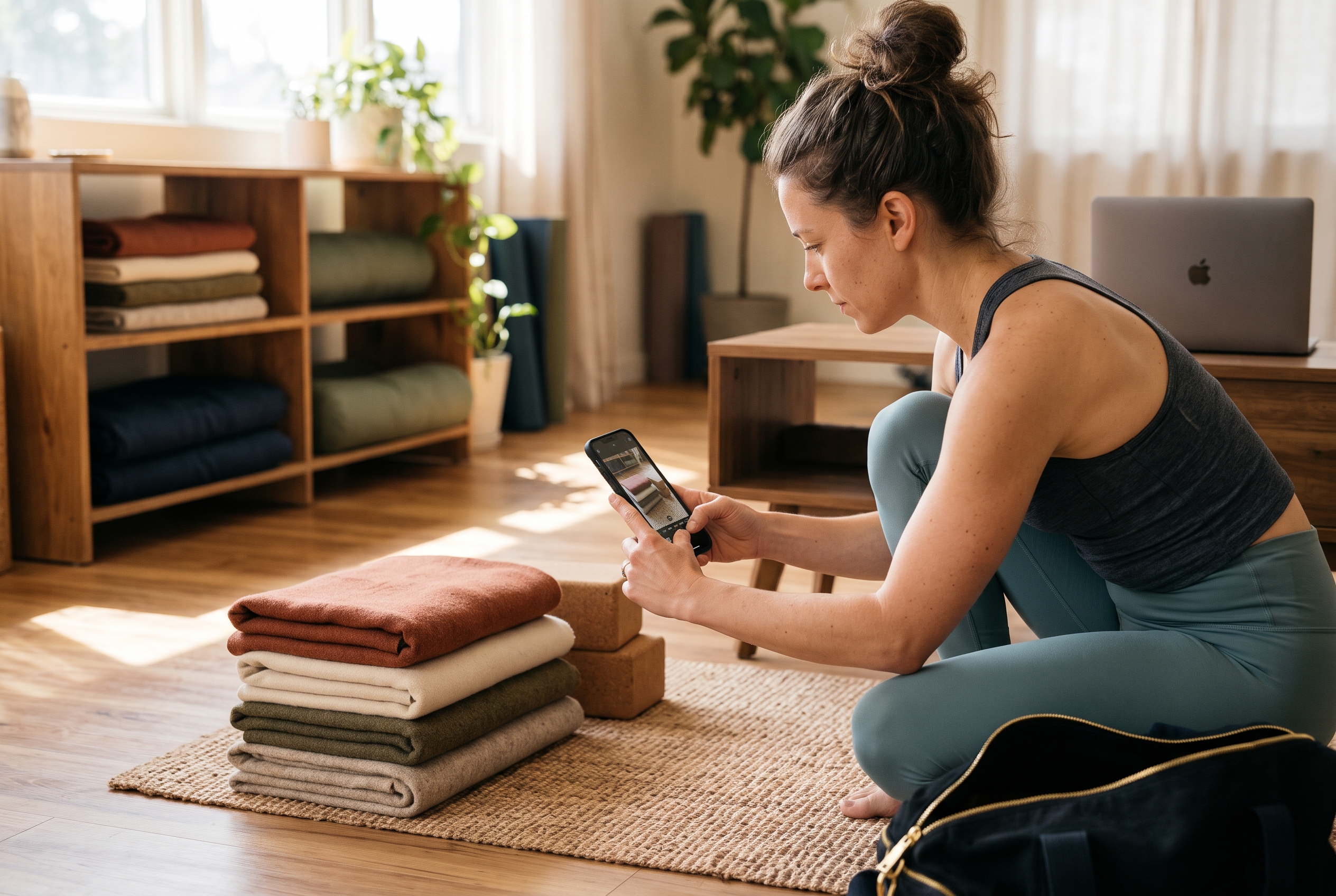
- Pick 10-15 products. Start with what students already ask for. Check your front-desk notes: the last five things people requested are your first listings.
- Choose your platform. You need a storefront, secure checkout, inventory, gift cards and email. Avoid stacking ten plugins to get there.
- Build the store. Add photos taken in your own studio. Shoot near a window in morning light, use a plain wall or wooden floor as background, and take one detail shot and one in-use shot per product. Real rooms and real props sell better than stock images.
- Connect payments and shipping. Use a processor like Stripe and offer local pickup for students nearby.
- Write honest product pages. Say why you chose each item and who it's for.
- Launch to your list first. Email, class announcements and a QR code at the desk.
Already selling a few things at the front desk? Our guide on how to start selling online from a physical store covers inventory syncing and the common traps when you run both counters.
Choosing a Platform for Your Yoga Studio Ecommerce
The best platform for a studio is the one you can run without an agency. You're a teacher, not a web developer, so prioritize built-in features over a long app list.
Here's how the common options compare for a small studio:
| Option | Typical monthly cost | Built-in for studios? | Maintenance |
|---|---|---|---|
| Shopify | $39-$399 base, plus $50-$200 in apps | Gift cards yes; abandoned cart, wishlist and Q&A often need apps | Apps need updating and can conflict |
| WooCommerce | $30-$100 hosting plus plugins | Mostly plugin-based | You handle security and updates |
| Wix / Squarespace | $17-$399 | Basic; many integrations paywalled | Low, but limited depth |
| Rovela | Flat subscription, see pricing | 100+ features included, no per-app billing | Changes done by chat |
Base plan ranges for Shopify come from Shopify's pricing page; the app spend and hosting figures are typical estimates and vary by setup, but apps are the line item most owners underestimate. If you're weighing a drag-and-drop builder, read about Wix ecommerce limitations before committing.
One more question to settle: do you need a separate app at all? Often not. Our piece on whether you need an app to sell online gives the honest answer.
Pricing, Shipping and Fulfilment That Fit a Studio
Retail businesses commonly price at a keystone markup, which means doubling the wholesale cost (about 2x), and many go higher on branded or niche goods. A mat that costs you $45 wholesale would land around $90, and premium mats from well-known brands often retail at $100 or more. Check three competitor listings before you set your own price, then adjust for shipping and card fees (Stripe's standard US rate is 2.9% plus 30 cents per transaction, per Stripe's pricing page).

Offer local pickup and delivery
Mats are bulky and shipping them is pricey. Let students pick up at class for free. That pushes people through your door, which raises the odds they'll book the next session. If your students live close by, a bike or van run once a week can work too. See our walkthrough on setting up an online store with local delivery.
Source products you'd put your name on
Your credibility is the product. Order samples, use them in class for a month, then list them. Not sure where to find suppliers? Here's a rundown of where to get products to sell online. Dropshipping from a wholesale partner lets you skip stock on bulkier items such as bolsters.
Handle returns clearly
Say upfront that unused props can be returned within 14-30 days and that mats once unrolled and used can't. A plain policy prevents arguments and protects your margins.
Don't forget sales tax
Physical goods are usually taxable, while class fees may be treated differently depending on your state or country. Register for a seller's permit before your first sale, turn on automatic tax calculation at checkout, and keep gift card sales separate in your books, since tax typically applies when the card is redeemed rather than sold. Confirm specifics with your accountant.
Promoting Your Studio Shop to Students
Promote to the people already in your room. Your first 100 sales will come from students, not strangers, so build the store into the class experience.
Turn teacher recommendations into sales
Yoga teacher recommended products are your edge over Amazon. Create a "Teacher Picks" page where each instructor lists a favorite item and a two-sentence reason. A teacher saying "this is the strap I use for hamstring work" converts better than any banner ad. To make it less generic, add a short note on which class or pose the item supports, and link each pick from the class description it relates to.
Use email and post-class moments
Send a short email after a new student's third class: "Here's the starter kit our teachers suggest." Add abandoned-cart reminders so a half-finished purchase of workshop tickets doesn't simply vanish. Post a QR code by the door linking directly to the shop.
Extend to related studios
Running a Pilates studio online store follows the same playbook with different gear: grip socks, resistance bands, small balls. If your space blends disciplines, a single store can serve both. Our guide to a fitness studio online store shows how to organize mixed catalogs.
Common Questions From Studio Owners
Do I need a business license to sell products online?
You'll typically need a seller's permit or sales tax registration where you operate, and your existing studio license may already cover part of it. Rules vary by location, so check our business license guide and confirm with your local authority.
How much can a studio realistically earn from retail?
It depends on class volume, so use your own numbers. As a hypothetical worked example, not a benchmark: a studio with 150 active students where 10% buy one $60 order brings in 15 orders, or $900. At a 50% gross margin that's about $450 before card fees and shipping, with gift card and event sales on top. Swap in your student count and average order to forecast your own figure.
Should I sell retreat spots on the same site?
Yes. Keep retreats on their own page with a clear deposit, balance date and cancellation terms, so you aren't managing bookings in spreadsheets and DMs.
Start Small, Then Let the Store Grow With the Studio
Selling online as a yoga studio comes down to a few moves: curate a small range, sell gift cards and tickets alongside gear, offer pickup at class, and promote through your teachers. You don't need a huge catalog. You need a store that works while you're teaching.
If you'd rather not wire together apps, Rovela builds a complete store from a plain-language description of your studio. Checkout, gift cards, abandoned-cart emails, reviews and an admin dashboard come included, so you can launch in hours and ask the chat to change anything later. Describe your studio to Rovela today and see your shop before you spend a weekend on templates.