June 20, 2026
Do I Need a Business License to Sell Online? (2026 Guide)
Wondering if you need a business license to sell online? Here's exactly what's required — licenses, LLCs, EINs, sales tax, and permits — without the legalese.

Short answer: in most cases, you can start selling online without a formal business license — but "no license" rarely means "no paperwork." Whether you need a business license to sell online depends on where you live, what you sell, and how much you earn. Some sellers are legally fine with nothing more than a tax ID. Others need a seller's permit before the first sale ships. This guide walks through every piece — licenses, LLCs, EINs, sales tax, and resale certificates — so you can set up your store without a nasty surprise from your state or city.

None of this is legal advice — rules vary by state, county, and even city. But by the end, you'll know the questions to ask and the order to tackle them in.
Do You Need a Business License to Sell Online?
Most online sellers don't need a general business license to make their first sale, but many cities and counties still require one once you're operating as a real business. There's no single federal "online seller" license in the U.S. — the requirement comes from your local government, not from selling online itself.
Think of it this way: the internet doesn't change the rules, your location does. A handmade jewelry seller in Texas faces different paperwork than a dropshipper in California. The act of selling online is what's new; the licensing framework underneath it is the same one that's governed local businesses for decades.
Here's the practical breakdown of who typically needs what:
- Hobby sellers making occasional sales often need nothing upfront — but income is still taxable.
- Home-based businesses may need a home occupation permit from their city or county.
- Sellers of regulated goods (food, alcohol, cosmetics, supplements, firearms) almost always need special licenses.
- Anyone collecting sales tax usually needs a seller's permit, which is separate from a general business license.
The safest move is to check with your city clerk's office and your state's business portal. The U.S. Small Business Administration maintains a directory of state-level licensing requirements that's a solid starting point.
The Core Legal Requirements to Start an Online Business
When people ask whether they need a business license, they usually mean the broader question: what are the actual legal requirements to start an online business? There are five common pieces, and not every seller needs all of them.

1. Business structure (sole proprietor, LLC, or corporation)
By default, if you start selling and do nothing, you're a sole proprietor. That's the simplest path — no filing, no fee. The trade-off is that your personal assets aren't separated from the business, which matters more as your revenue grows.
2. Business license or seller's permit
A general business license registers your right to operate in a jurisdiction. A seller's permit for ecommerce (sometimes called a sales tax permit) authorizes you to collect sales tax. They're different documents, and you may need one, both, or neither.
3. EIN (Employer Identification Number)
An EIN for ecommerce is a free federal tax ID from the IRS. You need one if you form an LLC, hire employees, or want to avoid using your Social Security number on supplier and payment forms.
4. Sales tax registration
If you sell taxable goods, you'll likely register to collect sales tax for your online store in states where you have "nexus" — a legal connection like physical presence or high sales volume.
5. Industry-specific permits
Selling food, supplements, cosmetics, CBD, or children's products triggers extra rules from agencies like the FDA. Check before you list.
Do I Need an LLC to Sell Online?
No — you don't legally need an LLC to sell online. You can operate as a sole proprietor from day one. But an LLC for an ecommerce business is worth considering once you have real revenue, inventory, or liability exposure, because it separates your personal finances from the business.
The question "do I need an LLC to sell online" comes up constantly, and the honest answer is: it depends on risk, not rules. Here's how the main structures compare.
| Structure | Setup cost | Liability protection | Best for |
|---|---|---|---|
| Sole proprietor | $0 | None — personal assets at risk | Testing an idea, side income |
| LLC | $50–$500 (varies by state) | Strong — separates personal and business | Growing stores, inventory, employees |
| Corporation (S/C-corp) | $100–$800+ | Strong | Raising money, multiple owners |
For most serious sellers, an LLC hits the sweet spot. It's affordable, gives you liability protection, and lets you open a business bank account cleanly. You can form one yourself through your state's Secretary of State website, or use a filing service if you'd rather not handle the paperwork.
One thing people forget: forming an LLC doesn't replace a business license or a seller's permit. They're separate steps. You may need all three.
Sales Tax, Seller's Permits, and Resale Certificates
This is where most new sellers get tripped up. Sales tax isn't optional once you cross the threshold, and the rules changed significantly after the 2018 South Dakota v. Wayfair Supreme Court decision, which let states require out-of-state sellers to collect tax based on sales volume alone.
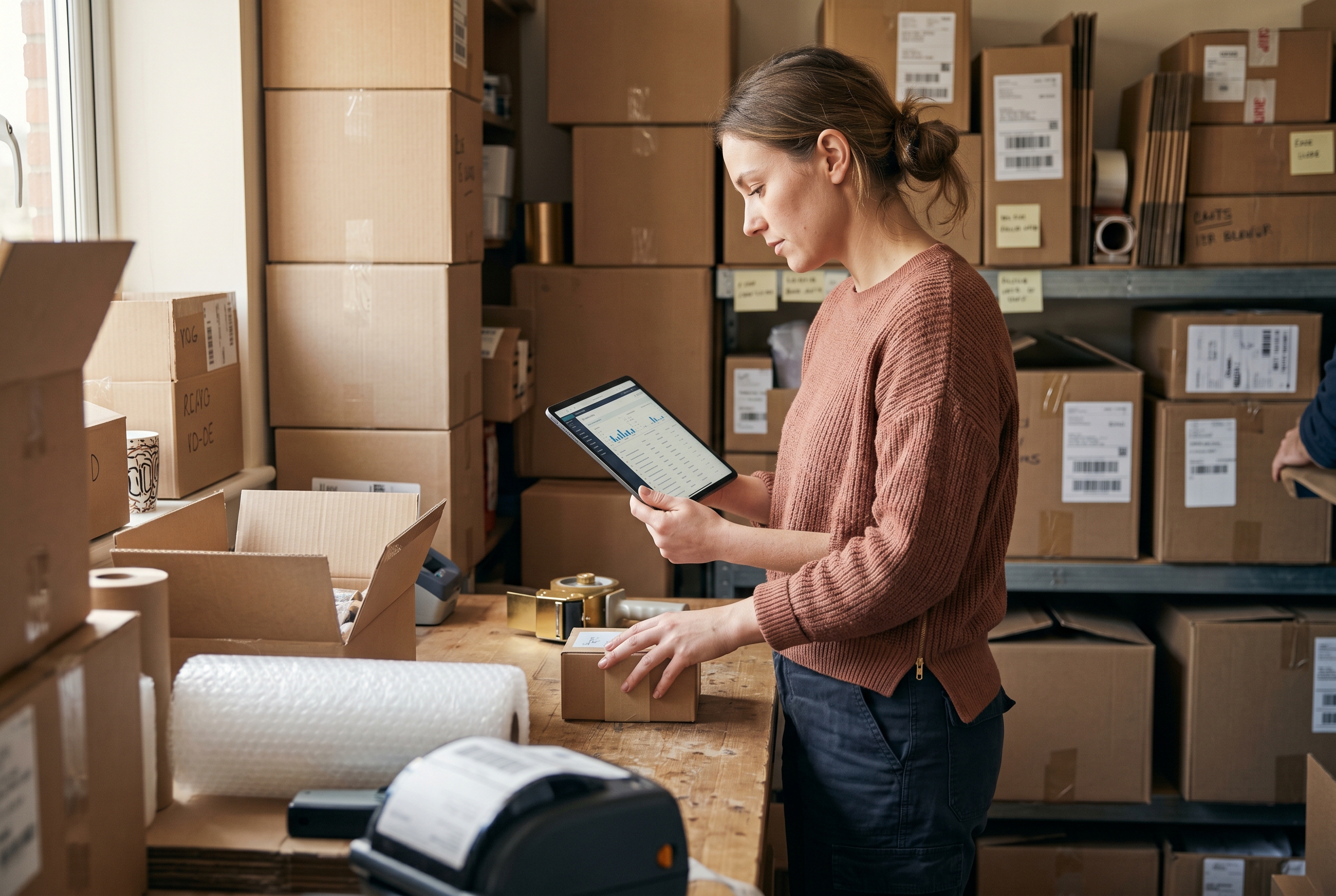
Sales tax for your online store
You collect sales tax for your online store in any state where you have nexus. Physical nexus means an office, warehouse, or employees. Economic nexus kicks in when you pass a state's threshold — commonly $100,000 in sales or 200 transactions in a year. Once you cross it, you register, collect, and remit.
Seller's permit
To collect that tax legally, most states require a seller's permit. Getting a seller's permit for ecommerce is usually free or cheap and done online through your state's department of revenue. Don't collect tax without one — that's a common compliance mistake.
Resale certificate
A resale certificate for ecommerce lets you buy inventory from suppliers without paying sales tax, since the end customer pays it instead. If you're sourcing products wholesale, this saves real money. You give the certificate to your supplier; they skip charging you tax.
Quick way to keep these straight:
- Seller's permit = your right to collect tax from customers.
- Resale certificate = your right to not pay tax when buying inventory.
- Sales tax registration = telling the state you'll collect and remit.
Good store software handles tax calculation automatically at checkout, which removes most of the day-to-day burden once you're registered. The IRS website covers federal tax obligations, while sales tax itself is handled at the state level.
How to Register an Ecommerce Business: Step by Step
Here's the practical order of operations. You don't have to do every step before your first sale, but tackling them in this sequence avoids redoing work. This is essentially how to register an ecommerce business without missing anything.
- Pick a business name and check it's available in your state and as a domain.
- Choose your structure — sole proprietor to start, or an LLC if you want liability protection now.
- Register the entity (if forming an LLC) with your Secretary of State.
- Get an EIN from the IRS — it's free and takes minutes online.
- Apply for a business license through your city or county if required.
- Get a seller's permit and register for sales tax in your home state.
- Open a business bank account to keep finances clean.
- Set up your store and payments so you can accept orders and collect tax correctly.
That last step is where a lot of the friction used to live — wiring up checkout, tax collection, customer accounts, and a dashboard usually meant stitching together a platform plus a stack of paid apps. Modern tools collapse that. Rovela builds a complete store from a plain-language description, with Stripe checkout, tax-ready settings, and an admin dashboard included by default, so the technical side of "going live" stops being the bottleneck.
If you want to compare what's included before committing, the Rovela pricing page lays out exactly what ships with each plan — no per-app billing on top.
Common Mistakes (and How to Avoid Them)
A few errors show up over and over with new online sellers. Knowing them in advance saves money and stress.
- Collecting sales tax without a permit. It feels responsible, but it's actually illegal in most states. Register first.
- Using your SSN everywhere. Get an EIN to protect your personal information on supplier and payment forms.
- Assuming online means exempt. An ecommerce business license may still be required by your city even if you never meet a customer in person.
- Ignoring home occupation rules. Running a store from your house can trigger local permit requirements and even HOA restrictions.
- Mixing personal and business money. This weakens LLC liability protection and makes taxes a nightmare.
For deeper reading on structuring and registration, the SCORE network offers free mentoring and guides aimed at small business owners, and many state Secretary of State sites publish plain-English checklists.
One more practical note: requirements scale with your business. Don't over-engineer on day one. Test your idea, make a few sales, and add the LLC and permits as your revenue justifies them. The goal is to stay compliant without drowning in paperwork before you've proven the concept.
Putting It All Together
So, do you need a business license to sell online? Often not to start — but you'll likely need some combination of a seller's permit, sales tax registration, an EIN, and possibly a local license as you grow. The smart approach is to start lean as a sole proprietor, then add an LLC and the right permits once real money is moving. Get your EIN early, register for sales tax where you have nexus, and keep your business finances separate.
The legal setup is only half the job. Once the paperwork's handled, you still need a store that can actually sell — fast pages, working checkout, accurate tax at the cart, and a dashboard that tells you what's happening. Rather than assemble a platform plus a dozen plugins, you can describe your business and have Rovela build the whole store for you, then tweak anything by chatting. Browse more guides on starting an online business when you're ready to take the next step — and get back to selling instead of wrestling with software.