
By El Ghali Bennis · Published
How to Sell Barbershop Merchandise Online: 2026 Guide
Learn how to sell barbershop merchandise online: what to sell, how to price it, legal basics, and a simple plan to get your first orders.
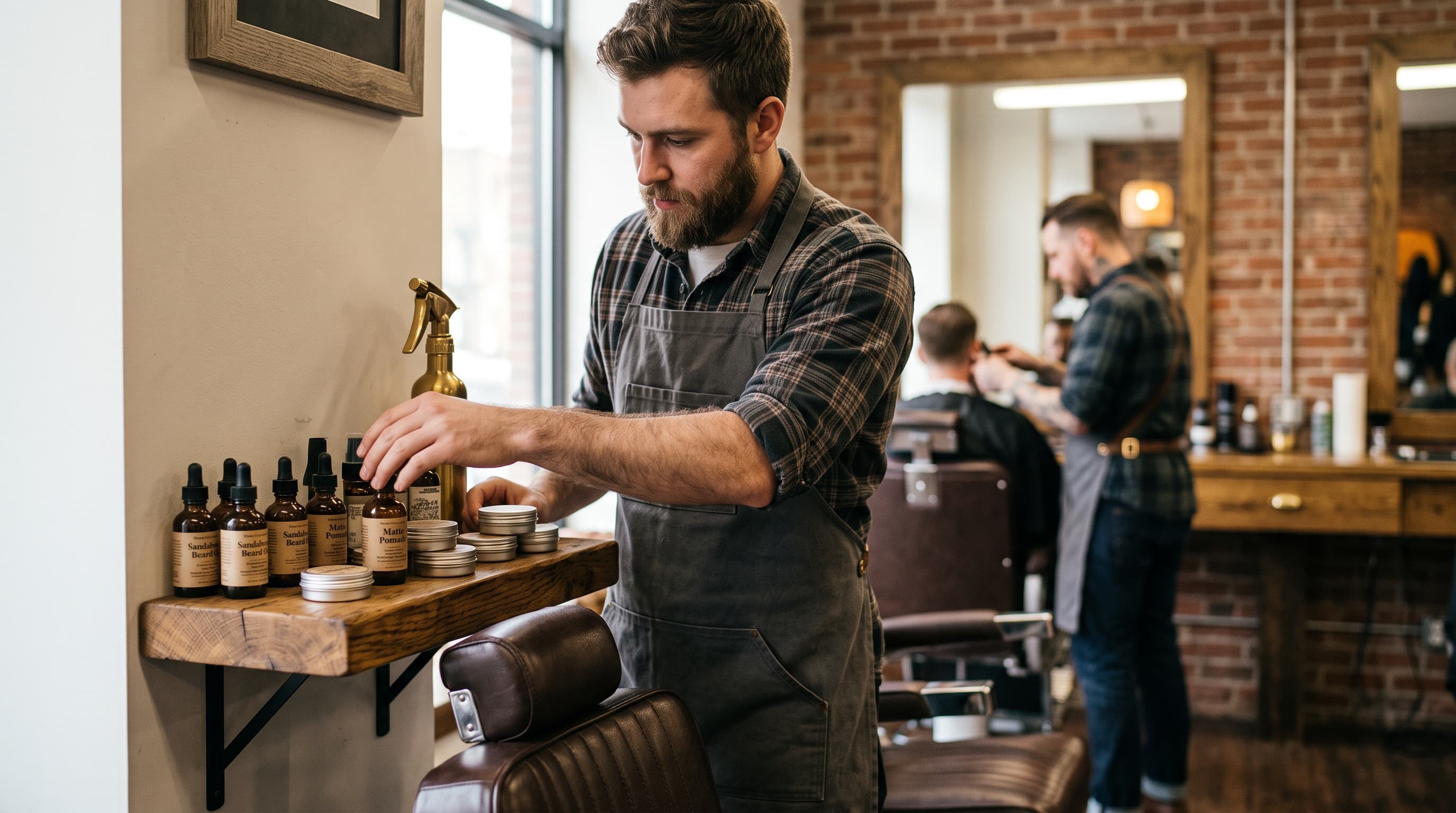
To sell barbershop merchandise online, pick a small range of products your clients already ask for (pomade, beard oil, apparel, gift cards), open a simple online store with Stripe checkout, photograph everything well, and promote it to the clients sitting in your chair. Your shop's reputation is the sales engine. The website just takes the order.
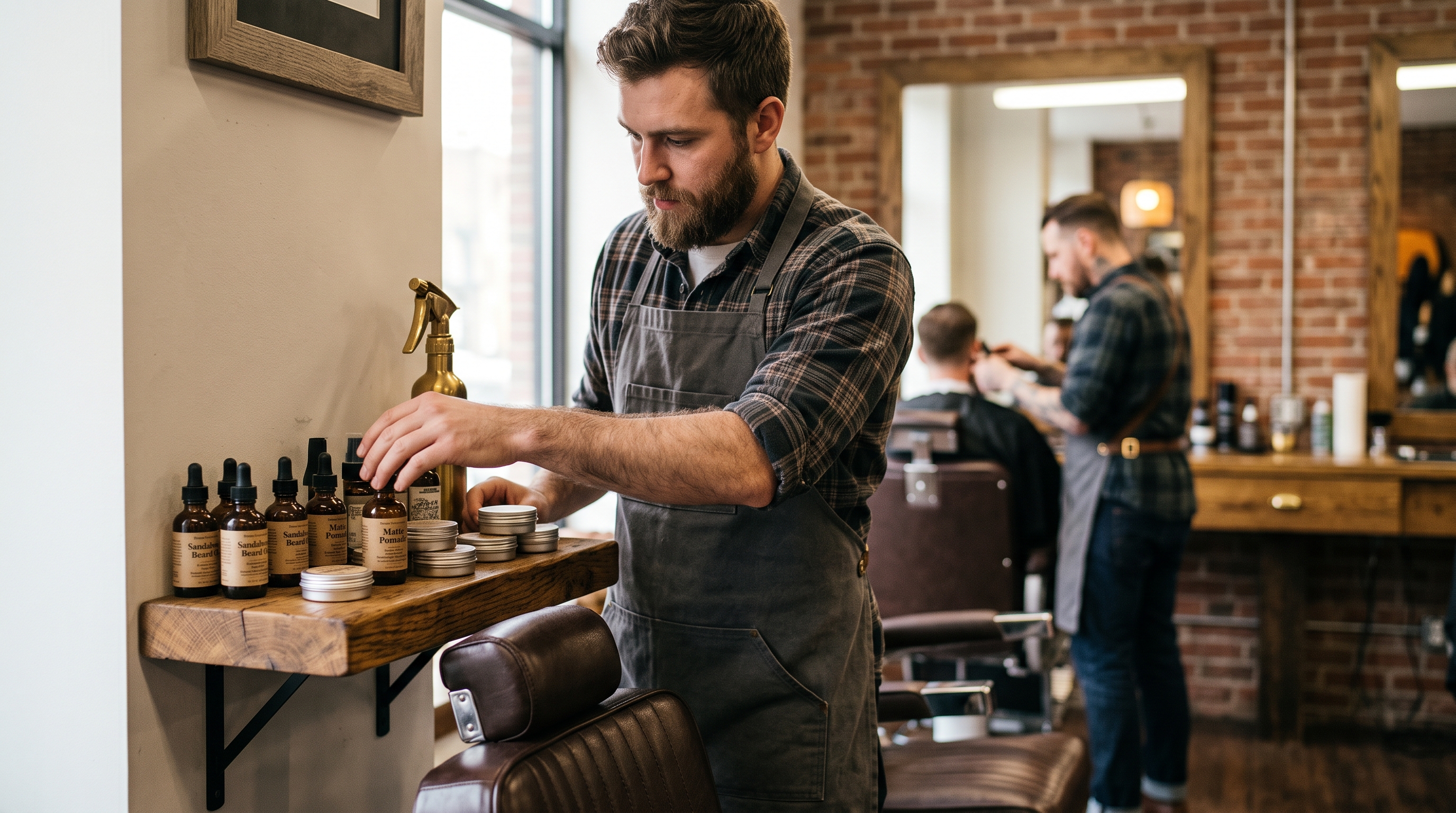
Most barbers already sell a few products at the counter. The problem is that sales stop when the client walks out the door. A barbershop online store keeps that revenue running between haircuts, on nights when you're closed, and in cities you'll never cut hair in. This guide covers what to sell, how to price it, the legal basics, how to set up the store, and how to get the first orders.
Why Sell Barbershop Merchandise Online?
Online sales add revenue that doesn't depend on your chair time. A barber can only cut so many heads per day, but a bottle of beard oil ships while you're asleep.
Clients already trust their barber's recommendations more than any ad. That trust is your edge over generic brands, and it's why a small shop can compete in a crowded grooming market without an ad budget.
Here's what an online store gives you that a counter shelf doesn't:
- Repeat orders without a visit. Clients reorder pomade at week three instead of waiting for the next cut.
- Gift sales. Partners and family buy for the guy who "has everything."
- Brand reach. Your logo ends up on hoodies in other cities.
- Cash flow smoothing. Slow Tuesdays matter less when orders still land.
If you already run a physical shop, starting to sell online from a physical store covers the broader mindset shift. Hair salons face the same retail question, and our guide on selling products online for a hair salon shows a similar playbook.
What Barbershop Merch Ideas Actually Sell?
The best sellers are consumables first, apparel second, and gift cards third. Consumables bring repeat buyers, apparel builds your brand, and gift cards bring in new clients.
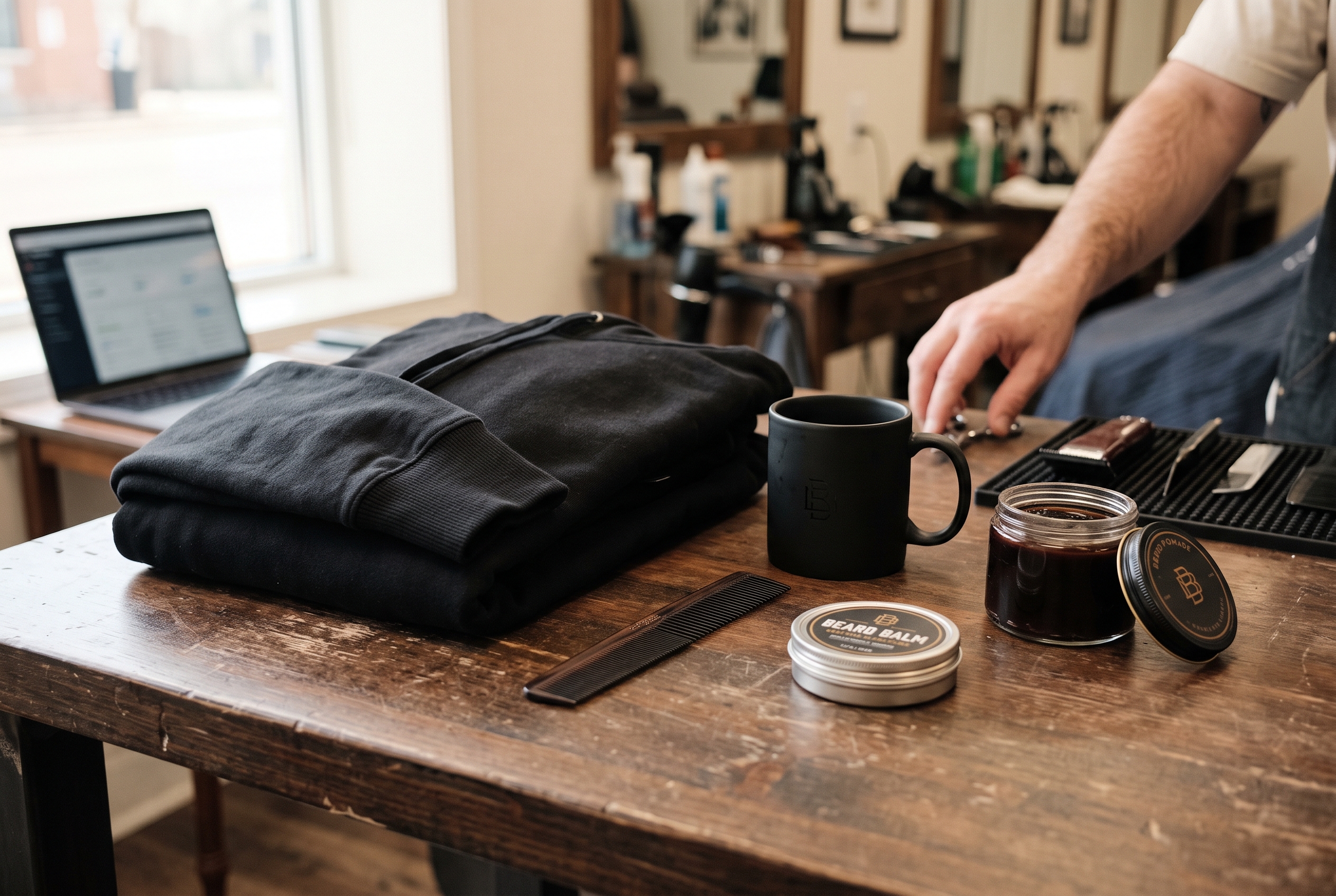
Barber retail products that reorder
These are the core of any grooming products online store. They're used up, so customers come back.
- Pomade, clay and paste. Pick two or three holds (matte clay, medium shine, strong hold) rather than ten.
- Beard oil and balm. Easy to ship, high margin, and perfect for a three-scent range.
- Shampoo, conditioner and tonic. Good for bundles with a cut.
- Combs, brushes and neck dusters. Low cost, solid add-ons at checkout.
Barbershop branded apparel and accessories
Barbershop branded apparel works because barbers have identity. Clients wear the shop like a team jersey. Start with:
- Heavyweight tees and hoodies with a simple logo
- Dad hats and beanies
- Barber capes and aprons (a good seller to other barbers)
- Mugs, stickers, and enamel pins
Print-on-demand lets you test designs without holding inventory. Order a sample of everything before you list it, because quality problems cost you more than the sample does.
Barbershop gift cards online
Barbershop gift cards online are the easiest product you'll ever sell. No shipping, no stock, and 100% of the card value is a future visit. Offer fixed amounts ($25, $50, $100) plus a custom value. Push them hard in late November and early December, and before Father's Day. Some cards are never redeemed, but check your local gift card laws before counting on that money, since many places restrict expiry dates and require unused balances to be reported.
A worked example: a two-chair shop with 8 products
Here's an illustrative scenario, not a real shop's results. Imagine a two-chair shop with about 120 regular clients that lists two pomades, three beard oils, a hoodie, a cap and gift cards. If 15 clients reorder one $15 product each month, that's $225 in revenue. Add 10 beard oil bundles at $28 and 6 gift cards at $50, and monthly sales reach about $800. With product costs near 40% on consumables, the shop keeps roughly $450 to $500 before shipping and fees. It's not life-changing, but it can cover a chair rental or a month of supplies. Use your own client count and prices to build the same quick model before you commit to stock.
How to Sell Beard Oil and Pomade Online
To sell beard oil online or sell pomade online, you need a legal label, clear photos, honest descriptions, and a shipping plan that doesn't eat your margin. Skip any of those and returns pile up.
Choose your sourcing model
The margins below are rough ranges based on common retail pricing practice, not guarantees. Your real numbers depend on supplier quotes, order size and shipping, so get written quotes before you commit.
| Model | Upfront cost | Typical margin range | Best for |
|---|---|---|---|
| Resell wholesale brands | Medium | About 40-50% of retail price | Barbers who already stock brands |
| Private label | Higher (minimum orders) | Often 60-70% of retail price | Shops with a strong local name |
| Make your own | Low to medium | Highest, but time-heavy | Barbers who enjoy formulating |
| Print-on-demand apparel | Near zero | 20-40% of retail price | Testing merch designs |
Reselling is the fastest start. Private label is where the real margin lives. If you make your own, check labeling rules for cosmetics. The U.S. Food and Drug Administration regulates cosmetic labeling and ingredient listing, and you're responsible for compliance even as a small shop.
Cover the legal and liability basics
Selling products you apply to skin and hair carries more risk than selling mugs. Before launch, work through this checklist:
- Labels. In the U.S., cosmetic labels generally need the product name, net quantity, ingredients in descending order, and the business name and address. Ask your supplier whether private-label products arrive compliant.
- Claims. Avoid claiming a product treats hair loss or heals skin. Those claims can push a cosmetic into drug territory.
- Product liability insurance. If you make or private-label products, your shop's general liability policy may not cover them. Ask your insurer about product liability coverage, and ask whether reselling other brands is included.
- Ingredient lists and allergens. Show full ingredients on the product page so clients with sensitivities can check before buying.
- Batch records. If you make your own, note the date, recipe and batch number so you can trace any complaint.
- Licenses and tax. Retail sales usually need a seller's permit and a business license, covered in the setup steps below.
Rules vary by country and state, so confirm the details with your local authority or an accountant.
Price for profit
A simple rule of thumb: price at 2 to 2.5 times your cost, then check that shipping doesn't wreck it. A $6 jar of pomade sold at $15 leaves room for packaging and a free-shipping threshold of $40. That threshold nudges clients to add a comb or a second scent. A non-obvious tip: price bundles (pomade plus comb, or oil plus balm) so the bundle's margin beats buying separately, since the extra item costs you little to pack.
Write descriptions that sound like you
Say what the product does on real hair. "Matte finish, strong hold, washes out with water, works best on short-to-medium cuts" beats "premium grooming excellence." Add scent notes for oils and balms. If you need a starting point, these ChatGPT prompts for product descriptions will get you a clean first draft you can edit in your own voice.
Handle shipping carefully
Liquids leak. Use sealed caps, bubble mailers aren't enough for glass, and a small box with padding is cheap insurance. Weigh your packed products and offer flat-rate shipping to keep checkout simple. Check carrier rules for any aerosol products, since many sprays can't go by air.
How to Set Up Your Barbershop Online Store
You need a store with a catalog, secure checkout, gift card support, and an admin you can run from your phone between clients. Setup should take hours, not weeks.

- Define your range. Start with 8 to 15 products. Three pomades, three beard products, two apparel items, gift cards.
- Photograph in your shop. Natural window light, a clean wood or concrete surface, and one lifestyle shot per product. Your shop is your brand, so use it.
- Set up payments. Stripe handles cards and Apple Pay. PayPal is worth adding for older clients.
- Add gift cards. Make them front and center on your homepage.
- Configure shipping and tax. If you're unsure about collecting tax, read our guide on whether you need a sales tax permit to sell online, and check business license requirements for your area.
- Add local pickup. Clients can order online and grab it at their next cut. See how to set up local delivery and pickup.
- Test an order yourself. Buy something, check the email, and confirm it reaches your phone.
On platform choice, be honest about total cost. Shopify's base plans are listed on its pricing page, but abandoned cart recovery, wishlists, and reviews often mean paid apps on top. For a barber with a small catalog, that stack adds up. Rovela is built for this kind of store: you describe your shop in plain words, and it generates the storefront, catalog, Stripe checkout and admin dashboard, with abandoned cart and reviews included. Whatever you pick, avoid platforms that charge commission on every sale.
How to Get Your First Barbershop Merch Sales
Your first sales come from the people already in your chair, not from ads. Tell them, show them, and make it easy to buy in under a minute.
- Put a QR code at every chair and the register. Link it to your best-selling product or gift cards.
- Add a card to every haircut. "Your pomade, reordered in 30 seconds."
- Recommend by hair type. Tell each client which product you used and why, then text or hand them the link while the cape is still on. A specific recommendation converts better than a shelf display.
- Post the work. A fade photo with the product used in the caption sells better than a product shot. If Instagram is your main channel, our guide on selling clothes on Instagram applies directly to merch drops.
- Run a limited drop. A numbered batch of 50 hoodies creates urgency without risk.
- Collect emails. A 10% first-order code gives you a list you own, which beats any follower count.
- Claim your Google Business Profile. Add a link to your store so local searches turn into orders.
Common questions
Do I need a business license to sell grooming products? Usually yes, and cosmetics you make yourself may carry extra rules. Check your state or country's requirements before launch.
How much can a barbershop make from retail? Use the worked example above as a model: a small shop with around 120 regulars might reach several hundred dollars a month from a tight range, with gift cards and bundles lifting that figure. Treat it as a planning scenario, not a promise, and track your own numbers for 90 days before judging.
Should I sell on Amazon instead? Amazon brings traffic but takes fees and owns the customer. Your own store builds a list and a brand. You can do both once your store works.
What if I don't have a product line yet? Start with apparel and gift cards. They need no formulation and almost no upfront cash. Our post on how to pick a winning product can help you narrow down.
Start Your Barbershop Store This Week
Selling barbershop merchandise online comes down to a short list of decisions: a tight product range, fair pricing, clear photos, and a store that makes buying easy. Start with gift cards and one best-selling pomade or beard oil, then add apparel once orders prove the demand.
If you'd rather not wrestle with themes and apps, Rovela can build your barbershop online store from a plain-language description, with checkout, gift cards, and the admin included on one flat subscription and no commission on sales. Check Rovela's pricing or start from the homepage and see your store before you commit. Your clients already trust you. Give them somewhere to buy.
