By El Ghali Bennis · Published
Same Day Delivery for Small Business: Setup That Works
Set up same day delivery for small business with cutoff times, zip code zones, slot limits and the right driver mix. Get the numbers to start.
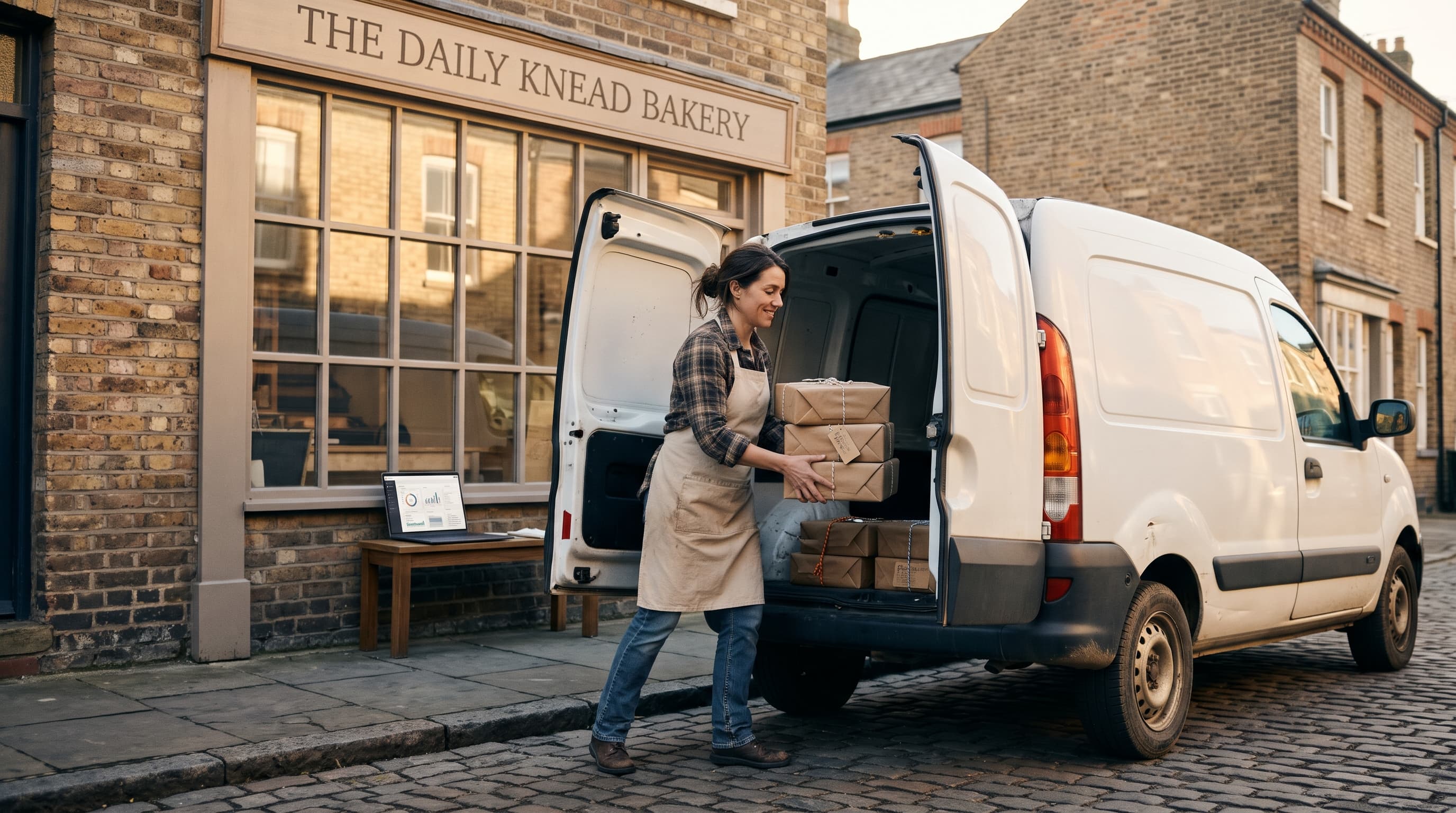
Same day delivery for small business works when you limit it: a fixed order cutoff time, a tight delivery radius, a few booked time slots, and a cap on orders per slot. You don't need a fleet. You need rules your checkout enforces automatically, so promises match what your team can physically deliver.
Most small shops get this wrong in one of two ways. They promise "same day" everywhere and miss half the deadlines, or they skip it entirely and lose orders to the nearest competitor who says yes. This guide walks through the decisions in the order you should make them, with numbers you can adapt. The figures below are working rules of thumb drawn from common small-shop setups, not industry-audited benchmarks, so time your own operation and adjust.
What does same day delivery for small business really require?
It requires four things: a cutoff time, a service area, a delivery method, and a way to show customers only the options you can fulfill. Everything else is detail.
Think of it as a promise with boundaries. "Order by 1 p.m., delivered between 4 and 8 p.m., within 8 miles" is a promise you can keep. "Same day!" with no conditions is a complaint waiting to happen.
Before you build anything, check the basics:
- Stock accuracy. If your shelf and your website disagree, same day falls apart. Our guide to syncing in-store and online inventory covers this.
- Pick and pack time. Time one real order from click to sealed bag. Many small shops land between 10 and 20 minutes, but your own stopwatch beats any average.
- Who drives. You, a part-timer, or a courier. This changes your costs more than anything else.
- Which products qualify. Plenty of businesses limit same day to in-stock, small, non-fragile items.
How do you set an order cutoff time for same day delivery?
Work backward from your last delivery window. Subtract driving time, packing time, and a buffer. If your last route leaves at 5 p.m., you need to stop taking same day orders around 2 or 3 p.m.
Here's a simple formula: cutoff = last departure − route time − packing time − 30-minute buffer. A florist whose last van leaves at 4 p.m., with a 60-minute route and 20 minutes of packing, should set the order cutoff time at about 2:10 p.m. Round it to 2 p.m. Round down, never up.
Choose one cutoff, then test it
Start with a single cutoff. Adding morning and afternoon cutoffs makes sense later, once you see when orders actually land. Check your order timestamps for a month. If 40% of orders arrive after 3 p.m. and you cut off at 2, you've found either a problem or a reason to add a next-day option.
Show the countdown at checkout
A line like "Order within 2 hrs 14 min for delivery today" lifts urgency and prevents disappointment. Whatever platform you use, display the cutoff on product pages and in the cart, not only at the final step.
How big should your same day delivery radius be?
Start smaller than feels natural. A delivery radius for small business of 5 to 10 miles around your shop or kitchen is typical for dense areas, and 15 or more only works in rural zones with fewer, larger orders.
The radius is really a time limit in disguise. Measure drive time at 4 p.m. on a weekday, not on a Sunday morning. If you can cover a stop in 20 minutes or less, it belongs in your core zone.
Use zip code delivery zones instead of a circle
Circles ignore rivers, highways and traffic. Zip code delivery zones are easier to explain and enforce. A customer types a postal code and instantly sees what's available. A common setup looks like this:
| Zone | Distance | Delivery option | Typical fee |
|---|---|---|---|
| Zone 1 | 0-5 miles | Same day, 2 windows | $4-$6 |
| Zone 2 | 5-10 miles | Same day, 1 window | $7-$10 |
| Zone 3 | 10-20 miles | Next day only | $8-$12 |
| Outside | 20+ miles | Standard shipping | Carrier rates |
These fees are illustrative starting points. For a full breakdown of what covers your costs, read how much to charge for local delivery.

How do delivery time slots and capacity limits work?
Delivery time slots in an online store let customers pick a window, such as 12-3 p.m. or 4-7 p.m. Each slot has a capacity, the maximum orders you'll accept, so you never overbook your driver.
Capacity per slot is the part most people skip, and it causes most late deliveries. Calculate it from your route. If one driver averages 12 minutes per stop including parking and handoff, a 3-hour window holds about 15 stops at the very most. Cut that by 20% for real life: 12 orders.
Keep windows wide enough
Two- to four-hour windows are realistic for a small team. One-hour windows sound premium but multiply your failure points. Offer them only when you have a dedicated driver and a tight zone.
Build slots around your day
- List the hours your driver is actually free.
- Split them into two or three windows.
- Assign capacity to each, based on stops per hour.
- Close a slot automatically once it fills, and let it reopen if an order is cancelled.
- Block slots for holidays, staff leave and peak days like Valentine's Day.
This is what local delivery scheduling in ecommerce comes down to: your store reading your real capacity and hiding what you can't deliver. If you're still setting up the basics, our local delivery setup guide covers the full store configuration.
Own drivers vs courier for local delivery: which is cheaper?
Own drivers are cheaper per stop once you pass roughly 10 to 15 deliveries a day. Below that, a courier or on-demand service usually wins because you pay only when an order ships and carry no idle time. Treat that threshold as a starting estimate: divide your driver's hourly cost, including fuel and insurance, by stops per hour, then compare it with the courier quote.
The trade-off is control against flexibility. Your own driver knows your customers and can handle gifts or fragile items with care. A courier scales on busy days without a hiring decision.
| Factor | Own drivers | Courier / on-demand |
|---|---|---|
| Best volume | 10-15+ deliveries/day | Under 10/day or spiky |
| Cost model | Wages, fuel, insurance | Per delivery fee |
| Brand experience | High control | Varies by driver |
| Slot reliability | You set it | Depends on availability |
| Peak-day scaling | Hard | Easy |
If you drive yourself, check your insurance. The IRS standard mileage rates page sets the per-mile rate you can use to deduct business driving, which also gives you a handy per-mile cost to build into fees. Personal auto policies often exclude commercial delivery, so ask your insurer before the first run.
A hybrid works for many shops
Run your own route for Zone 1 and use a courier for Zone 2 or overflow. A café selling coffee and pastries might deliver nearby orders on the owner's lunch break and hand outliers to a courier. Fewer fixed costs, fewer missed windows.
How do you package perishables and prove delivery?
Same day often means food, flowers or other perishables, and these need extra care because they sit in a vehicle for hours.
- Insulate by product. Use insulated bags and reusable ice packs for chilled items, and sturdy boxes with dividers for baked goods. Keep hot and cold orders in separate bags.
- Protect flowers. Keep stems in water or hydration tubes and deliver upright in a crate so arrangements don't shift.
- Seal and label. A tamper-evident sticker with the order number and delivery window prevents mix-ups on multi-stop routes.
- Limit time in the vehicle. Load in stop order, last delivery first, and keep perishable orders in the earliest slot.
Proof of delivery
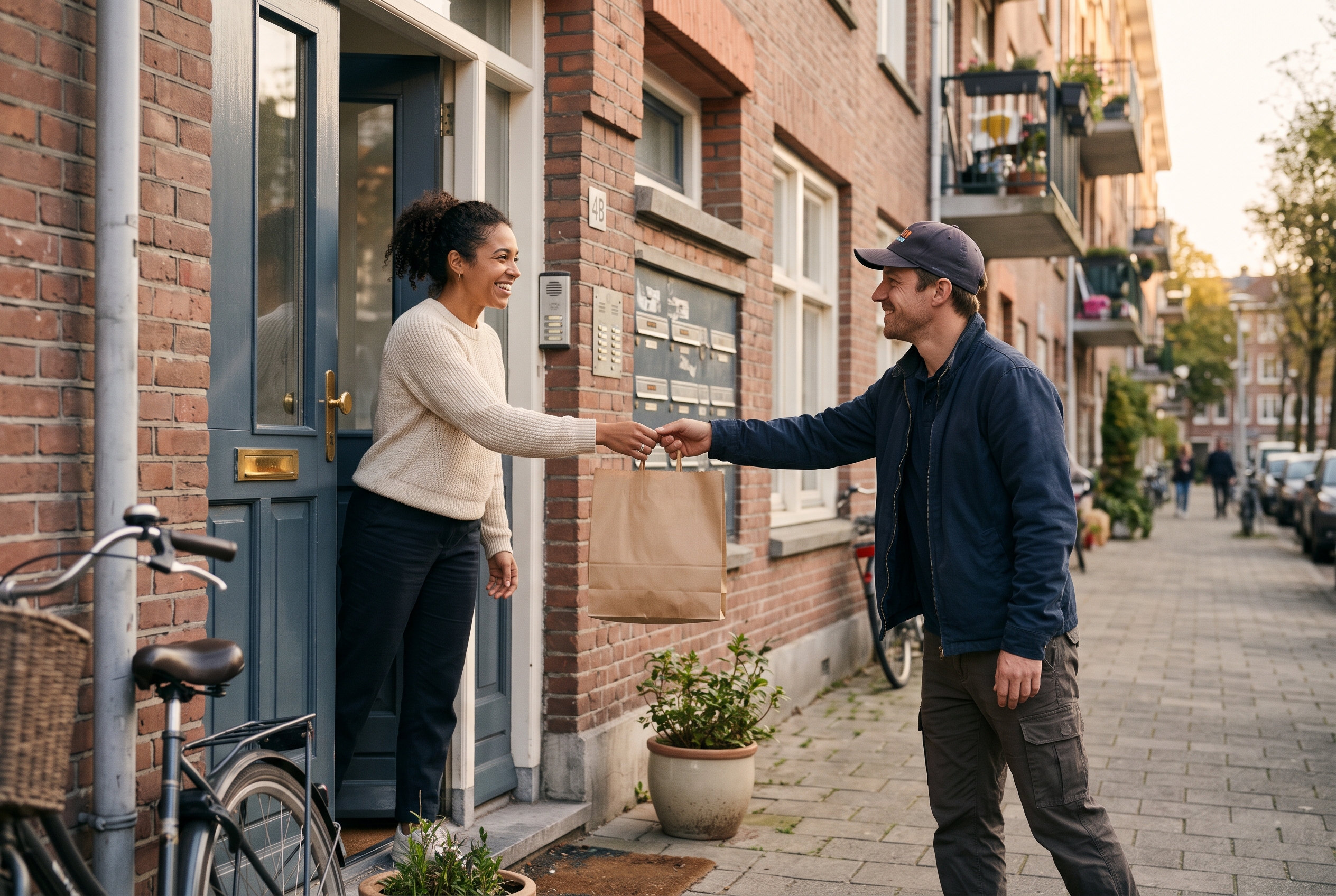
A photo of the package at the door, timestamped, settles most "it never arrived" disputes. Add a signature or a handoff code for higher-value or age-restricted items. Save the record with the order so support can answer in seconds. If a customer isn't home, follow your failed delivery policy rather than leaving perishables outside.
Route tools for small teams
You don't need enterprise software. A free map app that lets you add multiple stops is enough for one driver with under ten stops. Beyond that, a route planner app that optimizes stop order and sends customers a live arrival link can save real driving time and cut "where is my order?" messages. Pick one that exports a delivery log so you can review late runs weekly.
What if you can't offer same day? Next day local delivery setup
Next day local delivery is the easiest upgrade from standard shipping. Orders placed after cutoff roll into tomorrow's route, which lets you batch stops, fill slots evenly, and cut cost per delivery.
Here's how to set it up in five steps:
- Define the cutoff. Anything after your same day cutoff becomes next day automatically.
- Open tomorrow's slots at midnight. Customers see real availability, not a vague promise.
- Batch routes by zip code. Group stops so your driver covers one area at a time.
- Send a confirmation and a reminder. An email with the window, plus a text the morning of delivery, cuts failed handoffs.
- Review weekly. Track late deliveries, empty slots and refund requests, then adjust capacity.
Many shops find next day batching is cheaper enough that they lower the fee, which improves conversion. And if customers want to skip delivery altogether, offering click and collect gives them a fast alternative at almost no cost to you.
Common questions
Should same day delivery be free? Rarely. Free delivery works as a threshold, such as free over $60, with the cost folded into your prices. Our online vs in-store pricing guide covers how to do that without hurting margins.
What if a customer orders after cutoff? Show them the next available slot automatically. Never accept the order with a promise you can't keep.
Can I limit same day to certain products? Yes, and you should. Restrict it to in-stock items you can pack in minutes.
How do I handle failed deliveries? Set a policy up front: one retry, then pickup or a redelivery fee. Put it in your checkout terms.
Start your same day delivery for small business plan
Start narrow: one cutoff, one or two zones, two time slots, and a capacity number you trust. Run it for a month, read the data, then widen it. Same day delivery for small business isn't about speed at any cost. It's about a promise your team can keep every day.
If you'd rather not wire this together by hand, Rovela builds a complete store from a plain-language description, including checkout and shipping tools, and you can ask in chat to adjust your delivery rules as your capacity changes. Check pricing to see what's included.