By El Ghali Bennis · Published
How Much to Charge for Local Delivery (2026 Guide)
Not sure how much to charge for local delivery? Work out your real cost per run, pick a fee model, and set a free-delivery minimum.
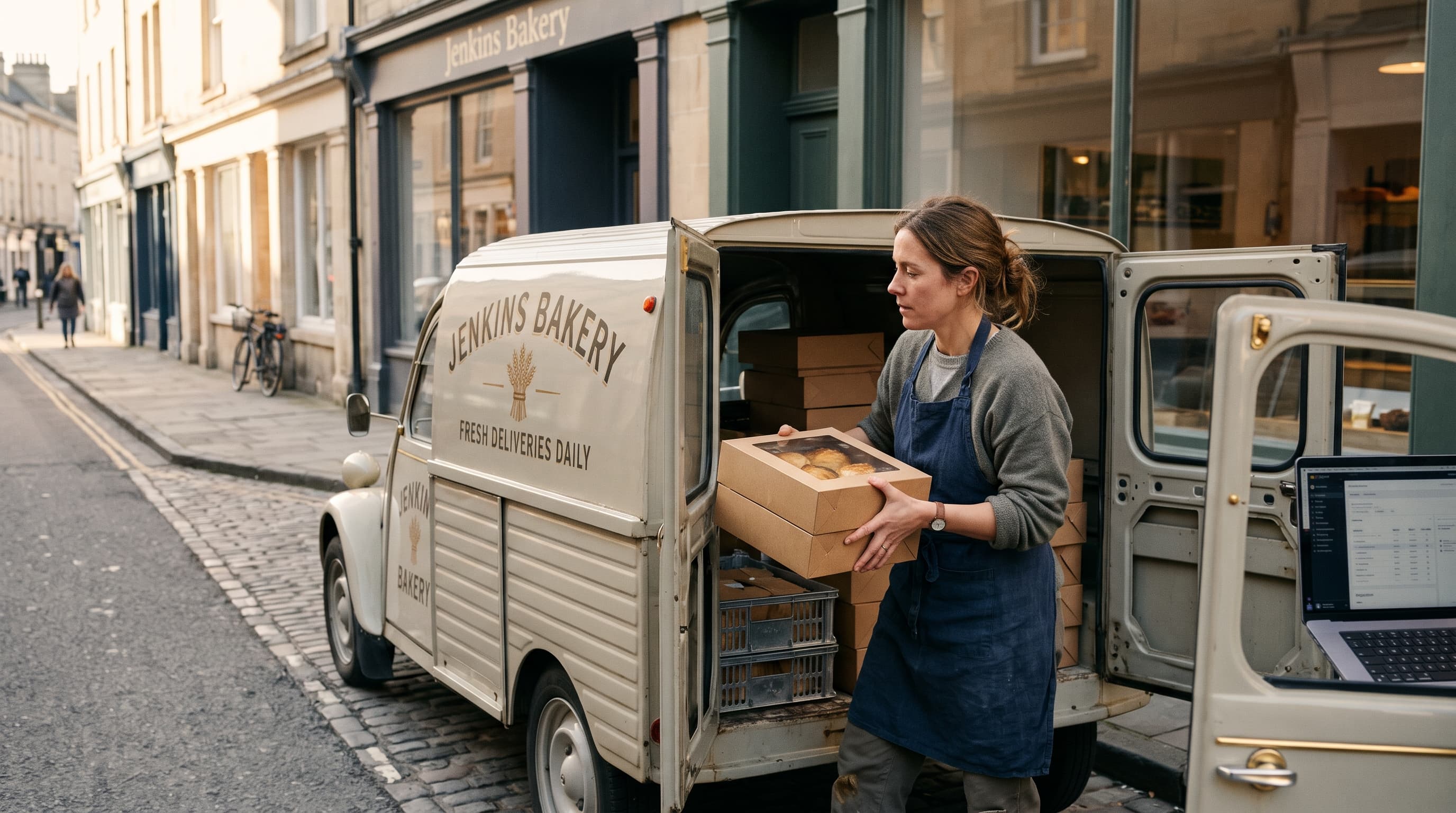
Most small businesses charge $3 to $10 for local delivery, usually a flat fee for nearby zones that rises with distance. That range is a common rule of thumb from typical small-shop cost structures, not a fixed standard. The right number is your real cost per delivery (driver time, fuel, packaging) compared with what a typical order margin can absorb. Add a free-delivery minimum to lift order size.
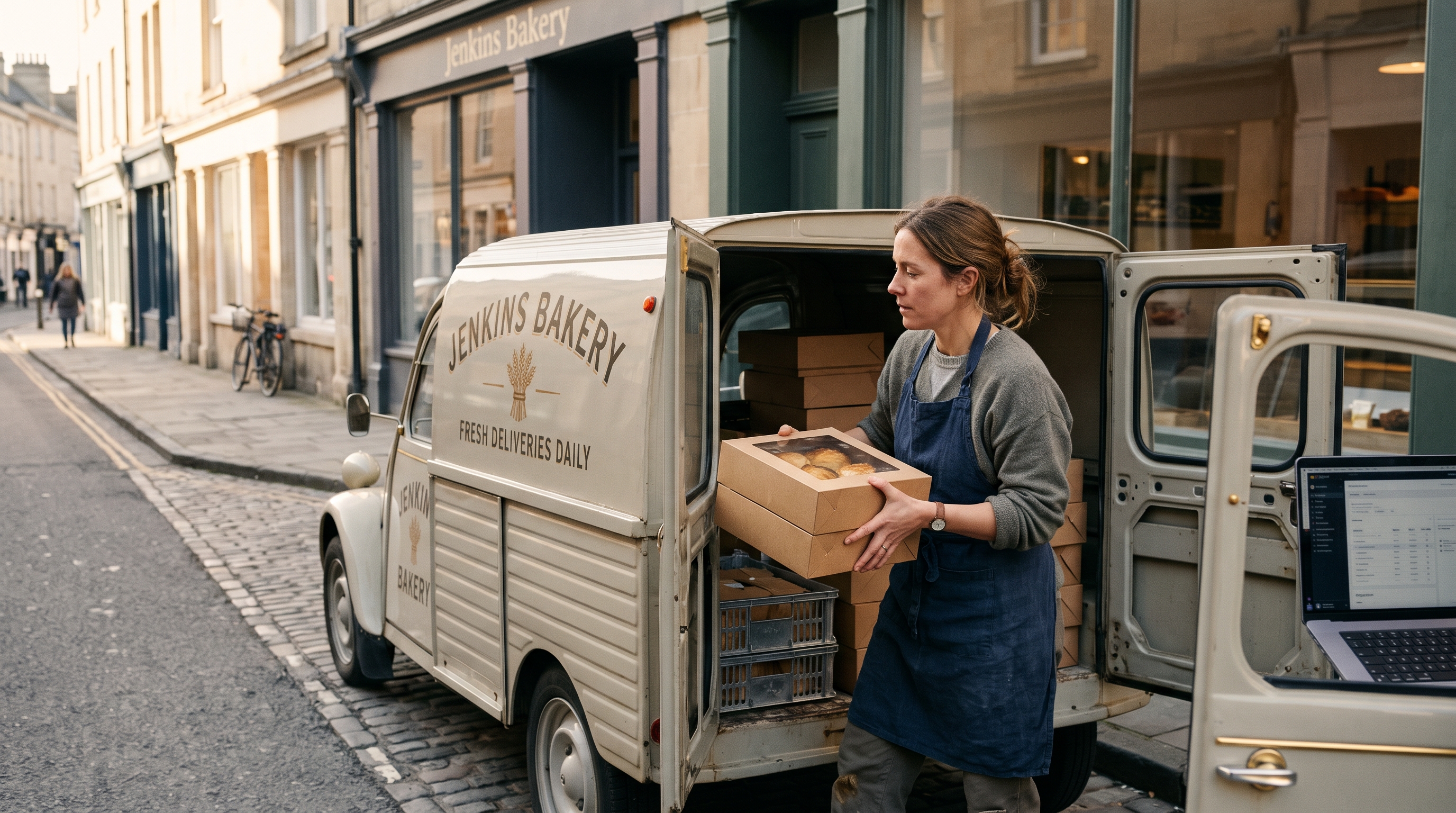
This guide walks you through the math, a worked example, the main pricing models, and how to set a minimum order for local delivery that doesn't scare customers off. You'll also see how to handle zones, zip codes, and the question every owner asks first: should I charge for delivery at all?
Should I Charge for Delivery at All?
Yes, in most cases, unless your margins or order sizes clearly absorb the cost. Delivery isn't free to you. Someone's time and fuel pay for it, and if you hide that cost inside your prices, you overcharge pickup customers to subsidize delivery customers.
There are exceptions. If your average order is $120 and your gross margin is 55%, that order produces $66 of gross profit, so a $6 delivery run is easy to swallow. If you sell $18 candles at a 50% margin, you make $9 of gross profit, and a $9 run wipes it out. Free delivery works when the order is big enough to carry it.
Baymard Institute's checkout research consistently lists unexpected extra costs, such as shipping, taxes, and fees, as the top reason shoppers abandon carts, ahead of every other factor it tracks. So the goal isn't to avoid fees. It's to show them early and make them feel fair.
A quick decision rule
- Average order under $30: charge a flat fee and set a free-delivery threshold well above your average.
- Average order $30 to $80: charge a small fee for close zones, free above a minimum.
- Average order over $80: free local delivery is often affordable, especially with a minimum.
How to Price Delivery for Online Orders: Start With Your Cost
Your delivery fee should start from one number: cost per delivery. Calculate it before you look at what competitors charge.

Use this simple formula:
- Labor: minutes per delivery (including loading and handoff) multiplied by hourly wage. A 30-minute run at $18/hour costs $9.
- Vehicle: miles driven multiplied by the mileage rate. The IRS standard mileage rate, published at irs.gov, is a reasonable benchmark for what a mile of driving really costs. It has been in the range of 65 to 70 cents per mile in recent years, so check the current figure.
- Packaging: bags, boxes, cold packs, labels.
- Payment fees: Stripe's standard card processing is published on its pricing page at stripe.com/pricing. In the US it has typically been about 2.9% plus 30 cents per card transaction, and it applies to the delivery fee too.
Worked example: a florist sets a delivery fee
Say a florist averages $70 per order and delivers within 6 miles. Here is the cost of one typical solo run, using the formula above:
- Labor: 30 minutes at $18/hour = $9.00
- Vehicle: 8 miles round trip at $0.67/mile = $5.36
- Packaging: sleeve, water tube, box = $1.50
- Payment fee on a $10 delivery fee: about $0.59
Total cost per solo delivery: roughly $16.45. Charging $16 would scare most customers, so the florist does two things. First, batch: three orders on one 45-minute, 12-mile loop costs about $13.50 labor, $8.04 vehicle, $4.50 packaging, and $1.77 payment fees, or about $27.80 in total, which is $9.27 per order. Second, set a $10 fee for the outer zone and $6 for the inner zone, with free delivery at $120. Batched, the $10 fee covers about 100% of cost, and the $6 fee covers roughly 65%, which the order margin absorbs. That is the whole method: cost first, then fee, then threshold.
Batch deliveries to cut cost
The biggest lever isn't the fee, it's route density. As the florist example shows, three orders in one neighborhood can cost about $9 each, while the same order alone costs closer to $16. Offer delivery windows (say Tuesday and Friday afternoons) and your cost per drop falls fast.
If you're still working out the setup side, our guide to an online store with local delivery covers zones, scheduling, and pickup options.
Flat Rate vs Distance-Based Delivery Fee
A flat rate is easier to explain and sell. A distance-based fee is more accurate and protects you on long runs. Most small shops do best with a hybrid: flat fees by zone. The fees below are illustrative ranges built from the cost formula above, not survey data.
| Model | Typical fee | Best for | Main drawback |
|---|---|---|---|
| Single flat rate | $4 to $8 | Tight service areas (under 5 miles) | You lose money on the farthest orders |
| Distance-based (per mile) | $2 base + $0.75 to $1.50 per mile | Wide areas, bulky or fragile goods | Harder for customers to predict |
| Zone or zip code pricing | $3 / $6 / $10 by ring | Most local shops | Needs a one-time setup |
| Free over a minimum | $0 above threshold | Raising average order value | Threshold must be set carefully |
Delivery charge by zip code
Zip code pricing is the simplest way to run zones. List the postal codes you serve, assign each to a tier, and the checkout does the rest. For example, a neighborhood pizza shop might charge $4 for zips within 3 miles, $7 for zips 3 to 6 miles away, and $11 beyond 6 miles, or simply not serve them.
Zip codes aren't perfect. They vary in size, and a rural zip can span 20 miles. If that's your area, mix zip codes with a maximum distance, or use a radius map instead.
A local delivery fee calculator you can build in five minutes
You don't need special software to model this. In a spreadsheet, make one row per zone with these columns: average miles, average minutes, labor cost, vehicle cost, packaging, and total. Then compare that total to the fee you plan to charge. As a working target, aim for a fee that covers 70 to 100% of cost. Where it covers less than half, raise the fee or raise the minimum.
Free Delivery Minimum Order: How to Set the Threshold
A free delivery minimum order works when it sits 20 to 30% above your current average order value. That nudges customers to add one more item without feeling forced. Treat that range as a starting hypothesis to test with your own orders.
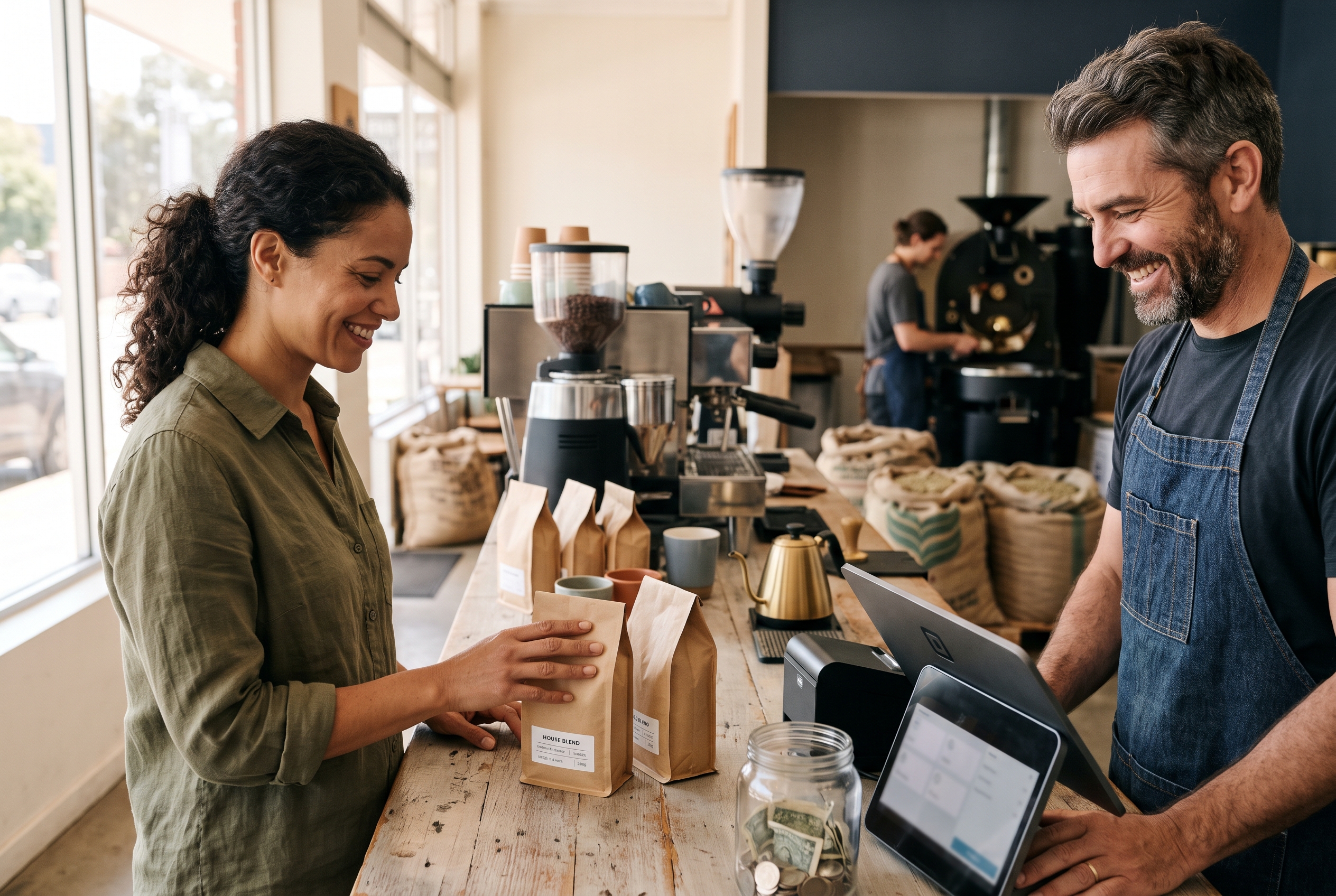
Say your average order is $40. Set free delivery at $50 or $55. A customer at $38 will add a $12 item rather than pay a $6 fee. You earn more margin on the added item than you spend on the delivery.
Here's how to test it:
- Pull your last 90 days of orders and find the average and median order value.
- Set the threshold at about 1.25 times the average.
- Run it for four weeks and watch average order value and delivery volume.
- Adjust in $5 steps. Don't change it weekly.
Minimum order for local delivery
This is different from the free-delivery threshold. A minimum order for local delivery is the smallest cart you'll deliver at all. Shops with expensive runs often set $20 to $25 so a single $9 item doesn't cost more to deliver than it earns. Pair it with a flat fee below the free threshold, and your tiers are clear: under $20, pickup only; $20 to $49, pay a fee; $50 and up, free.
The price-matching question is related. If online orders cost the same as in-store, the delivery fee is the only place you recover the extra work.
Delivery Fee for Small Business: Examples by Type
The right delivery fee for small business depends on order size and margin, not on what a national chain charges. These hypothetical examples show how the same method gives different answers.
| Business | Avg. order | Suggested fee | Free threshold |
|---|---|---|---|
| Coffee roaster | $32 | $5 flat | $45 |
| Salon retail products | $55 | $6 (zone based) | $75 |
| Florist | $70 | $8 to $12 by zone | $120 |
| Grocery or specialty food | $65 | $6 flat | $80 |
| Home goods, bulky | $140 | $12 to $20 | $200 |
These are illustrative starting points based on typical cost structures, not fixed rules or reported averages. Run your own numbers first. If you sell coffee, our piece on how to sell coffee beans online shows how delivery fits alongside shipping and subscriptions.
Common mistakes to avoid
- Pricing from a competitor's fee. They may have a bigger van, denser routes, or a different margin.
- Revealing the fee at the last step. Show a fee estimate on the product or cart page.
- Ignoring tips and wages. If staff drive, count their time, even if it feels free.
- One fee for everything. A $5 fee for a 1-mile run and a 12-mile run guarantees you lose on the second.
- Forgetting rush options. Same-day delivery can carry a $5 to $8 premium.
How Much to Charge for Local Delivery in Your Store
Once you've settled on a model, make it automatic. Manual quotes by text or DM cost time and invite haggling. Your checkout should apply zone fees, the free threshold, and the minimum order on its own.
A good setup shows the fee before checkout, lets customers choose delivery or pickup, and offers delivery slots so you can batch routes. If you're moving from a physical counter to online sales, how to start selling online from a physical store covers the rest of the groundwork.
If you'd rather not stitch this together with apps, Rovela builds a store from a plain-language description, with Stripe checkout and shipping tools included. Tell it your zones, fees, and free-delivery threshold, and change any of them later by chat. You can see plans on the pricing page.
Frequently Asked Questions
What's a fair local delivery fee?
For most small shops, $4 to $8 within a 5-mile radius is fair, with higher tiers beyond that. It's fair when it covers most of your real per-delivery cost and the customer sees it up front.
Should I offer free local delivery?
Only above a minimum. Unconditional free delivery turns small orders into losses. A threshold about 25% over your average order keeps it profitable.
How often should I review my fees?
Every quarter, or whenever fuel, wages, or order patterns change noticeably. Check cost per delivery against the fee you're collecting.
Set a Fee You Can Defend
To recap: calculate your cost per delivery, choose zones over a single flat rate if your area is wide, and set a free-delivery minimum about 25% above your average order. Review it quarterly. A fee that's honest, visible, and tied to real cost beats a guess every time.
When you're ready to put those rules into a live store, Rovela can set up delivery zones, fees, and checkout in hours, without a developer or a stack of paid plugins. Try it and set your first delivery zone today.