By El Ghali Bennis · Published
Gym Merchandise Ideas: 15 Products Members Actually Buy
15 gym merchandise ideas with sample margins, print on demand tips, and a pre-order drop plan to launch your studio merch line.
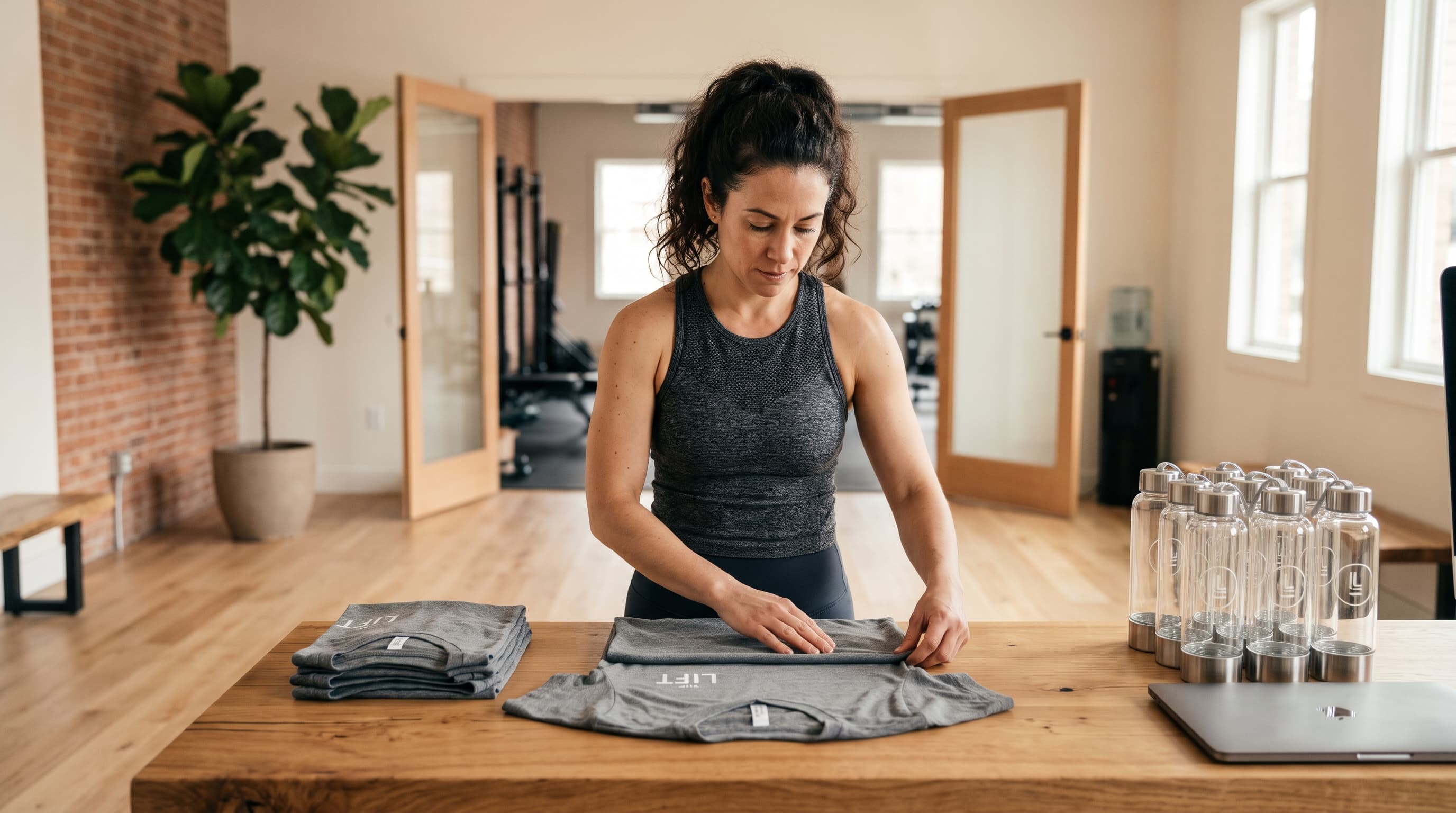
The best gym merchandise ideas are items members already use daily: tees, tank tops, hoodies, water bottles, gym towels, and totes with a clean logo. Start with two or three low-risk pieces, test them through a pre-order drop, and expand only after members prove they'll pay for more.
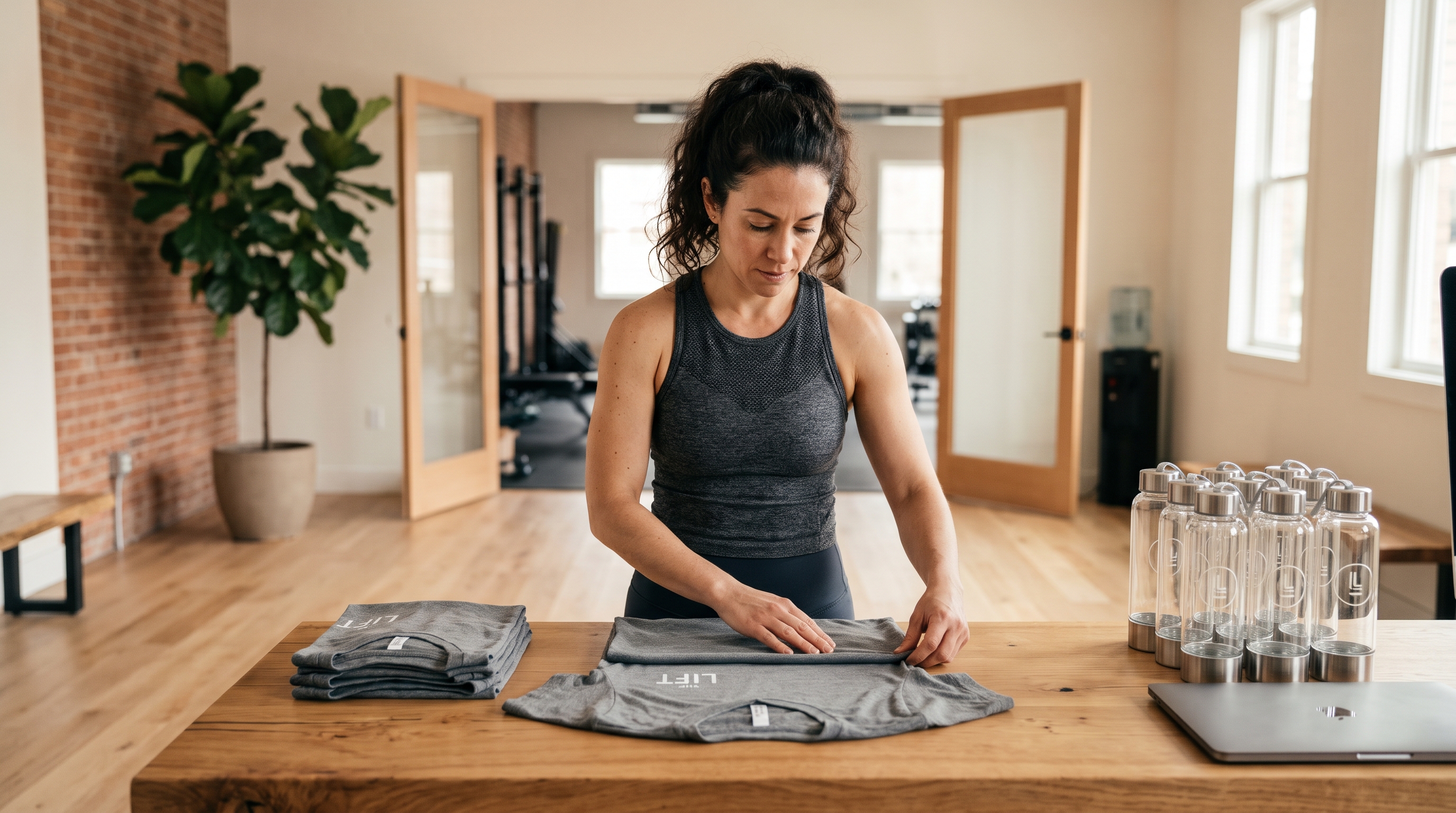
Merch isn't just a side income. It turns members into walking billboards, and it deepens the feeling that your studio is a community instead of a monthly charge. This guide covers what merch to sell at a gym, how to price it, how to produce it without a garage full of inventory, and how to launch it.
Gym Merchandise Ideas: What Merch Should You Sell at a Gym?
Sell what members wear or carry during a workout, plus one or two "identity" pieces they'd wear outside. Apparel leads, followed by hydration and small accessories. Here are 15 ideas that work best for fitness studio merch.
Apparel
- Logo tees. The entry product. Keep the design small and tasteful, since members wear what they'd be happy to be seen in.
- Racerback and muscle tanks. Strong sellers for yoga, barre, Pilates, and CrossFit-style boxes.
- Hoodies and crewnecks. Highest price point and the best margin per sale, especially in fall and winter.
- Joggers and shorts. Harder because of fit, so only add them once tees sell through.
- Caps and beanies. One size fits most, so there's no sizing headache.
- Socks. Grip socks for Pilates and barre studios are a natural fit and easy to restock.
Hydration and gear
- Insulated water bottles. Gym water bottle branding is the safest accessory. Members use them every session, and a bottle sits on the floor next to the mat or rack where other members see it. Choose a powder-coated finish that won't scratch, and a size that fits standard cup holders.
- Gym towels. Small microfiber towels with an embroidered logo feel premium and are cheap to produce. Offer a darker color so sweat and chalk don't show, and consider a zip pocket version for studios with showers.
- Tote and gym bags. Great for carrying shoes, and they travel through the neighborhood.
- Shaker bottles. A fit for strength-focused gyms that sell protein. Pair one with a first-month protein sample and you give new members a reason to come back. Pick leak-proof lids, since a leaking shaker is the fastest way to earn a bad review.
- Yoga mat straps. Niche but loved by yoga members. Many students carry mats on foot or by bike, so a strap with your studio name acts as a moving ad.
- Mat towels. A mat towel solves the slippery-mat problem in hot classes, which makes it easy to explain at checkout.
Small extras
- Stickers. Almost free to make. Add them to every order as a thank-you.
- Challenge-edition shirts. Limited designs for a 30-day challenge or milestone, like "100 classes club."
- Gift cards bundled with merch. A tee plus a class pack makes an easy holiday gift. If you sell packs, see how to sell class packs online.
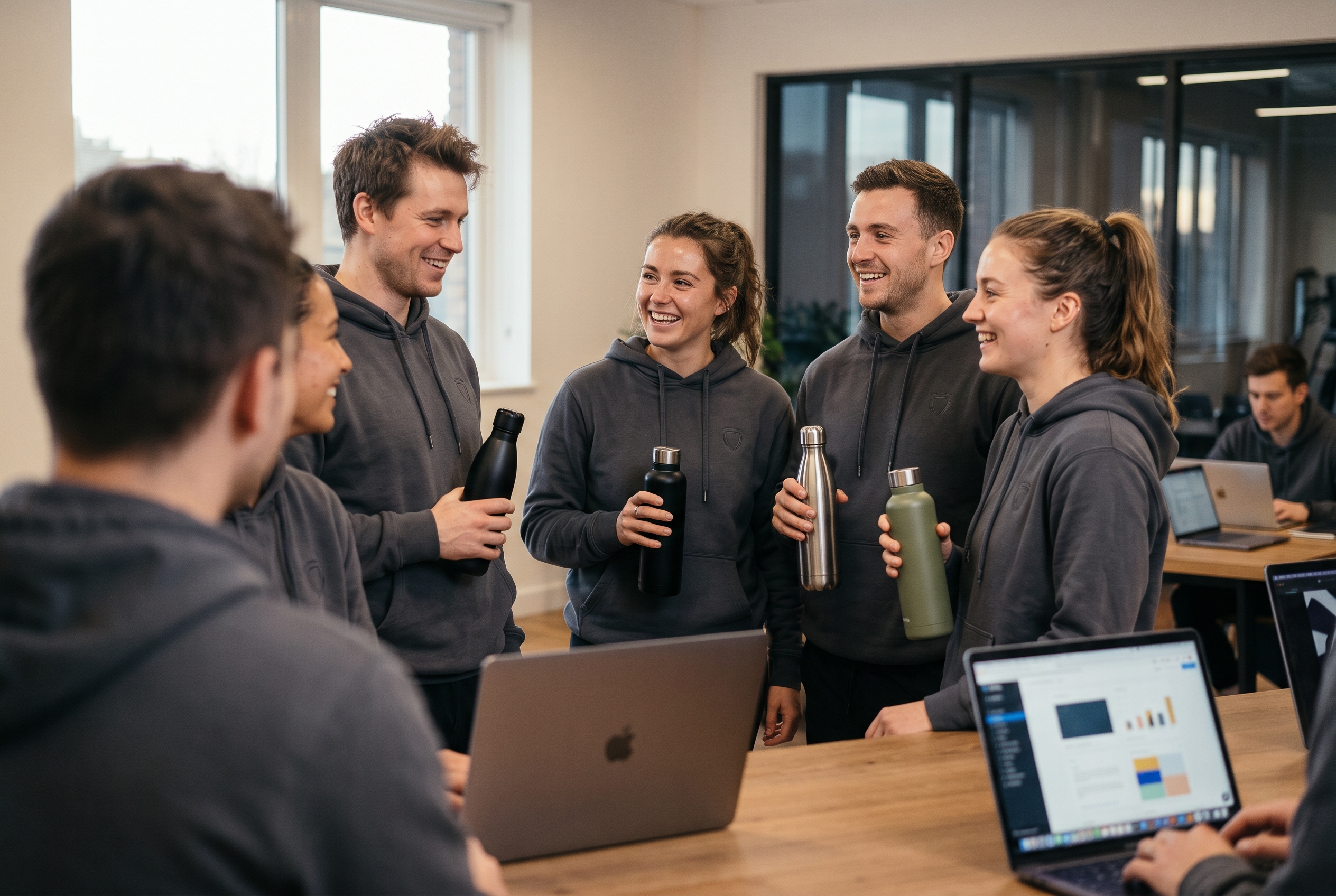
How Much Can Gym Merchandise Earn?
Apparel typically earns a 50-65% gross margin when you price at roughly 2-2.5x your unit cost. That's simple arithmetic, not a guarantee: a 2x markup gives a 50% margin and a 2.5x markup gives 60%. Run your own numbers before ordering.
Here's a sample breakdown. The cost ranges are illustrative planning estimates based on typical wholesale and print-on-demand pricing, not quotes or sourced benchmarks. Get actual quotes from your suppliers and replace these figures.
| Item | Typical unit cost | Suggested price | Approx. margin |
|---|---|---|---|
| Logo tee | $9-$13 | $28-$35 | 55-65% |
| Racerback tank | $10-$14 | $28-$34 | 55-60% |
| Hoodie | $22-$30 | $58-$72 | 55-60% |
| Insulated bottle | $8-$14 | $28-$38 | 60-70% |
| Microfiber towel | $3-$5 | $15-$20 | 70-75% |
| Stickers (pack) | $0.30-$1 | $3-$5 | 80%+ |
A worked example: a 120-member studio
Here's a hypothetical scenario, not a real studio's results. Say a 120-member Pilates studio runs one pre-order drop and 25% of members buy. That's 30 buyers. If each buys one $32 tee and a third (10 buyers) also add a $30 bottle, revenue is $960 plus $300, or $1,260. With unit costs of $11 for tees and $11 for bottles, product cost is $330 plus $110, or $440, leaving about $820 in gross profit before shipping and payment fees.
The bottle shows why add-ons matter. Those 10 bottles brought in $190 of profit on top of the tees, with no extra design work and no new buyers to convince. Add-ons at checkout are often easier than discounting, because you raise the order value instead of cutting the margin on every sale.
The uptake rate is the number to test. Treat 25% as a placeholder, then replace it with your own drop results. If only 10% buy, you still lose nothing with pre-orders, because nothing was produced until payment landed.
For wider benchmarks on retail income, read our breakdown of fitness studio retail profit margins. The takeaway is simple: merch is a brand tool first and a profit line second, but it should never lose money.
Print on Demand Fitness Apparel vs. Bulk Orders
Print on demand fitness apparel means each item is printed only after someone orders it, so you carry zero inventory. Bulk ordering costs less per piece but ties up cash and leaves you with unsold sizes. Most new studios should start with print on demand.

When print on demand wins
- You haven't tested demand yet.
- You want many designs with small volume each.
- Your membership is under roughly 150 people.
- You don't have space to store boxes and ship orders.
When bulk wins
- You've sold out two drops in a row.
- You need embroidery or specialty fabric, such as performance blends.
- You supply uniforms for staff and coaches. Custom workout apparel for studios often looks better with consistent, higher-quality blanks.
Printful and Printify are two well-known print-on-demand providers worth comparing. Check Printful and Printify for current product catalogs, pricing, and shipping times. Order a sample of every item first. A tee that feels scratchy will hurt your brand more than no tee at all.
Design tips for custom gym t-shirts
- Go smaller than you think. A chest-sized or sleeve logo reads as premium.
- Use a mantra, not just a logo. Inside jokes and class slogans sell better than a plain wordmark.
- Limit colors. One or two ink colors keep costs down and look sharper.
- Pick soft fabrics. Tri-blend and ring-spun cotton beat basic heavy cotton for fitness.
- Offer unisex and women's cuts if your members skew either way.
How to Run a Pre-Order Merch Drop
A pre-order merch drop is a limited-time sale where members order before anything is produced. You open orders for 1-2 weeks, close them, then print and deliver. It removes inventory risk and creates urgency. Studio merch drops work because scarcity is real.
- Pick a tight lineup. Three to five products is plenty. More choices slow decisions.
- Preview the design. Post mockups in class, on Instagram, and in your member email list. Ask members to vote on colors.
- Set a clear window. Seven to fourteen days, with an announced close date.
- Set a minimum. If you're doing bulk, define a minimum order count before production. Tell members what happens if you don't reach it.
- Collect payment upfront. Payment at order time protects you.
- Promise a delivery date and add a week of buffer. Offer free pickup at the front desk to skip shipping costs.
- Close and print. Send an update when production starts and another when orders arrive.
Time drops around moments members care about: new-year resolutions, a studio anniversary, a 30-day challenge, or the first cold week of fall. Pair the launch with a coach wearing the pieces in class. Social proof does more than any discount.
One tactic worth trying: let the vote do double duty. When members pick between two designs, they've already committed emotionally. Record votes per option, then compare them to final orders after your first drop. This is a method for building your own data, not a proven benchmark. Over two or three drops you'll have a conversion ratio from your own members, which will serve you better than any rule of thumb from an article.
Where to Sell Your Studio Merch
Sell merch both at the front desk and online. The desk captures impulse buys. An online shop captures members who think of it later, plus alumni and out-of-town fans. If you're new to the idea, our guide to launching a fitness studio online store walks through the setup.
For a sense of what works beyond apparel, see how other studios think about selling products online for a yoga studio. And if you also stock supplements, towels, or gear, look at how to start selling online from a physical store so inventory and checkout stay simple.
Common questions
Do I need a trademark for my gym logo? It's wise to check. Consult a business attorney, and look up the U.S. Patent and Trademark Office database to confirm nobody else holds a similar mark in fitness apparel.
Should staff wear merch? Yes. Coaches wearing it daily is the cheapest advertising you'll get, and it signals that the product is worth buying.
How many units should I order first? With bulk orders, a cautious starting point is about 10-15% of your active member count per design. This is our own conservative rule of thumb, not an industry statistic, so adjust it to your studio. Split units across sizes with more mediums and larges, and reorder once you see real sell-through. With print on demand, the question disappears.
What if merch doesn't sell? Discount it to members, bundle it with a class pack, or give it as a referral reward. Then adjust the next design.
Start Small With Gym Merchandise Ideas That Fit Your Members
The best gym merchandise ideas are simple: a great tee, a bottle people keep, and a limited drop that makes members feel part of something. Start with three products, test with a pre-order, and read the results before expanding.
If you want a place to sell it, Rovela lets you describe your studio in plain words and get a complete store with Stripe checkout, abandoned cart recovery, and an admin dashboard built in. You pay one flat subscription with no plugin bills, and you can see current plans before you decide.