
By El Ghali Bennis · Published
Can Salons Sell Professional Hair Products Online? Rules
Can salons sell professional hair products online? See what brand contracts, MAP pricing and diversion rules allow, plus safe alternatives.
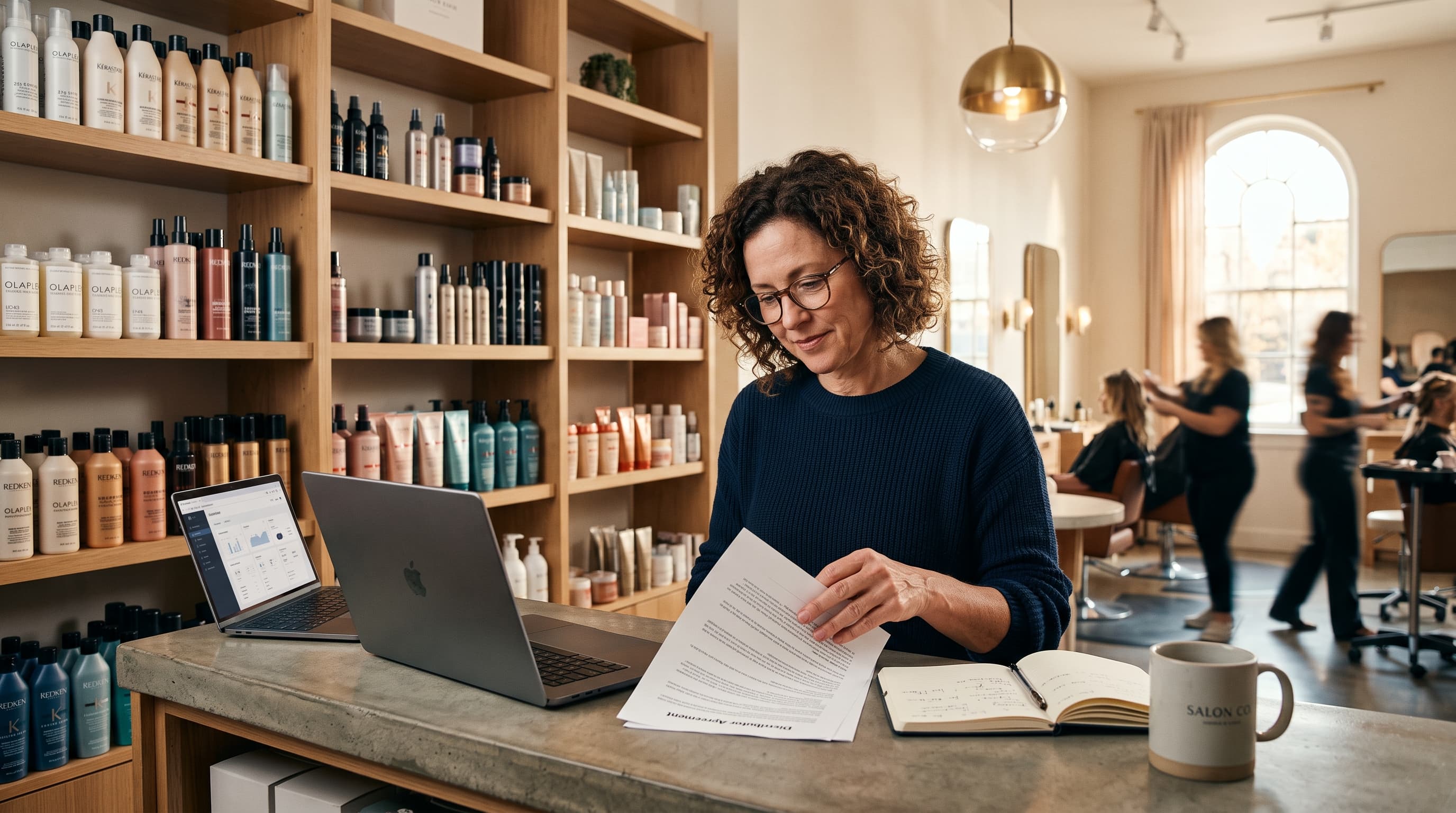
Can salons sell professional hair products online? Yes, in most cases, but only as far as your brand agreements allow. Many pro lines let authorized salons sell on their own website while banning Amazon and marketplaces. Others prohibit all online sales. Your distributor or reseller contract is the final word, not the law.
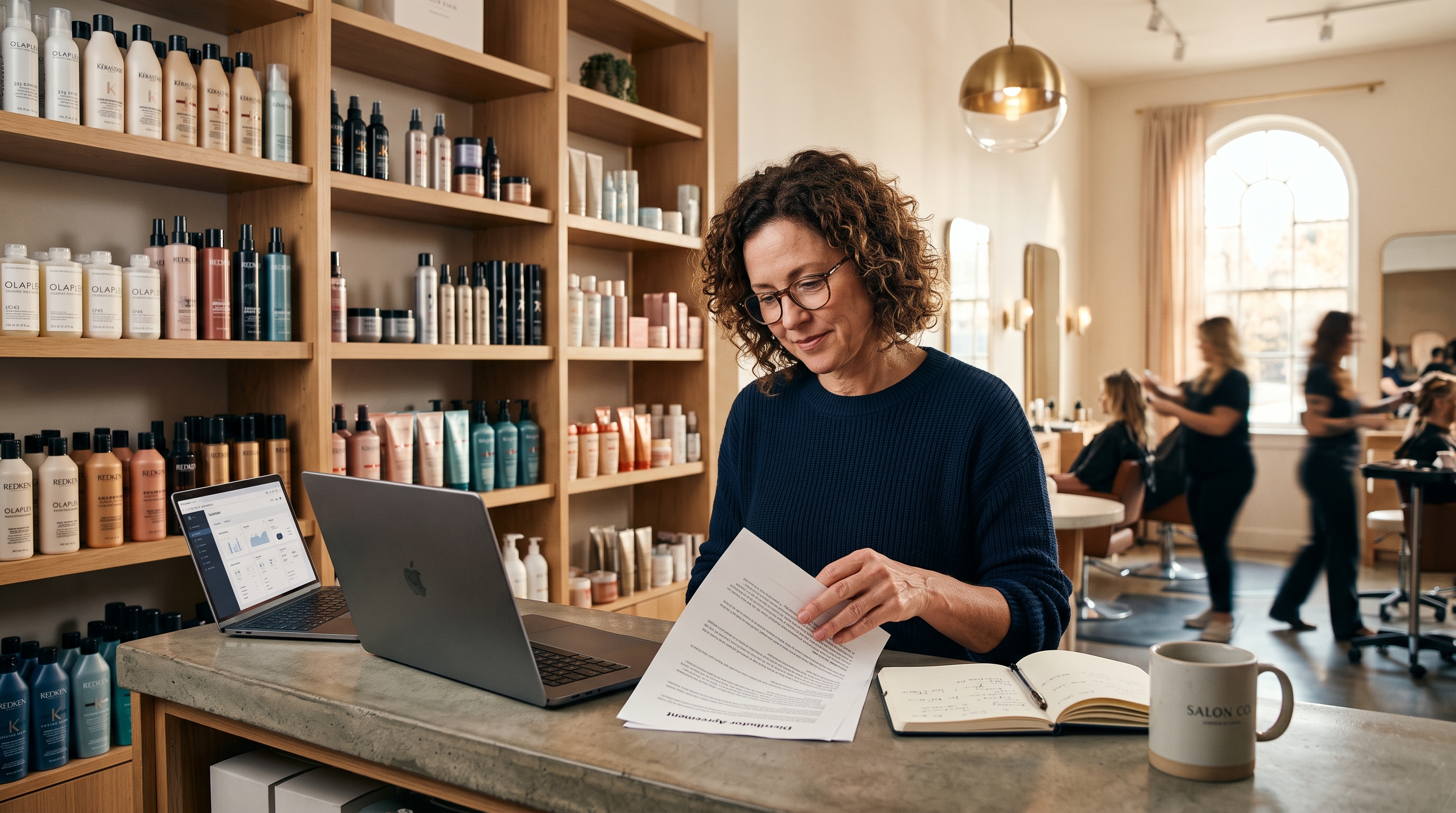
That's the short version. The longer one matters, because a wrong move can get your account closed overnight. Below you'll find how brand restrictions work, what MAP pricing means for your website, how to avoid diversion accusations, and the options you have if your main brands say no.
Can Salons Sell Professional Hair Products Online Legally?
Yes, it's legal. Once you buy product, you own it, and in the US the first-sale doctrine generally lets you resell genuine goods without the brand's permission. But the doctrine has limits. It protects the resale of authentic, unaltered products. It does not protect you if you relabel, repackage, decant or remove batch codes, if the product is materially different from what the brand sells in that market, or if you mislead buyers about your relationship with the brand. And it does not override a contract: if you signed an agreement with a brand or distributor, you can be bound by online-sales rules even where the law would allow the sale.
The Federal Trade Commission oversees truthful advertising and fair competition, and it hasn't banned brands from choosing their authorized sellers. So a brand can say "salon only" or "no third-party marketplaces" and enforce it by cutting you off. Sellers who skip a contract entirely, such as buying from a retailer or a distributor's cash-and-carry, may not be bound by it, but they also lose access to brand support and can face trademark claims if they misuse logos or imply authorization.
Outside the US: the EU and other markets
Rules differ abroad. In the EU, brands may run selective distribution systems, and the European Court of Justice has upheld them for luxury and prestige goods, including a ban on third-party marketplaces in the 2017 Coty case. But EU competition law treats blanket bans on a retailer's own website as a "hardcore" restriction in most cases, and fixing resale prices is also prohibited. So an EU salon may have more room to run its own shop than a US one, while marketplaces remain easier for brands to block. The UK and Canada have their own competition regimes. Get local legal advice before relying on any of this.
Why brands restrict online sales
Professional brands sell through salons because stylists add education, consultation and trust. Brands worry about three things:
- Counterfeits and old stock sold by anonymous marketplace sellers.
- Discounting that undercuts the salons who recommend the product.
- Loss of the consultation, which is the reason the product is "professional" at all.
Understanding that motive helps you negotiate. A brand that fears Amazon discounting rarely objects to a salon site that sells at full price to its own clients.
Common Online Sales Restrictions on Pro Hair Brands
Restrictions usually fall into a handful of patterns, and most contracts mix them. Read for these terms before you build anything.
| Restriction type | What it means | Typical impact on you |
|---|---|---|
| Full online ban | No internet sales at all | In-salon and phone orders only |
| Own-website only | Your branded site is fine; marketplaces are not | You can sell, with rules on photos and pricing |
| Approval required | Brand reviews your site before you list | Short wait, sometimes a fee or training |
| Local shipping limits | Sales only to your clients or region | Limits national shipping |
| MAP policy | Minimum advertised price | You can't advertise below the set price |
What real brand policies look like
Policies vary widely, so check each line directly. Olaplex, for example, has publicly described its products as sold through licensed professionals and authorized retailers, and it has pursued legal action against unauthorized sellers and counterfeiters. Redken and other L'Oréal Professionnel Products Division brands have stated that their products are meant to be sold through salons, with consumer-facing retail limited to authorized channels. Treat these as illustrations, not current terms: policies change, and the only version that binds you is the one in your own agreement or in an email from your rep.
Authorized reseller salon brands
Becoming one of the authorized reseller salon brands' accounts usually means a signed agreement, a licensed stylist on staff, and a physical location. Brands often ask for a link to your site or social page during onboarding. Be honest about your plans. Telling a rep "I'd like to add an online shop for my existing clients" is far safer than being discovered later.
Salon exclusive brands
Salon exclusive brands are lines sold only through licensed salons, and they're the strictest group. Many forbid online sales entirely or limit them to a "client reorder" page. Others allow it once you complete a certification. Ask your rep directly, and get the answer in writing by email.
MAP Pricing for Salon Products and Your Website
MAP pricing salon products policies set the lowest price you may advertise, not the lowest you may sell. For illustration, if a brand's MAP on a shampoo were $32, your website would have to show $32 or more. Breaking MAP is one of the fastest ways to lose an account.
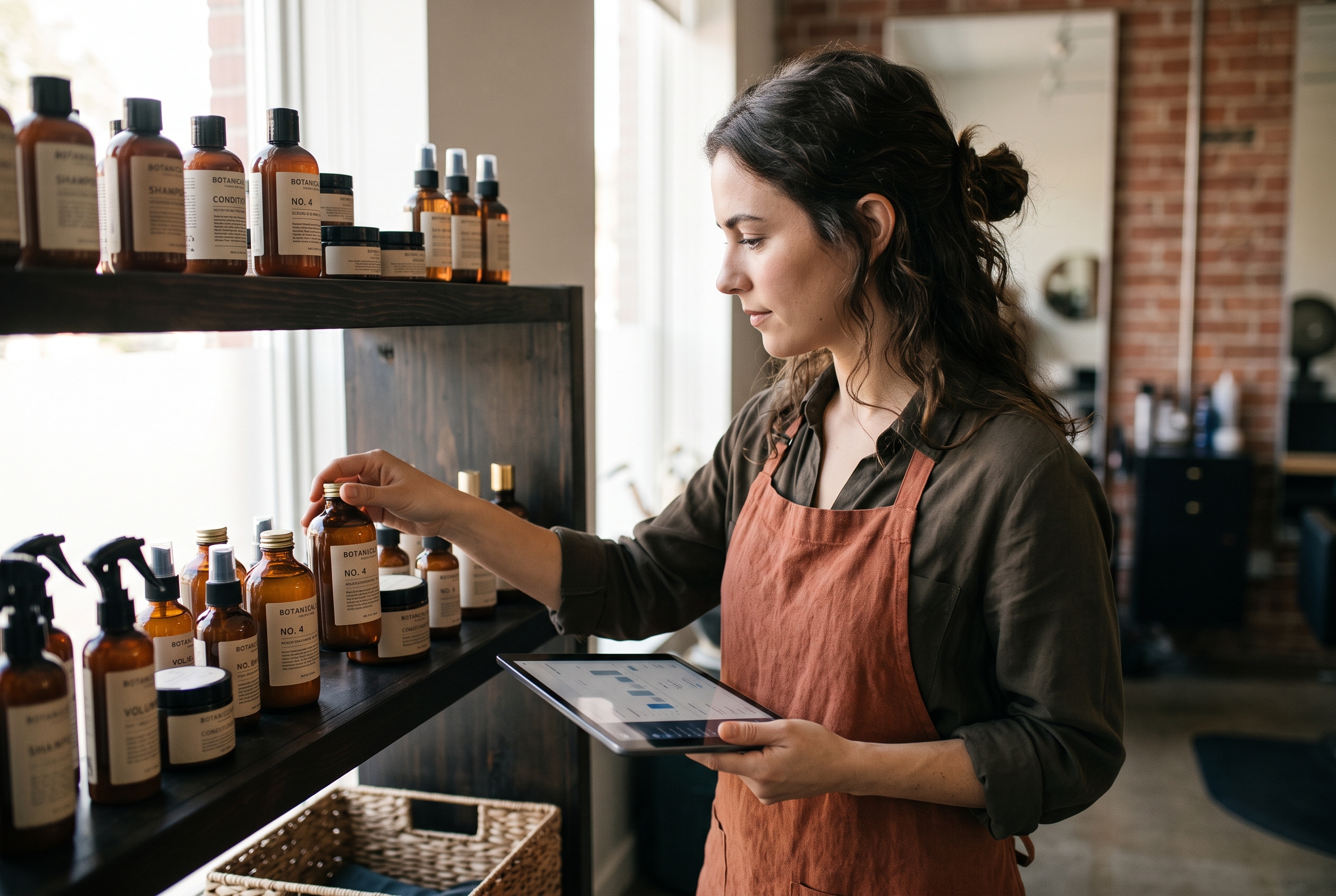
MAP differs from resale price maintenance, where a brand dictates the actual selling price. MAP is a policy about advertising, and brands typically enforce it through account warnings, then suspension. Practical rules to follow:
- Get the current MAP sheet from each brand every quarter.
- Match it on your website, Instagram shop and email campaigns.
- Offer value through bundles, services or loyalty points rather than visible price cuts, if the policy allows it.
- Screenshot your product pages so you can show compliance if challenged.
Check whether your agreement treats "add to cart" prices differently from listed prices. Some brands allow lower prices revealed in the cart. Others count that as a violation.
Diversion of Salon Products: How to Stay Out of Trouble
Diversion salon products means professional product leaving the salon channel and showing up in places like discount retailers or marketplaces. Brands trace it with batch codes, so if diverted stock traces back to you, your account is the one that closes.
Diversion happens in two ways: a salon sells in bulk to a reseller, or a staff member lists stock on a marketplace. You can protect yourself with simple habits.
- Never sell cases or large quantities to anyone who isn't a client.
- Keep a written policy that staff can't resell stock personally.
- Limit online orders per customer, for example three units of any item.
- Skip Amazon, eBay, Walmart Marketplace and TikTok Shop for pro lines unless the brand approves it in writing.
- Don't buy from unauthorized sources. Gray-market stock can carry your account into trouble too.
Salon distributor agreement online sales clauses
In any salon distributor agreement, online sales clauses hide in sections called "Internet policy," "Sales channels," "Permitted territory" or "Advertising." Look for words like "solely at the Premises," "marketplace," "third-party websites" and "prior written consent." If the language is vague, ask the rep to clarify by email. A vague clause that gets interpreted against you later is a real risk.
How to Sell Pro Hair Brands Online the Right Way
To sell pro hair brands online safely, confirm permission, mirror brand rules on your site, and sell mainly to existing clients. Done carefully, an online shop turns a walk-in reorder into a repeat purchase without a trip to the salon.

- Audit your brands. List each line, its contract terms, and whether online sales are allowed, limited or banned.
- Ask for written approval. Email each rep with your site link and ask what's permitted.
- Use brand-approved images and copy. Many brands supply assets, and using them avoids claims you can't back up.
- Set MAP-compliant prices. Build them into your catalog from day one.
- Add consultation. Include a "talk to your stylist" prompt, a quiz, or a reorder-only login for clients.
- Ship carefully. Use proper packaging, because leaking bottles generate refunds and bad reviews.
If you're starting from scratch, our guide on how to sell products online for a hair salon covers the practical setup, and starting to sell online from a physical store explains the wider shift from in-person to online.
A sample scenario: a three-brand salon
Picture a salon that stocks three lines. Brand A allows own-website sales at MAP, so it goes on the shop. Brand B allows only client reorders, so it sits behind a login. Brand C bans online sales, so it gets a "reserve and collect" listing. This is a hypothetical, but it shows the typical result of an audit: one salon, three different rules, one site built to respect all of them.
What if your brands say no?
You still have options. Many salons keep restricted lines available for in-salon pickup only, with an online "reserve and collect" page. That often falls within "sold at the premises" rules, though you should confirm. Others lean on a mix of allowed brands and their own products.
Private Label Hair Products for Salons: The Way Around Restrictions
Private label hair products for salons are made by a contract manufacturer and sold under your own name. Because you own the brand, no distributor agreement controls where or how you sell. Online sales, pricing and bundles are all your call.
That freedom has trade-offs. Minimum orders vary by manufacturer, and some quote several hundred to a thousand or more units per formula, so ask for written quotes. You also carry the liability for ingredients, labeling and claims. The FDA's cosmetics pages explain labeling and safety responsibilities for hair products sold in the US. Margins can be strong, though, because you skip the brand's markup and gain a product clients can only buy from you.
Many salons run a hybrid: a few pro brands for in-chair use and in-salon sales, plus a private label line online. It protects your relationships and builds an asset you own. For sourcing ideas beyond hair care, see where to get products to sell online.
Quick answers salon owners ask
- Can I sell on Amazon? Usually not. Most pro brands ban it, and Amazon may also gate beauty categories.
- Can I sell on Instagram? Often yes if the brand allows social sales and you follow MAP. Check the contract.
- Do I need a license? Probably. See our guide to business licenses for online selling and collect sales tax where required.
- Can I ship out of state? Only if your territory clause allows it.
Build Your Salon's Online Shop Without the App Pile
Whether you sell approved pro lines, your own private label, or both, the shop itself should stay simple. You need fast product pages, secure checkout, reorder reminders and clean MAP-friendly pricing. The platform choice shouldn't add a monthly pile of plugins.
Rovela builds a complete store from a plain-language description, including Stripe checkout, customer accounts, abandoned cart recovery and loyalty tools, with no commission on sales. New stores go live in hours. If you'd like to see how a salon shop could look, you can try Rovela or review the pricing before you commit.
The rule to remember: read your agreements, get approvals in writing, respect MAP, and guard against diversion. Do that, and an online shop becomes a steady extra income stream for your salon instead of a risk to your brand relationships.
