By El Ghali Bennis · Published · Updated
How to Start an Online Business With No Money
A practical, step-by-step guide to starting an online business with no money — from picking a model to launching a store without upfront costs.

To start an online business with no money, sell something you don't have to pay for upfront: a service, a digital product, or physical goods that a supplier prints or ships after the customer pays. Build on free tools, take payments through pay-per-transaction processors, and reinvest your first sales. Your costs become time and effort instead of cash.

You don't need savings, investors, or a warehouse full of stock to sell online. Figuring out how to start an online business with no money comes down to two things: picking a model that doesn't require inventory, and using free tools until real revenue arrives. This guide walks you through the exact steps — the business models that work broke, the free tools that cover most of what you need, and how to reinvest your first sales instead of your own cash.
Can you really start a business with no money?
Yes. You can start a business with no money if you sell something that doesn't require you to buy inventory first — a service, a digital product, or physical goods that a supplier ships on your behalf. The cost shifts from cash to time and effort, which is a trade most first-time founders can make.
The old assumption was that you needed thousands of dollars for stock, a designer, and a developer before you could open your doors. That's no longer true. Free plans, no-cost sales channels, and print-on-demand suppliers have removed almost every upfront barrier. What's left is the work: research, setup, and hustle.
Be honest with yourself about the difference between no money and low cost. A truly free launch is possible, but a low cost online business — spending $20 or $50 to move faster — often reaches profit sooner. Start free, then reinvest what you earn rather than what you don't have.
How to start an online business with no money: the quick version
If you want the short path, follow these five moves. Each one is expanded in the sections below.
- Pick a zero-inventory model (services, digital products, print on demand, or dropshipping).
- Choose a niche where people already search and buy.
- Launch on a free channel such as a marketplace listing, social profile, or free store trial.
- Accept payments with Stripe or PayPal, which charge per transaction rather than monthly.
- Earn attention for free, make a sale, then reinvest the profit.
For a broader walkthrough that isn't limited to a zero budget, see our step-by-step guide to starting an online business.
The best models to start ecommerce with no money
Not every business works when you're broke. The winners share one trait: you get paid before — or at the same time as — you spend. Here are the models that let you start ecommerce with no money and keep your risk near zero.
| Model | Upfront cost | Speed to first sale | Main trade-off |
|---|---|---|---|
| Services / freelancing | $0 | Days | Income tied to your time |
| Digital products | $0 | Weeks | You must create the product first |
| Print on demand | $0 (pay base cost per order) | Weeks | Lower margins per item |
| Dropshipping | $0 to start; store costs later | Weeks | Thin margins, slower shipping |
Dropshipping
You list products in your store, and when a customer orders, a supplier ships directly to them. You never touch inventory or pay for stock upfront. Your only real cost is the store itself — and that can start free. Margins are thinner and shipping is slower, so pick a niche where customers value selection over speed. Our guide to creating an online store without inventory covers this in more detail.
Supplier choice matters more than most beginners expect. Directories and apps such as Spocket (US and EU suppliers, faster delivery), Zendrop, CJ Dropshipping, and DSers (which connects to AliExpress) all let you import products without paying for stock. Before listing anything, order a sample or read recent reviews so you know the real shipping time and quality. As a rough pricing rule, many dropshippers aim for a retail price of two to three times the supplier cost, then subtract payment fees (Stripe's standard US rate is 2.9% plus 30 cents per card transaction) to see what's left. A $12 item sold at $29 leaves roughly $16 before ads and fees, which is workable. A $12 item sold at $16 does not.
Print on demand
Design t-shirts, mugs, posters, or phone cases, and a partner prints and ships each item only after it sells. Sites like Printful charge nothing to set up — you pay the base cost only when an order comes in. It's one of the cleanest ways to sell physical products with zero inventory risk. See how to start a print on demand business with no money for the full process.
Printful isn't the only option. Printify connects you to a network of print providers so you can compare base prices, Gelato prints locally in many countries to shorten delivery, and Gooten and Teespring (now Spring) offer similar no-setup-fee models. Sample math: if a shirt's base cost is about $12 and you sell it at $26, you keep roughly $13 after payment fees. Pricing and base costs change often, so check each provider's current catalog. Order one sample of your best design before you promote it; it's a small cost that protects your reputation.
Digital products
Templates, ebooks, presets, courses, printables. You make the thing once and sell it infinitely with no per-unit cost. Margins approach 100%. If you have a skill or knowledge people want, this is the fastest free way to start online business revenue with almost no ongoing expense.
Platforms like Gumroad, Payhip, and Etsy (which charges a small listing fee per item) let you list a download in an afternoon. Typical price points are $5 to $15 for printables and templates, $20 to $50 for guides, and $100 or more for courses. A $9 template that sells 30 times in a month brings in $270 for a single day of creation work, though results vary widely and early months are usually slower.
Services and freelancing
Copywriting, design, consulting, virtual assistance, social media management. Zero product, zero shipping, immediate cash. Many founders use service income to fund a product business later. It's the most reliable way to start a business with no money and see money this week, not this quarter.
For a sense of scale, a beginner charging $25 an hour for virtual assistance and landing just two clients at five hours a week each earns about $1,000 a month. That's enough to cover a domain, a Printful sample order, and a small ad test within the first few weeks. Upwork, Fiverr, LinkedIn, and local Facebook groups are the usual places to find first clients.
Free tools to launch a low cost online business
Here's the part that surprises people: nearly every tool you need to launch has a free tier. You can build a real, working online business no money operation without entering a credit card until you're actually making sales.
| Need | Free option | When to upgrade |
|---|---|---|
| Selling channel | Free marketplace listings, social selling, free store trials | Once you have steady orders |
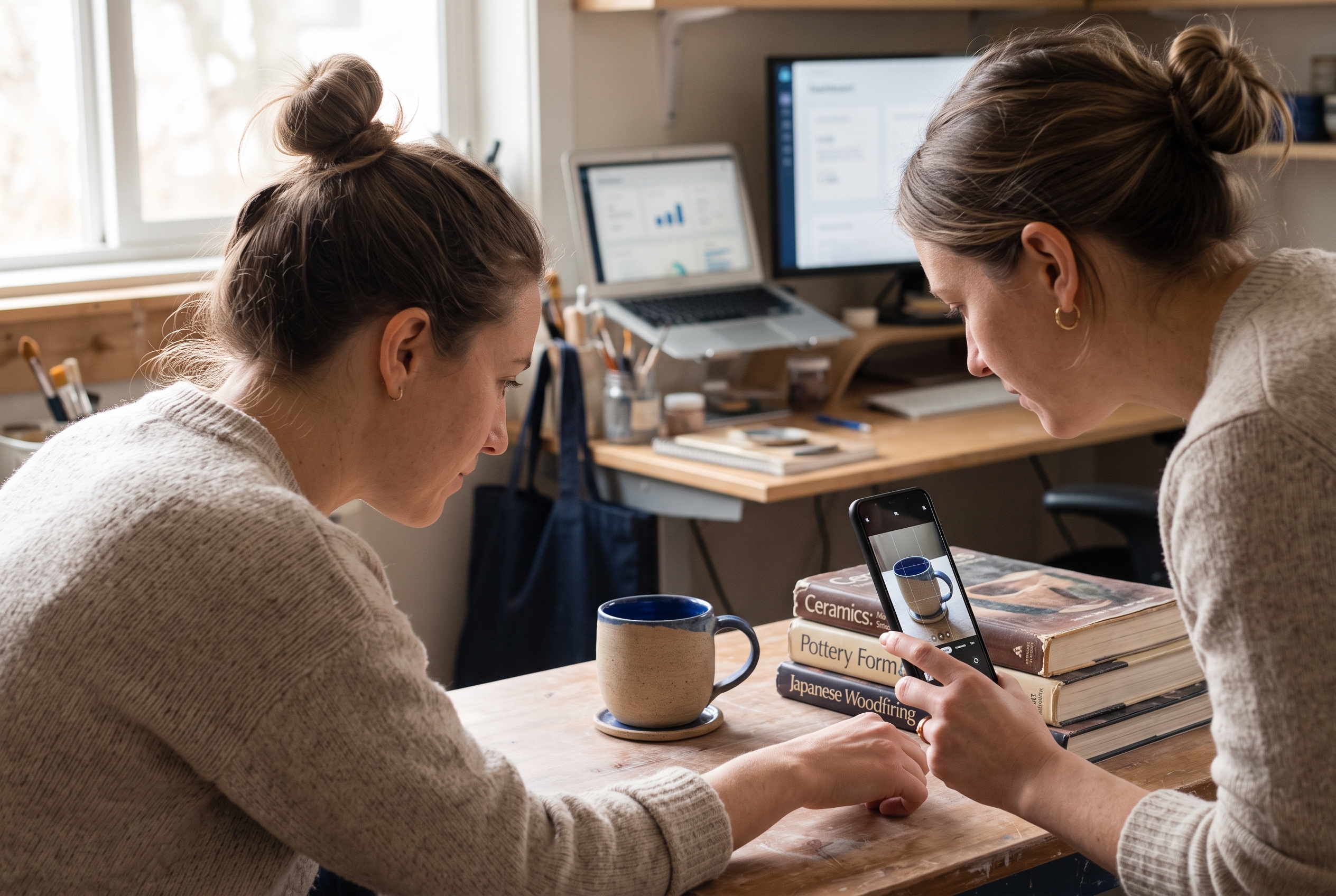
| Product photos | Your phone camera + natural light | When photos limit conversions |
| Design | Canva free plan | For brand assets at scale |
| Payments | Stripe / PayPal (pay per transaction, no monthly fee) | Never — usage-based is fine |
| Traffic | Organic social, SEO, communities | When you can afford paid ads |
| Free marketing tiers under 500–1,000 contacts | As your list grows | |
| Niche research | Google Trends, Google autocomplete, marketplace best-seller lists | When you need keyword volume data |
Notice that payments cost nothing until you sell. Stripe and PayPal only take a small percentage per transaction — no monthly bill. That's the whole philosophy of a no-money launch: costs that appear only after revenue does.
The trap to avoid is stacking paid subscriptions before you've made a sale. Paid apps on platforms like Shopify can quietly add $50 to $200 a month before you've earned a cent. When you're starting broke, every recurring bill you sign up for is money working against you. If you're comparing options, our guide to creating an online store for free shows what free plans really include.
How to start an online store with no money, step by step
Knowing the models and tools is one thing. Here's the actual sequence to follow when you want to learn how to start an online store with no money and get to your first sale fast.

- Pick a niche you understand. Choose something you know or genuinely care about. You'll create better content and answer customer questions with real authority. Validate demand by checking whether people already search for and buy it.
- Choose a zero-inventory model. Dropshipping, print on demand, digital products, or services — whichever matches your niche and skills.
- Source or create your products. Line up a print-on-demand partner, find a dropshipping supplier, or build your first digital product. Start with three to five products, not fifty.
- Set up your storefront. Begin on a free channel or a free store trial. Add clear photos, honest descriptions, and simple pricing that covers your costs plus margin.
- Connect payments. Plug in Stripe or PayPal so you can accept cards immediately. No monthly fee, just a per-sale cut.
- Drive free traffic. Post on the platforms where your buyers already hang out. Answer questions in communities. Build a simple SEO page or two. Consistency beats budget here.
- Make your first sale, then reinvest. Put early profit into better photos, a custom domain, or a small ad test — not into your rent money.
The biggest mistake at this stage is over-building before you've proven anyone wants what you're selling. Get to a sale with the scrappiest possible version. Polish later, with money the business earned. We cover a store-specific version in how to start an online store with no money.
How to validate a niche for free
Before you commit weeks to a niche, run a simple three-part check that costs nothing:
- Search demand. Type your product idea into Google and note the autocomplete suggestions, then compare it against related terms in Google Trends to see whether interest is steady, rising, or seasonal.
- Proof people pay. Look at Etsy, Amazon, or Gumroad best-seller lists in your category. If several listings have hundreds of reviews, buyers exist. If nobody is selling, that is usually a warning, not an opportunity.
- Pre-sell. Post your idea or a mockup in a relevant community or to your network and ask for a small deposit or waitlist signup. Ten genuine signups tells you more than any spreadsheet.
A realistic timeline: services can bring a first payment in one to two weeks, digital products often take two to six weeks to build and list, and print on demand or dropshipping stores commonly take a month or more to see steady orders because traffic must be earned first. Treat those as ranges, not promises.
What if you can't spend anything at all?
If you truly have zero dollars, start with a service or a digital product, because neither needs a purchase before your first sale. Use a free store trial or social profile as your storefront, and delay a custom domain until a sale covers it.
A realistic zero-dollar path looks like this: offer a service to your network this week, collect payment through a Stripe or PayPal link, then use that income to fund a print-on-demand or digital product line. Some things cost money even in a free launch, such as a domain name or a business license in some places, so check whether you need a business license to sell online before you scale.
Getting your first customers without a marketing budget
A store with no traffic makes no sales. When you can't buy ads, you earn attention instead. This is the grind, but it's also where founders who start online business with no money often build their most loyal audiences.
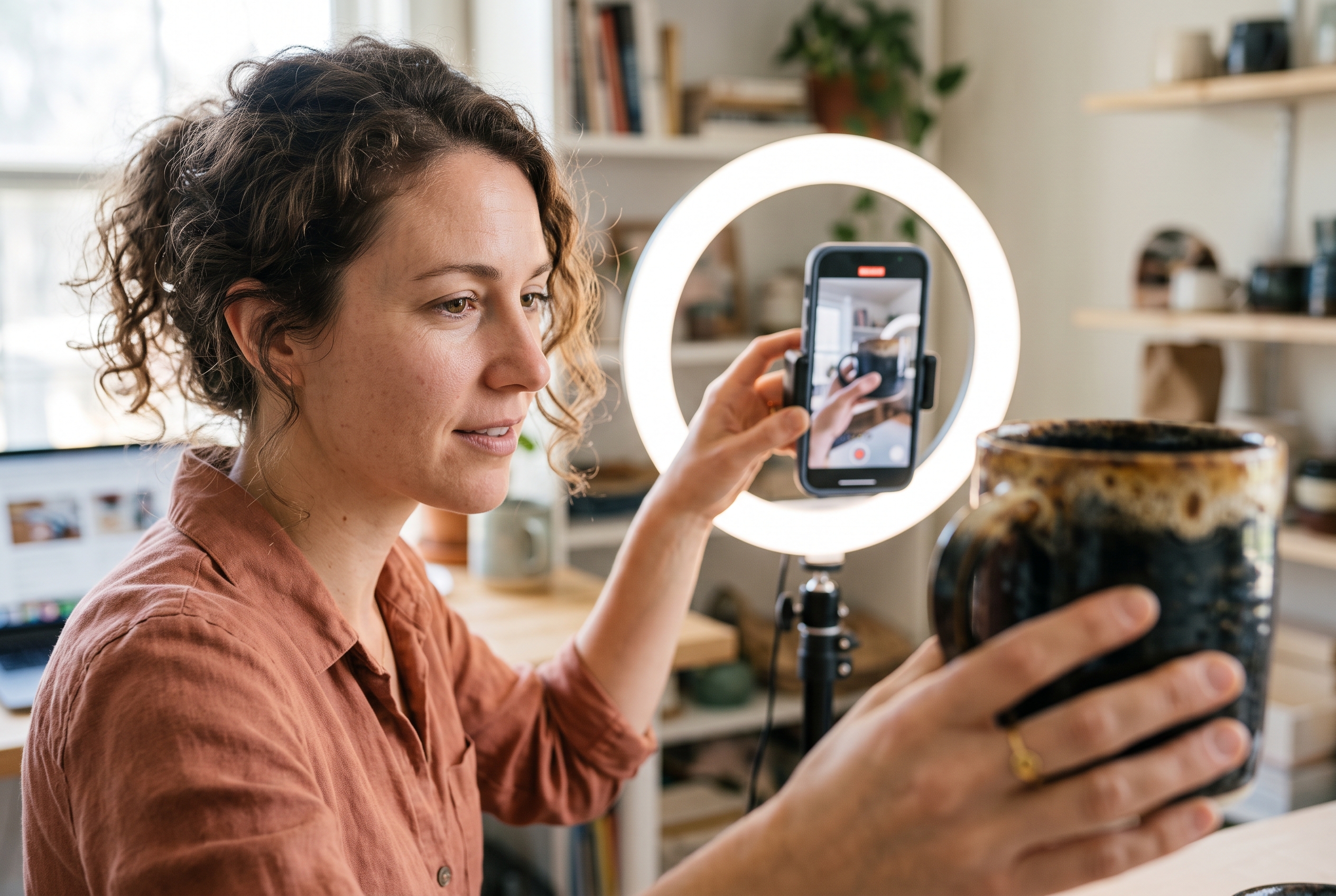
- Organic social content. Short videos showing your product, your process, or the problem you solve. One post can reach thousands for free if it resonates.
- SEO and helpful content. Write the guides and comparisons your future buyers search for. Google traffic compounds for years and costs nothing but time.
- Communities and forums. Be genuinely useful in Reddit threads, Facebook groups, and niche forums. Sell by helping, not spamming.
- Your existing network. Your first ten customers often come from people who already know you. Tell them what you're building.
- Email capture from day one. A free email tool lets you follow up with visitors who aren't ready to buy yet. The Baymard Institute, which tracks checkout research, puts the average documented cart abandonment rate at about 70%, so even a modest recovery email sequence can bring back sales you would otherwise lose.
None of these are quick. But they're durable. Paid ads stop the moment you stop paying; a ranking article or a viral video keeps working long after you posted it.
When to graduate from free to a real store
Free channels are perfect for proving demand. They're limiting once you're actually selling. Marketplace fees eat your margin, social bios can't hold a full catalog, and you don't own your customer relationships. At some point, a proper store pays for itself.
The signal to upgrade is simple: you're making consistent sales and free tools are now costing you money in lost margin or wasted hours. That's the moment to move to a real storefront — ideally one where the essentials are included so you're not rebuilding a paid app stack. Our breakdown of the cost to start an ecommerce business helps you budget that step.
This is where the traditional path gets expensive. A typical setup means a platform subscription, plus apps for abandoned cart, wishlist, reviews, and loyalty, plus transaction fees on top. It adds up to hundreds a month before you've optimized anything. Rovela takes a different approach: you describe your store in plain words, it gets built in hours, and 100+ features — abandoned cart, wishlist, loyalty, reviews, Stripe checkout, analytics — come included in a single flat subscription with no commission on your sales. Depending on how many paid apps your current stack uses, that can mean saving thousands of dollars a year; for example, $150 a month in apps alone is $1,800 a year.
The point isn't to spend money the moment you're profitable. It's to stop leaking it. When free tools start capping your growth, a store that includes everything beats bolting on a dozen paid plugins one at a time.
Common questions about starting a business for free
How much money do you really need?
You can reach your first sale for $0 using free channels, print on demand, or services. Practically, a low cost online business spending $20–$50 on a domain and better photos usually converts faster. Start free, reinvest earnings — don't fund the business from savings you can't afford to lose.
What's the fastest business to start broke?
Services and freelancing. There's no product to create, nothing to ship, and you can be paid within days. Many founders use that cash to bootstrap a product business — the cleanest way to start a business for free and grow it into something bigger.
Is dropshipping still worth it?
It can be, in the right niche. Margins are tight and shipping is slow, so avoid saturated products and compete on selection or service. Treat it as a way to test demand with zero inventory risk, not a guaranteed windfall.
Starting with no money isn't a disadvantage — it forces the discipline that keeps businesses alive: sell before you spend, prove demand before you polish, and reinvest earnings instead of borrowing hope. Pick a zero-inventory model, launch on free tools, earn your first customers by being useful, and upgrade only when the business is paying for it. When you're ready for a store that grows with you without a pile of monthly app bills, see how Rovela's flat pricing works or browse more practical guides on the Rovela blog. Your first sale is closer than the price tag makes it look.