June 21, 2026
How to Start a Print on Demand Business With No Money
A step-by-step guide to starting a print on demand business with no money — pick products, set up a free store, compare suppliers, and price for real profit.
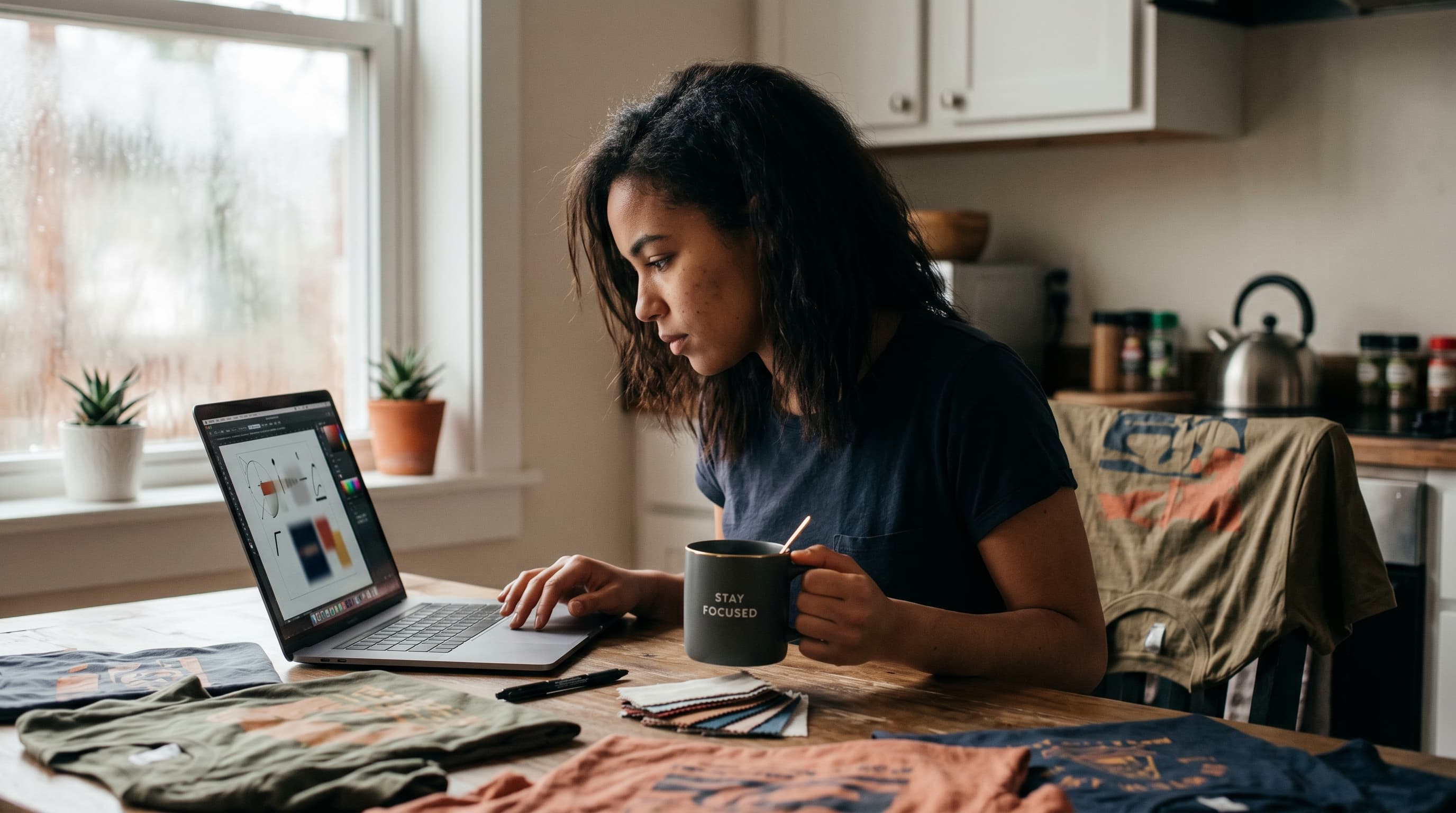
You don't need a warehouse, a printer, or a pile of cash to sell custom products online. Learning how to start a print on demand business with no money comes down to one simple idea: a supplier prints and ships each item only after a customer buys it, so you never pay for stock you haven't sold. That single mechanic removes the biggest risk in retail — buying inventory that might not move. This guide walks you through every step, from picking a niche to pricing for profit, without spending a dollar upfront.

How Does Print on Demand Work?
Print on demand is a fulfillment model where you sell custom-designed products — t-shirts, mugs, hoodies, posters, phone cases — but a third-party supplier prints, packs, and ships each order only after a customer pays. You hold zero inventory and pay nothing until a sale happens.
Here's the flow in plain terms. A customer buys a shirt from your store for $25. The order automatically routes to your supplier, who charges you the base cost — say, $12 — to print and ship it. You pocket the $13 difference. No bulk orders, no boxes stacked in your spare room.
That's why print on demand without inventory is the cheapest legitimate way to start an online store. The supplier carries the risk of stocking blank products; you carry only the cost of designs you can make for free. Because there's print on demand no upfront cost, your only real investment is time and creativity.
- You design — create artwork or text for a product.
- You list — publish it on your store with your chosen price.
- Customer buys — they pay your retail price.
- Supplier fulfills — they print, pack, and ship under your brand.
- You keep the margin — retail price minus base cost.
The model has matured into a serious channel, not a hobby. The global print on demand market was valued in the billions and is forecast to keep compounding at double-digit annual growth rates through the end of the decade, according to industry analysts like Grand View Research. That growth is exactly why so many no-money sellers can find a profitable corner — the demand pie keeps expanding.
How to Start a Print on Demand Business With No Money: 6 Steps
You can go from idea to live store in a weekend. The trick is sequencing the work so you never hit a step that demands payment before you've made a sale. Follow these six steps in order.

1. Pick a niche you actually understand
Generic "funny t-shirts" stores drown in competition. Narrow it down. Think dog breeds, a hobby like bouldering, a profession like nursing, or a regional identity. A tight niche means cheaper marketing and customers who feel you "get" them.
Validate demand for free. Search the niche on Etsy and Amazon, check how many sellers exist, and read reviews to find what buyers complain about. Those complaints are your opening. A pattern worth watching: when a niche has hundreds of listings but the top sellers all have one-star reviews mentioning the same flaw — sizing that runs small, faded prints, slow shipping — you've found a market with demand and a quality gap you can exploit with better mockups and clearer product copy.
2. Choose a print on demand supplier
Your supplier handles printing and shipping, so the choice matters. The two most popular options are Printful and Printify, and both let you join with no money down. We'll compare them in detail below.
3. Create designs without a designer
You don't need Photoshop or design skills. Free tools like Canva offer templates, fonts, and graphics you can arrange into clean, sellable designs in minutes. Stick to bold text and simple layouts — they print better and sell faster than busy artwork. If you want to widen your range, free generative AI image tools can produce print-ready graphics, though you should always check the supplier's resolution requirements (typically 300 DPI) so the print doesn't come out pixelated.
4. Set up a free print on demand store
You need a storefront where customers actually buy. Some sellers start on a marketplace like Etsy to test demand; others launch their own store so they own the customer relationship and the brand. Either way, you can start print on demand for free and only pay once orders roll in.
5. Connect payments and publish
Link a payment processor like Stripe or PayPal so you can collect money — both are free to set up and only take a small cut per transaction. Sync your supplier to your store, publish your products, and you're officially open.
6. Market with content, not ad spend
With no budget, your growth comes from organic channels: short-form video on TikTok and Instagram Reels, Pinterest pins, and SEO-friendly product titles. One video that hits can sell hundreds of units without a dollar spent on ads.
Best Print on Demand Sites: Where to Sell for Free
The best print on demand sites fall into two camps: zero-effort marketplaces that already have traffic, and your-own-store setups that give you control and better margins. The right choice depends on whether you want to test fast or build a brand.
- Redbubble & Teespring (Spring): The lowest-effort route. You upload a design, they handle the store, printing, payments, and even traffic. You set a markup and they keep the rest. Great for validating designs with zero setup, but margins are thin and you don't own the customer.
- Etsy: A marketplace with built-in buyer intent, especially for niche and personalized goods. Expect listing fees of $0.20 per item plus a transaction fee of roughly 6.5% and payment processing on top, per Etsy's published fee schedule. You get traffic but you rent the relationship.
- Your own store: Platforms let you launch a branded storefront and connect a POD supplier directly. You keep more margin and own your customer list — the trade-off is you have to drive your own traffic.
A practical sequence for someone starting with no money: list a handful of designs on Redbubble or Etsy to see what sells, then move your proven winners onto your own store where the margins are fatter and the customers are yours.
Printful vs Printify: Which Supplier to Pick
When sellers compare suppliers, the conversation almost always lands on the Printful vs Printify question. Both are free to join, integrate with most store platforms, and handle global shipping. They differ in how they source products and price them.
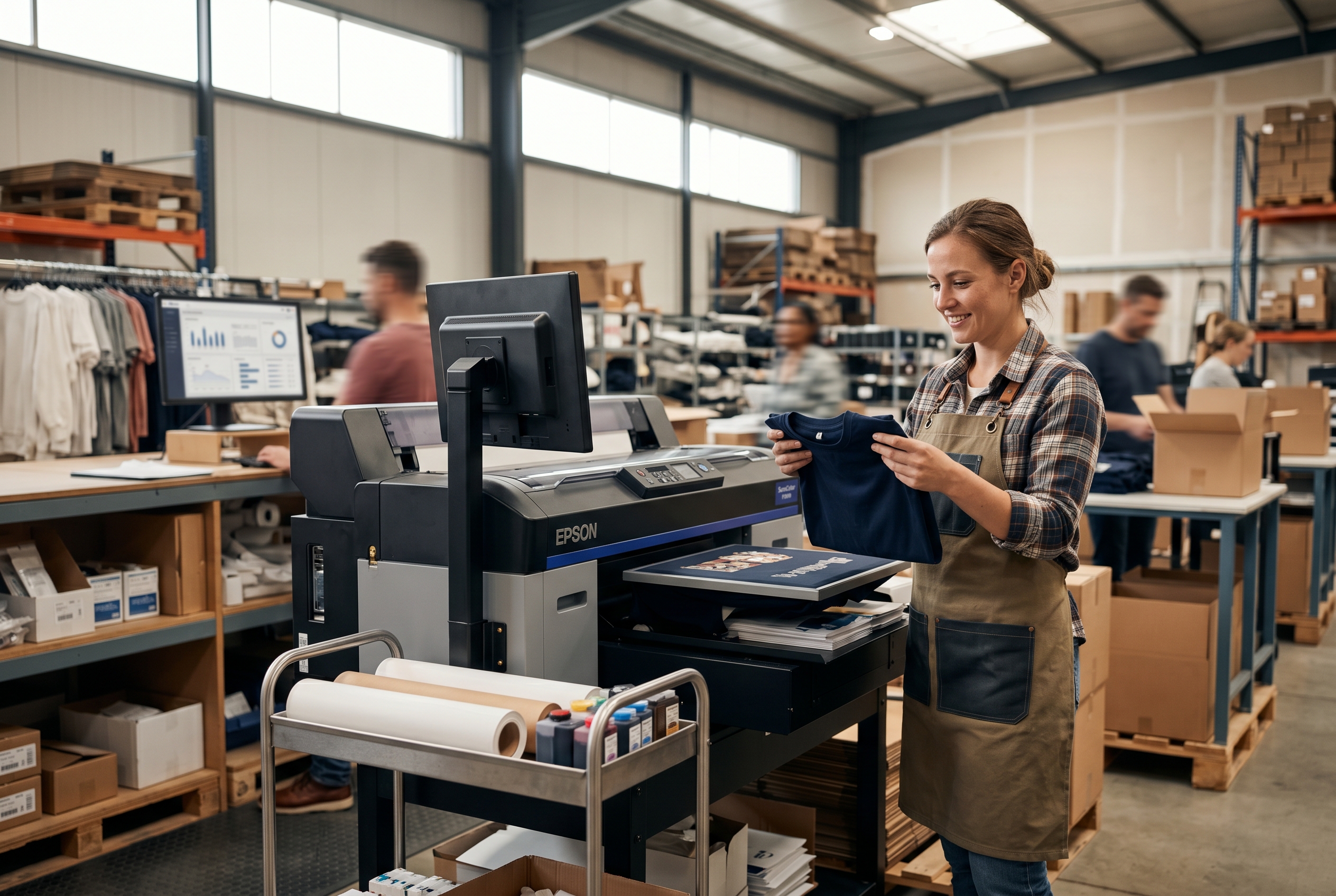
Printful owns its own production facilities, which means more consistent quality and tighter control, but slightly higher base prices. Printify runs a network of third-party print providers, so base costs are often lower and the catalog is wider — but quality can vary between providers.
| Factor | Printful | Printify |
|---|---|---|
| Joining cost | Free | Free |
| Production model | In-house facilities | Third-party network |
| Base prices | Higher, consistent | Lower, varies by provider |
| Quality control | Very consistent | Depends on provider |
| Catalog size | Solid, curated | Larger, more variety |
| Best for | Brand-focused sellers | Margin-focused sellers |
Where this matters in practice: for embroidered apparel, hats, and all-over-print items, Printful's in-house control tends to win on consistency, which is why brand-focused sellers favor it for hero products. For high-volume basics like standard cotton tees and mugs, Printify's provider network often shaves $2–$4 off the base cost per unit — a meaningful difference when you're selling at thin margins and volume. Many sellers run a hybrid setup: Printful for their signature, quality-critical products and Printify for everyday catalog fillers.
There's no universal winner. If you care about premium quality and a tight brand, lean Printful. If you want the lowest base cost and the widest product range to protect your margins, lean Printify. Many sellers order one sample from each — the only optional spend worth considering — before committing.
Print on Demand Profit Margins: What to Actually Expect
Print on demand profit margins typically land between 15% and 40% per item, depending on the product and your retail price. A t-shirt with a $12 base cost sold at $25 nets you $13 — a 52% markup, or roughly a 40% profit margin after payment processing fees.
Margins are slimmer than holding your own inventory because the supplier prices in convenience and risk. The trade-off is worth it: you carry no upfront cost and no dead stock. Here's how a typical product breaks down.
- Retail price: $25.00
- Supplier base cost: $12.00
- Payment processing (~3%): $0.75
- Net profit: ~$12.25 per shirt
Margins also vary sharply by product category. Here's how a few common items compare using typical mid-range POD base costs and realistic retail prices:
| Product | Typical base cost | Common retail price | Gross margin |
|---|---|---|---|
| Standard t-shirt | $10–$13 | $24–$28 | ~50% |
| Ceramic mug | $6–$8 | $18–$22 | ~60% |
| Hoodie | $24–$30 | $48–$60 | ~45% |
| Wall poster | $5–$9 | $20–$30 | ~65% |
| Phone case | $8–$11 | $22–$28 | ~55% |
To grow profit without raising prices past what customers will pay, focus on higher-margin products like mugs and posters, bundle items, and build repeat buyers through email. Volume is where print on demand pays off — small per-unit margins multiply fast when orders scale.
A Realistic Example: From Zero to a First Profitable Month
To make the math concrete, here's an illustrative path that mirrors how many no-money sellers actually ramp up. Treat the numbers as a realistic model, not a guarantee — results hinge on niche selection and marketing consistency.
Imagine a seller in the bouldering niche. They spend a weekend making eight bold text-and-line designs in Canva, list them on Etsy and on a free own-brand store, and post a short clip of each design to TikTok and Pinterest. Month one is quiet: a handful of sales, maybe 12 shirts, while a couple of videos slowly gain traction.
- Month 1: ~12 orders × ~$12 net = ~$144 profit, mostly from one Pinterest pin that started ranking.
- Month 3: A single TikTok clip crosses 200k views, driving ~90 orders that month — roughly $1,000 in profit, with email capture starting to compound repeat buyers.
- Month 6: A catalog of 30+ designs, a 1,500-person email list, and steady organic traffic push monthly profit into the $2,500–$3,500 range.
The pattern is the point: almost nothing happens in month one, then a single piece of content compounds. This is why the sellers who quit early never see the model work — the no-money path trades upfront cash for patience and volume of attempts. Every design you list is another lottery ticket that costs you only time.
Common Mistakes That Quietly Kill Profit
Most first-time sellers don't fail because the model is broken. They fail on avoidable details. Watch for these.
- Underpricing. If you only mark up a few dollars, ad costs or fees can wipe out your margin entirely.
- Copying trends too late. By the time a meme is everywhere, the market's saturated. Move on your own niche ideas.
- Ignoring mockups. Buyers judge a product by its preview image. Use clean, realistic mockups your supplier provides.
- Skipping samples. Selling a product you've never touched risks bad reviews and refunds.
- No customer ownership. Relying only on a marketplace means you don't own your buyers — build an email list from day one.
Avoid those five and you're ahead of most people who quit in their first month. The sellers who win treat print on demand as a real business, not a side experiment.
Scaling From a Free Store to a Real Brand
Starting with a free print on demand store is the smart way to validate your idea. But once orders are steady, growth stops being about luck and becomes about systems. Three levers do the heavy lifting once you have a few profitable products.
- Email automation. A simple welcome series plus an abandoned-cart sequence often recovers 10–15% of would-be-lost sales. Add a post-purchase flow that pitches a complementary product (a matching mug for a shirt buyer) and you raise average order value without any new traffic.
- Reinvesting profit into paid ads. Once organic content proves a design converts, a small TikTok or Meta ads budget — funded entirely by existing profit, not new cash — can scale a winner predictably. Start tiny, kill losers fast, and pour budget only into ads that beat your breakeven margin.
- Wholesale and bundles. Local gyms, clubs, and small businesses will buy branded merch in bulk. A single 50-unit wholesale order can outproduce a month of retail sales, and many POD suppliers offer volume discounts that widen your margin on those orders.
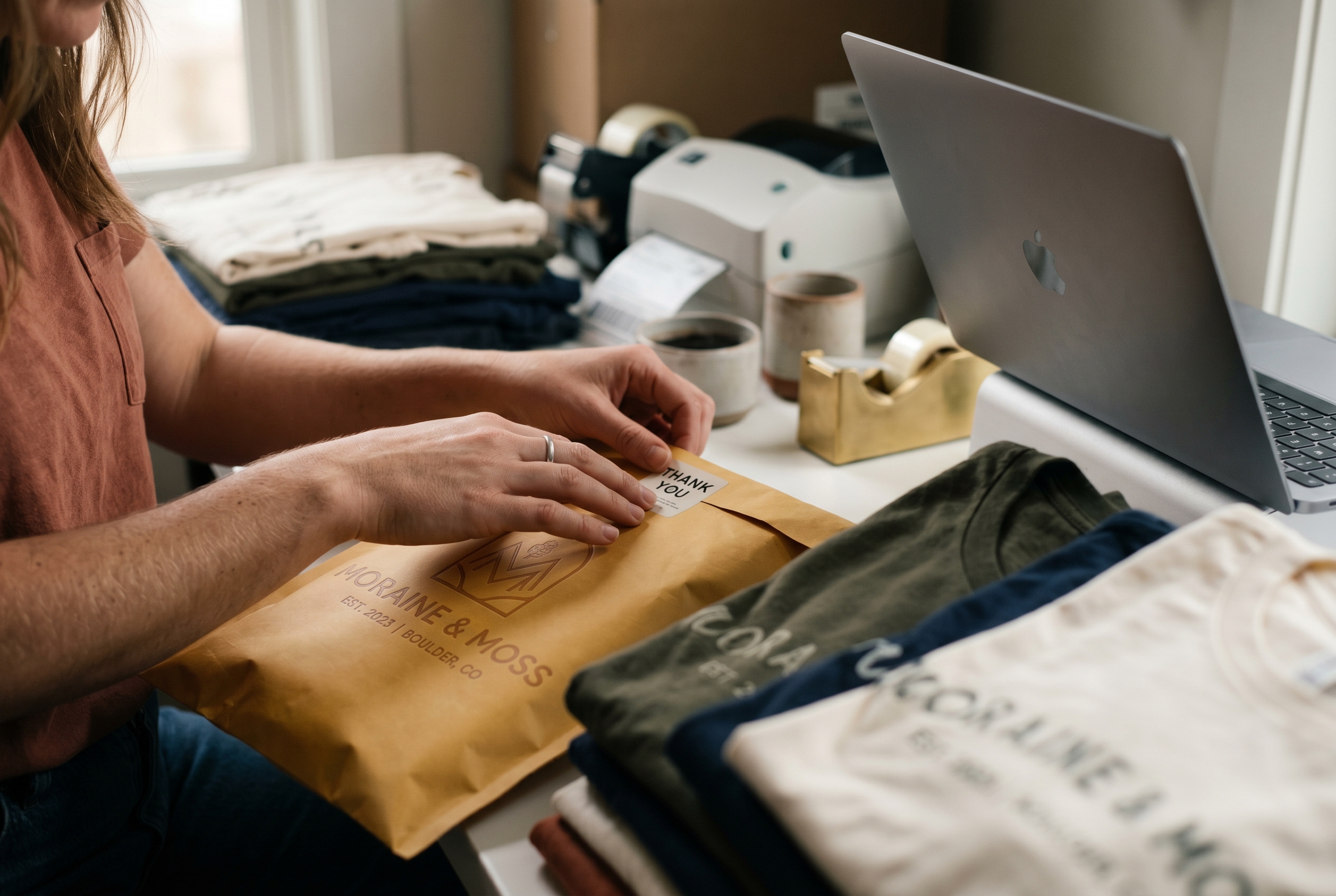
As volume climbs, the platform you build on starts to matter. Marketplace fees eat into margins, and bolt-on app stacks on traditional builders pile up monthly costs you didn't plan for. This is where many growing sellers re-platform — and re-platforming is painful on legacy tools. The better move is starting on a platform built to grow with you from $0 to multi-million in sales without rebuilding. Rovela generates a complete store from a plain-language conversation, with checkout, customer accounts, abandoned cart recovery, reviews, and email automation included by default — no app bills stacking on top of your subscription.
That matters for thin-margin print on demand businesses. Every dollar you don't spend on plugins is a dollar of profit. You can compare the included-everything approach on the Rovela pricing page, or read more guides on launching a store on the ecommerce blog.
Frequently Asked Questions
Can you really start print on demand with no money?
Yes. Suppliers like Printful and Printify are free to join and only charge you after a customer pays. Free design tools and a free store let you launch with zero upfront cost — your only real investment is time.
How much can you make with print on demand?
Profit margins typically run 15% to 40% per item. Earnings depend entirely on volume and marketing. Some sellers make a few hundred dollars a month; others build six-figure brands. The model rewards consistency and strong niche selection.
Do I need a business license to start?
Requirements vary by country and region. Many people start as sole proprietors and register a business once they're profitable. Check your local rules, but a license usually isn't a barrier to launching.
How long until print on demand becomes profitable?
Most sellers see little in month one and meaningful momentum only after a piece of content gains traction — often around months three to six. Because there's no upfront cost, the main thing you're risking is time, so consistency matters more than speed.
Start Building Today
The path is clear: pick a niche you understand, choose a free supplier, design with free tools, open a store, and grow with organic content. Print on demand without inventory removes the cash risk that stops most people from ever starting — so the only thing left is to begin.
When your store outgrows its free starting point and marketplace fees start eating your margins, you'll want a platform that scales without re-platforming. If you're ready to turn a side project into a real brand, Rovela builds your full store from a single conversation — every feature you need to sell, included, with no plugin bills draining your print on demand profits.