By El Ghali Bennis · Published
How to Build a Clothing Brand Identity From Scratch
A step-by-step guide to building a clothing brand identity: positioning, story, logo, colors, label design and a one-page guideline you'll actually use.
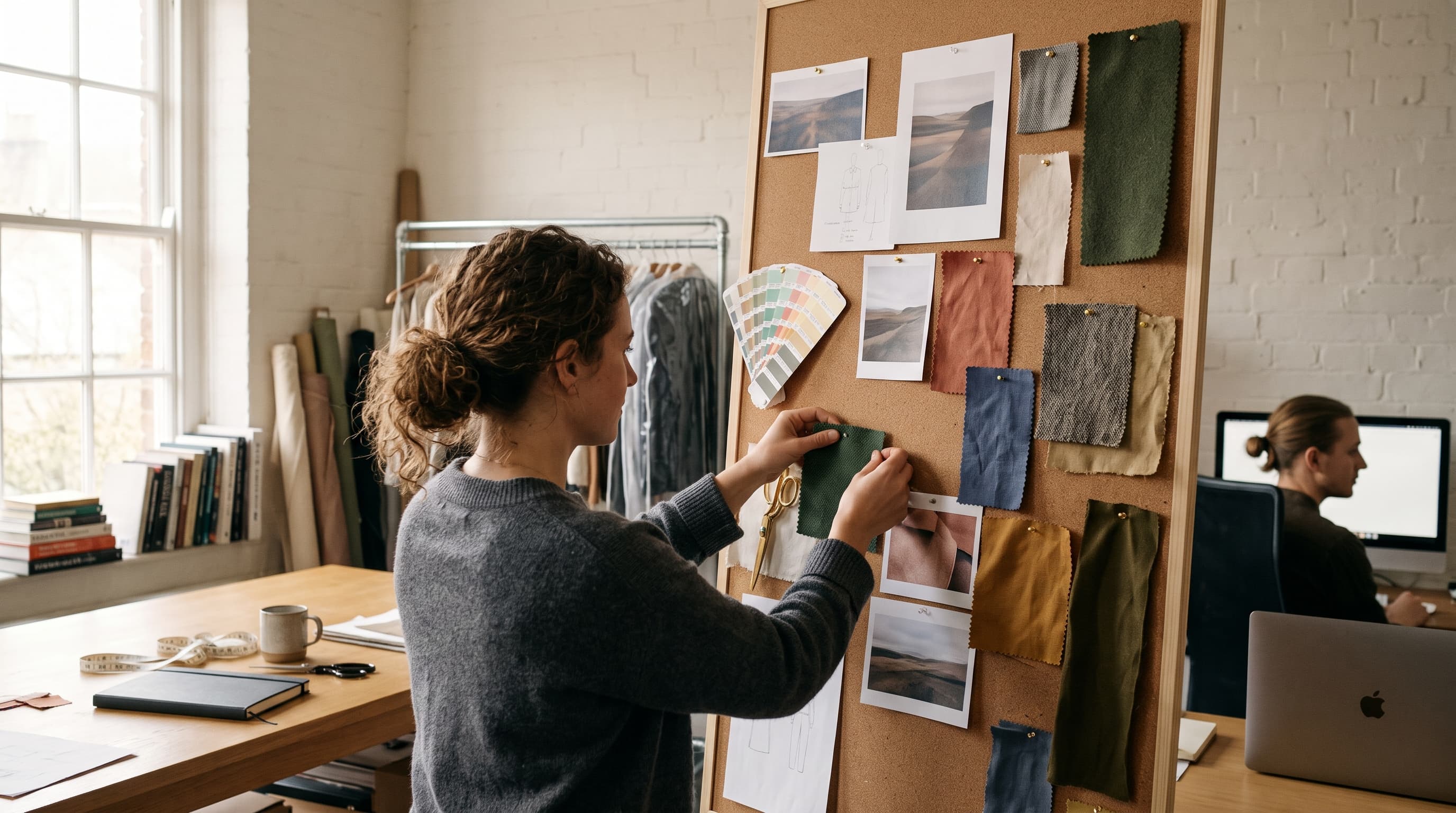
To build a clothing brand identity, you define who you serve and why you exist, turn that into a positioning statement and story, then express it consistently through your name, logo, color palette, label design and tone of voice. Write it down in a short guideline so every product and post matches.
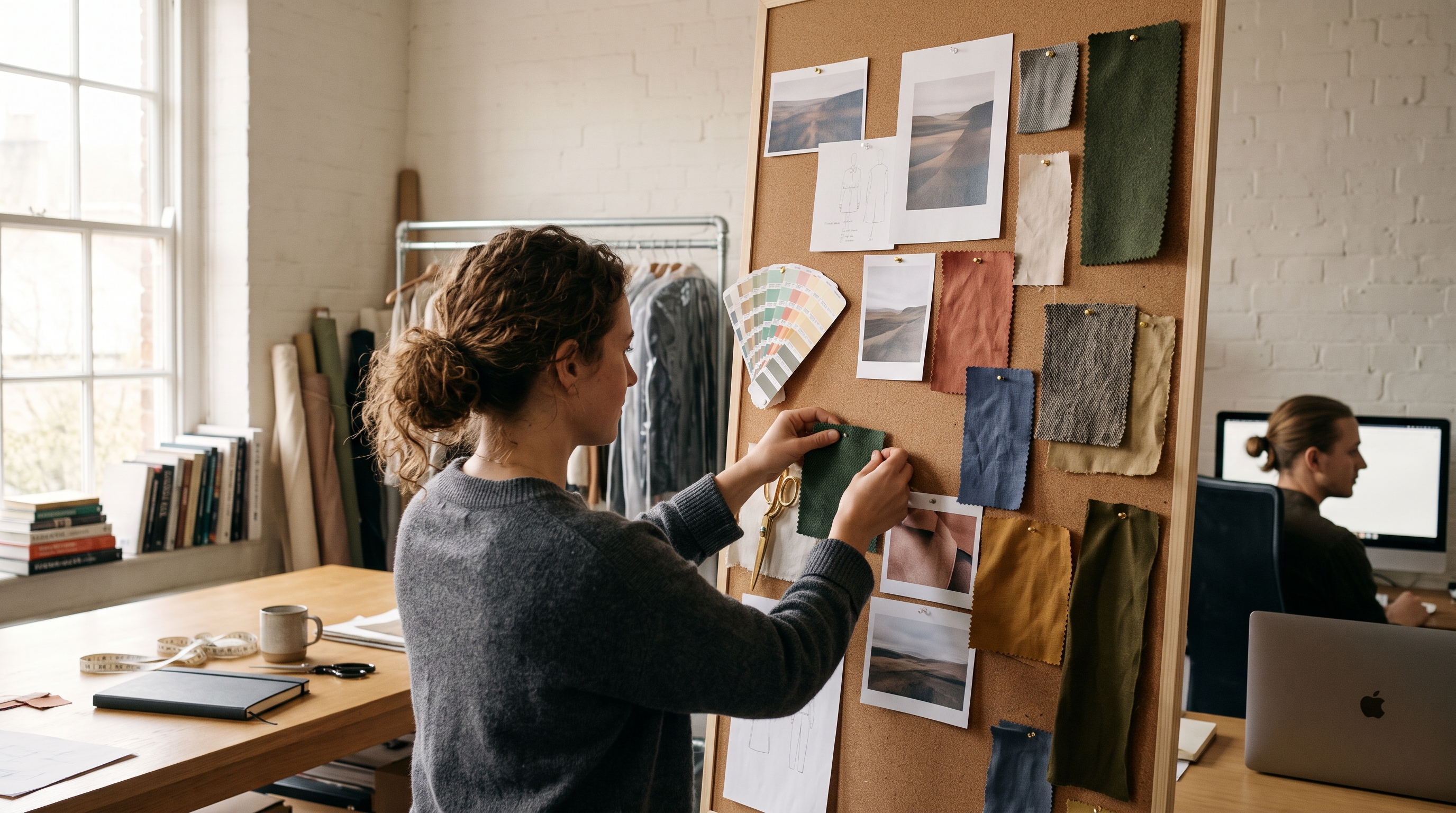
Most new founders do this backwards. They pick a logo on day one, order 300 hoodies, and then wonder why nothing feels cohesive. Identity isn't a logo. It's the set of decisions that makes a stranger recognize your brand across a hangtag, an Instagram post and a checkout page.
This guide walks through the process in the order that works: positioning first, visuals last. You'll get examples, a color palette framework, a label checklist and a template for your brand guidelines.
What Is a Clothing Brand Identity?
A clothing brand identity is the full set of verbal and visual signals that tell customers who you are: your positioning, story, name, logo, colors, typography, label design, photography style and voice. Brand is the feeling people have; identity is what you control to create it.
Think of it in two layers. The strategic layer covers purpose, audience, positioning and personality. The expressive layer covers everything people can see or read. Skip the first and the second turns into guesswork.
Brand identity vs. brand image vs. branding
- Brand identity: what you deliberately put out (logo, voice, packaging).
- Brand image: what customers actually perceive. It's often different from what you intended.
- Branding a clothing line: the ongoing work of closing the gap between the two.
Apparel is unusually identity-driven because the product is worn in public. Customers aren't just buying a cotton tee. They're buying a signal about themselves, which is why two nearly identical blanks can sell at $25 and $85.
Step 1: Nail Fashion Brand Positioning First
Fashion brand positioning is the single sentence that explains who you make clothes for, what makes them different, and why customers should pick you over alternatives. Write it before you touch a logo, because every later decision gets tested against it.

Use this fill-in-the-blank to start:
For [specific customer] who [need or frustration], [brand] makes [product type] that [main difference], unlike [alternative].
A weak version: "We make stylish, high-quality streetwear for everyone." A stronger one: "For tall men who can't find sleeves that fit, we make heavyweight basics cut 2 inches longer, unlike fast-fashion tees that shrink after one wash."
Questions that sharpen your position
- Who exactly is wearing this, and where are they going in it?
- What are they wearing now, and what annoys them about it?
- Are you competing on price, craft, community, sustainability or aesthetic? Pick one lead.
- Which three brands sit closest to you, and what will you refuse to copy?
Map those three competitors on a simple two-axis grid, such as price (low to high) and style (classic to experimental). Look for the empty corner. That gap is your territory.
Choose three brand personality traits
Pick three adjectives, and also their opposites. "Playful, not childish." "Premium, not stuffy." "Rebellious, not angry." The "not" half does the real work, because it stops your designer, copywriter and future self from drifting.
Step 2: Write a Story That Sells Your Clothing Brand
A good brand story answers three questions in under 150 words: why you started, what you believe, and what the customer gets to be part of. It should be specific and true, not a polished origin myth.
Look at the clothing brand story examples people actually remember:
- Patagonia: began as a climbing hardware business and grew into apparel with an environmental mission. Its own site still leads with that purpose, and the story justifies its higher prices.
- Carhartt: started in 1889 making durable workwear. The story is about work, not fashion, which is exactly why streetwear crowds adopted it.
- Gymshark: founded by Ben Francis as a teenager, built through fitness creators and community. The story is "built by lifters, for lifters."
Notice the pattern. Each story has a clear enemy or problem (disposable gear, flimsy clothes, boring gym wear) and a clear belief. None of them say "we love fashion."
A simple three-part story template
- The frustration: the moment you couldn't find what you wanted.
- The decision: what you did about it, with real details (the first sample, the first factory visit, the first 50 units).
- The promise: what every customer can expect from you, always.
Keep a short version (one sentence for your bio), a medium version (the 100-word About page) and a long version (the founder letter in your first drop). Reuse them everywhere.
Step 3: Design Your Visual Identity
Your visual identity is a small toolkit: a name, a logo system, a color palette, two typefaces and a photography style. Keep each piece simple, because apparel brands live on tiny surfaces like neck labels, zipper pulls and social avatars.

Start with the name
A name that's hard to spell, trademark or find a handle for will cost you for years. If you haven't locked one in, see our list of clothing brand name ideas, then run the checks in how to check if a business name is trademarked. The USPTO trademark search is a good first stop if you're selling in the US.
Clothing brand logo ideas that actually work on garments
Apparel logos need to survive embroidery, screen printing, woven labels and a 40-pixel favicon. Build a small system rather than one logo:
- Primary wordmark: your full name in a distinctive typeface. Best for websites and hangtags.
- Monogram or icon: initials or a simple symbol for chest hits, sleeve tags and avatars.
- Secondary lockup: a stacked or circular version for packaging and stickers.
- One-color version: required for embroidery and single-color screen prints.
Test every version at tiny size and in black on a busy fabric photo. If it turns to mush, simplify. Fine lines, gradients and more than two colors are the usual culprits.
Build a clothing brand color palette
A workable palette has 4 to 6 colors with defined jobs. Use this structure:
| Role | Share of use | Example |
|---|---|---|
| Primary brand color | ~40% | Deep forest green |
| Neutral base | ~35% | Warm off-white |
| Secondary color | ~15% | Sand or clay |
| Accent | ~10% | Safety orange for buttons and sale tags |
Record each color as HEX (for web), RGB, CMYK and a Pantone reference (for print and labels). Colors shift between screen, ink and thread, so ask your manufacturer for physical swatches before approving a production run.
Color also signals category. Black and white read as minimalist or luxury, earth tones as outdoor or sustainable, saturated brights as youth and sport. Choose on purpose, not because you like teal this month.
Pick typography and photography rules
Choose one display typeface for headlines and one readable sans or serif for body text. Then write three photography rules, such as "natural light only," "real people, no studio-perfect poses" and "always show the garment in motion." Consistency here makes a small catalog look like a real brand.
Step 4: Clothing Label Design and Physical Touchpoints
Clothing label design covers every piece of branding attached to the garment: the neck label, care label, hangtag, packaging and inserts. These are the only brand touchpoints customers physically hold, so they carry more weight than most founders expect.
The label checklist
- Main neck label: woven or printed, with logo and size. Printed tag-less labels feel modern and avoid itching.
- Care and content label: fiber content, country of origin and care symbols. In the US, the Federal Trade Commission enforces textile labeling rules, so confirm requirements before you print.
- Hangtag: your story in one line, a QR code to the product page, and the price if you sell wholesale.
- Packaging: a mailer or tissue in your palette. It's cheap and it photographs well for unboxing posts.
- Thank-you card: a short note with a reorder or review prompt.
Budget wisely. Custom woven labels often have minimum orders of a few hundred pieces, so lock your logo before ordering. Printed labels are a cheaper bridge for a first drop.
If you're still working through the product side, the guide to creating a size chart pairs well with this step, since sizing information is part of your label and your product pages.
Step 5: Write Clothing Brand Guidelines You'll Use
Clothing brand guidelines are a short document that records your positioning, voice, logo rules, palette, fonts and photo style so anyone can produce on-brand work. For a new line, one to three pages is plenty. A 60-page PDF nobody opens is worse than none.
What to include
- Positioning statement and three personality traits (with the "not" versions).
- Story: your one-sentence, 100-word and long versions.
- Logo rules: approved versions, minimum size, clear space and what not to do (no stretching, no recoloring).
- Color palette: HEX, RGB, CMYK and Pantone values.
- Typography: headline and body fonts, plus sizes for web.
- Voice: five words you use, five you never use, and two sample captions.
- Photography: lighting, models, backgrounds and cropping.
Test your identity before you commit
Show your mood board and logo to 10 people in your target customer group, without explaining it. Ask them to describe the brand in three words. If their answers match your three personality traits, you're close. If not, adjust before you order inventory.
Common mistakes to avoid
- Copying a bigger brand's look. You become a weaker version of someone else.
- Too many fonts and colors. Constraint reads as confidence.
- Designing for the logo, not the garment. Always mock it up on a real tee or hoodie.
- Inconsistent voice. A luxury label that writes "OMG sale!!!" confuses buyers.
- Skipping the store. Your website is where the identity gets tested by real shoppers.
Bringing Your Brand Identity to Your Online Store
Your identity only pays off when customers meet it in a store that matches it. Product pages, checkout, emails and even your 404 page should carry the same palette, fonts and voice you defined above.
Many founders lose weeks here, wrestling with themes and stacking apps to get basic features. For reference, Shopify's pricing page shows plans starting at a monthly base fee before any apps, and features like abandoned cart or wishlists often come from add-ons. Compare options in our best ecommerce platform for clothing brands breakdown, and use the 2026 playbook for starting an online clothing store for the full launch sequence.
Hand your guidelines to whatever builder you use. The more specific your palette, voice and photo rules, the less cleanup you'll do later.
Frequently Asked Questions
How much does it cost to build a clothing brand identity?
You can do it for near zero with a self-made mood board, free fonts and a simple wordmark. Hiring a freelance designer for a logo system typically runs from a few hundred to a few thousand dollars. Physical labels and hangtags add cost per unit.
How long does it take?
Plan on two to four weeks: one week for positioning and story, one to two for visuals, and a few days to write guidelines. Rushing the strategy step is where most rebrands start.
Do I need a designer?
Not for positioning or story, which only you can write. A designer helps most with the logo system and label files, because production-ready artwork has technical requirements.
Can I change my identity later?
Yes, but evolve rather than overhaul. Small refreshes to color or typography are common as a brand grows. A full reset costs you recognition you've already earned.
Turn Your Identity Into a Live Store
A strong clothing brand identity comes down to a clear position, a true story, a small visual toolkit and a short guideline you follow every time. Do the thinking first, and the logo, colors and labels almost choose themselves.
When you're ready to put it in front of customers, Rovela builds a complete store from a plain-language description of your brand, with checkout, abandoned cart, wishlists and reviews included in one flat subscription. Describe your palette and voice, and you can have a store that looks like you live in hours. Start at rovela.ai or check the pricing page to see what's included.