By El Ghali Bennis · Published · Updated
How to Start an Online Clothing Store: 2026 Playbook
A step-by-step guide to starting an online clothing store in 2026 — from niche and supplier to launch, marketing, and your first hundred orders.
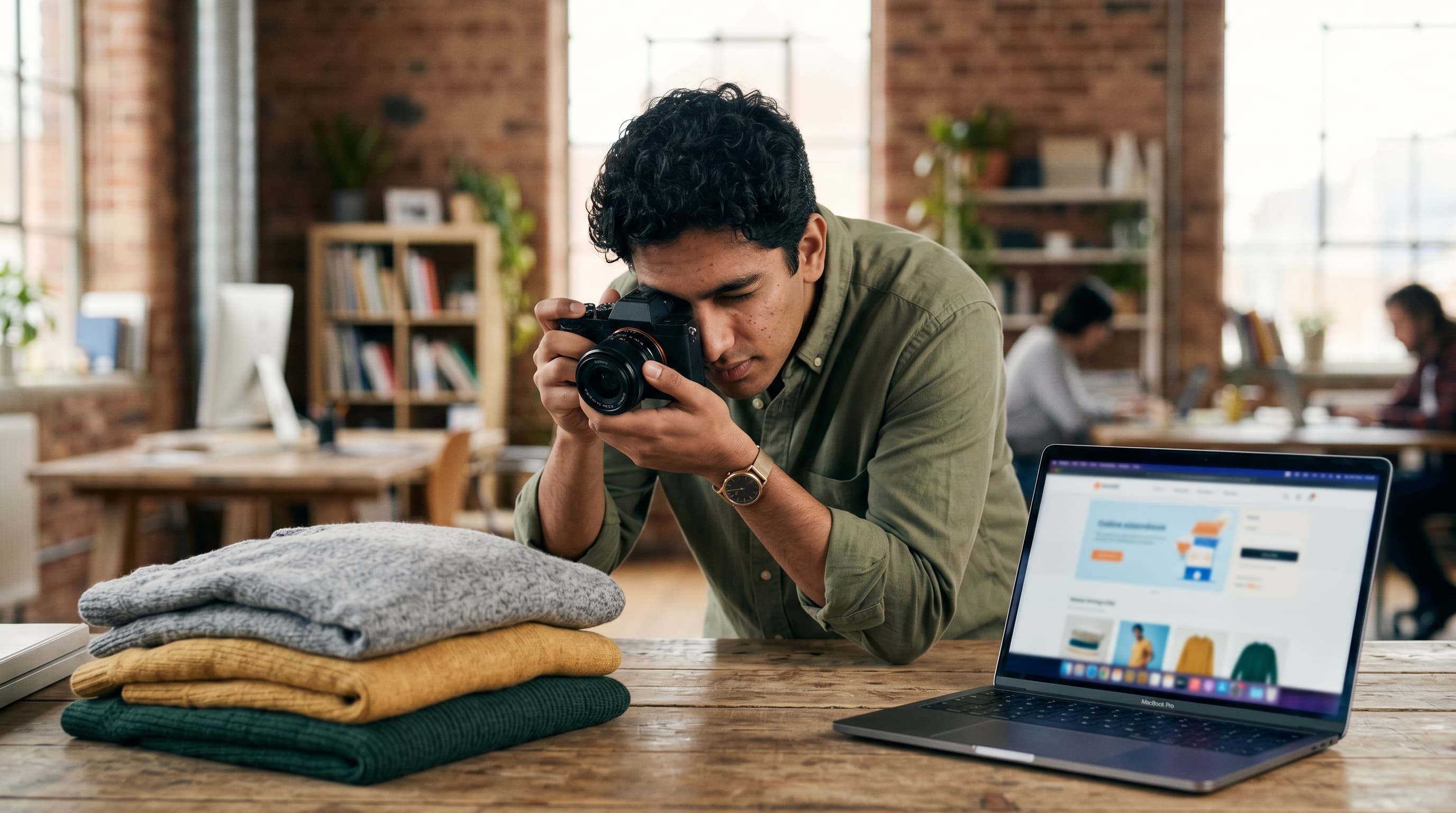
Figuring out how to start an online clothing store used to mean cobbling together a Shopify theme, a dozen plugins, a freelance designer, and a six-week timeline before you sold a single t-shirt. It doesn't anymore. The mechanics are simpler, the tools are cheaper, and the bar to look professional has dropped to near zero. What hasn't changed: the businesses that win still do the boring strategic work — picking a real niche, sourcing properly, pricing for margin, and showing up on the right channels every week.
This guide walks through the entire process end to end. By the end you'll know what to decide, in what order, and roughly what it costs. No fluff about "following your passion" — just the operational steps that take you from idea to your first hundred orders.

Step 1: Pick a niche before you pick anything else
The single biggest mistake new founders make when they start a clothing business online is launching a generic store. "Women's fashion" isn't a brand. "Linen workwear for ceramicists" is. Niches give you a clear customer, a clear marketing angle, and a clear reason for someone to choose you over Zara.
You're looking for the intersection of three things: a group of people you actually understand, a style or function that's underserved, and price points that leave room for margin. The narrower the niche when you start, the easier everything else becomes — ad targeting, supplier conversations, content creation, even pricing.
Niche angles that work in 2026
- Identity-based: clothing for a subculture, profession, or hobby (climbing, sailing, tattoo artists, postpartum mothers).
- Fit-based: tall, petite, plus-size, adaptive, athletic builds — categories big retailers still treat as afterthoughts.
- Material or process: deadstock, natural dyes, repair-friendly construction, traceable supply chain.
- Aesthetic: a specific look the algorithm rewards — coastal grandma, gorpcore, quiet luxury, Y2K revival.
- Use case: travel capsules, work-from-home loungewear, modest activewear, festival sets.
Validate the niche before you spend a euro on inventory. Search the term on TikTok and Instagram. Are creators making content about it? Are there subreddits and Facebook groups? Are people complaining that nothing in the category fits them? Those complaints are your brief.
Step 2: Choose your business model
How do you start an online clothing store without sinking $20,000 into a warehouse of inventory? You pick a model that matches your cash, your timeline, and your tolerance for risk. There are four realistic options.
Print on demand
You design graphics or all-over prints; a partner like Printful or Printify produces and ships when someone orders. Zero inventory, slim margins (typically 15–30%), limited product depth. Best for graphic tees, hoodies, and accessories where the design is the product. Easy to test concepts in a weekend.
Dropshipping
You list products from a third-party catalog (often AliExpress or a curated platform like Spocket); the supplier ships directly. Cheap to start, but quality and lead times are unpredictable, and you're competing with thousands of identical stores. Workable as a learning exercise; rough as a long-term brand.
Wholesale and resale
You buy inventory from brands or suppliers and resell. Higher margins (40–60%), more cash up front, more control over selection. Good for curated boutiques and vintage stores.
Private label and own production
You design your own pieces and manufacture them — through a small workshop, a sample-and-MOQ factory, or a local maker. Highest margins (60–75%), longest timeline, real brand equity. This is what turns into a real clothing label. Expect to spend 3–6 months on samples and sourcing before your first drop.

Step 3: Source product and nail your unit economics
This is where most online clothing store startup attempts quietly fail. Founders pick a supplier on vibes, price the products too low, and discover six months later there's no margin to pay for ads.
Finding suppliers
For private label, the main sourcing channels are Alibaba (large MOQs, factory-direct), Faire and Ankorstore (wholesale brands you can resell), trade shows like Première Vision and Magic, and platforms like Sewport that match you with smaller factories. For European production, look at Portugal, Romania, Turkey, and Tunisia — quality is high and MOQs are workable (often 100–300 units per style).
Always order samples before you commit. Always. Check fabric weight, stitching, label placement, and washing behavior. Ask for the tech pack and grading. Get pricing for three quantity tiers — you want to know what happens to your unit cost at 100, 500, and 1,000 pieces.
Pricing for real margin
The rough industry rule: retail price = landed cost × 2.5 to 4. Landed cost includes the unit price, shipping to your warehouse, customs, and any finishing. That multiplier has to absorb your platform fees, payment processing, marketing, returns (10–30% in apparel), and your time.
Here's what a healthy unit economic model looks like for a $80 retail piece:
| Line item | Amount | % of retail |
|---|---|---|
| Retail price | $80.00 | 100% |
| Landed cost (COGS) | $22.00 | 27.5% |
| Payment processing | $2.80 | 3.5% |
| Shipping to customer (subsidised) | $6.00 | 7.5% |
| Returns reserve (15%) | $4.50 | 5.6% |
| Marketing (CAC target) | $20.00 | 25% |
| Contribution margin | $24.70 | 30.9% |
If you can't make the math work at your target retail price, you don't have a business — you have a hobby that loses money on every sale.
Step 4: Build the store
Once you know what you're selling and at what price, you need somewhere to sell it. The platform choice matters less than founders think for the first $100k of revenue and more than they think after that. The real questions are: how fast can you launch, how much will you bleed on apps and plugins, and how easily can you change things when you learn what customers want?
The traditional path
Most guides will point you straight at Shopify. It works, but the real cost surprises people. The base plan starts at $39/month, but 87% of stores end up running at least six paid apps — abandoned cart recovery, wishlist, reviews, upsells, loyalty, email — which typically adds $80–$200/month. Add a paid theme, transaction fees on non-Shopify Payments, and an agency or freelancer for changes, and a real store spends $300–$2,000/month before a customer shows up.
WooCommerce is cheaper on paper but heavier in maintenance. You're responsible for hosting, security patches, and plugin conflicts. About 20% of WooCommerce stores close within six months of launch, mostly from maintenance fatigue. Wix and Squarespace are simpler but get thin fast on serious e-commerce features — abandoned cart, advanced inventory, real loyalty.
The AI-built path
The newer option is to describe your store in plain language and let an AI build it. Rovela is in this category — you describe your clothing brand, audience, and aesthetic, and the platform ships a complete storefront with Stripe checkout, customer accounts, wishlist, abandoned cart, reviews, loyalty, and 100+ other features included by default. A new store goes live in hours; an existing Shopify or Woo store migrates in about 30 minutes with branding, catalog, and customers preserved.
The reason this matters for a clothing startup specifically: apparel is high-touch, high-return, and conversion-sensitive. You need wishlist, size guides, fast product pages, abandoned cart sequences, and post-purchase email working on day one — not in month four when you finally have budget for apps.

What every clothing storefront needs
- Fast product pages with multiple images, video, and clean variant selectors for size and color.
- Detailed size guides including measurements in cm and inches, model height, and fit notes.
- Wishlist and save-for-later — apparel shoppers rarely buy on first visit.
- Abandoned cart recovery — recovers 5–15% of lost orders in apparel.
- Reviews with photo upload — drives conversion harder in clothing than almost any other category.
- Clear shipping and returns policy linked from every product page.
- Mobile-first design — 70%+ of fashion traffic is mobile.
Step 5: Handle the legal, payments, and shipping setup
Before launch you need the boring stuff sorted. None of it is hard. All of it is non-negotiable.
Business structure
In the US, an LLC is the default for a small clothing business — cheap to form, separates personal and business liability, simple taxes. In the UK, a Limited Company. In the EU, sole trader (auto-entrepreneur, ditto, freelancer) for the first year, then a proper company once revenue justifies it. Get an EIN or equivalent tax ID before you open a business bank account.
Payments
Stripe and PayPal cover roughly 90% of what new stores need. Stripe handles cards, Apple Pay, Google Pay, and Klarna in one integration. PayPal still matters — about 25% of online shoppers will abandon if it's not offered. Add Klarna or Afterpay if your average order value is over $80; buy-now-pay-later lifts apparel conversion by 20–30% in that price band.
Shipping
Negotiate rates with at least two carriers. In the US: USPS for sub-$50 orders, UPS/FedEx for heavier or higher-value. In Europe: Colissimo, DPD, Mondial Relay for pickup points (huge in France and Benelux). Offer free shipping above a threshold — set the threshold 15–20% above your average order value to push basket size up.
Returns
Apparel return rates run 15–30%. Build a returns portal from day one, decide whether you eat the return shipping or the customer does (free returns lift conversion but crush margin), and write a clear policy. A 30-day return window is standard; 14 days feels stingy; 60+ days is generous.
Step 6: Get your first 100 customers
Launch isn't the finish line — it's day one of the actual work. Here's what's working for clothing brands right now.
Organic content (the long game that compounds)
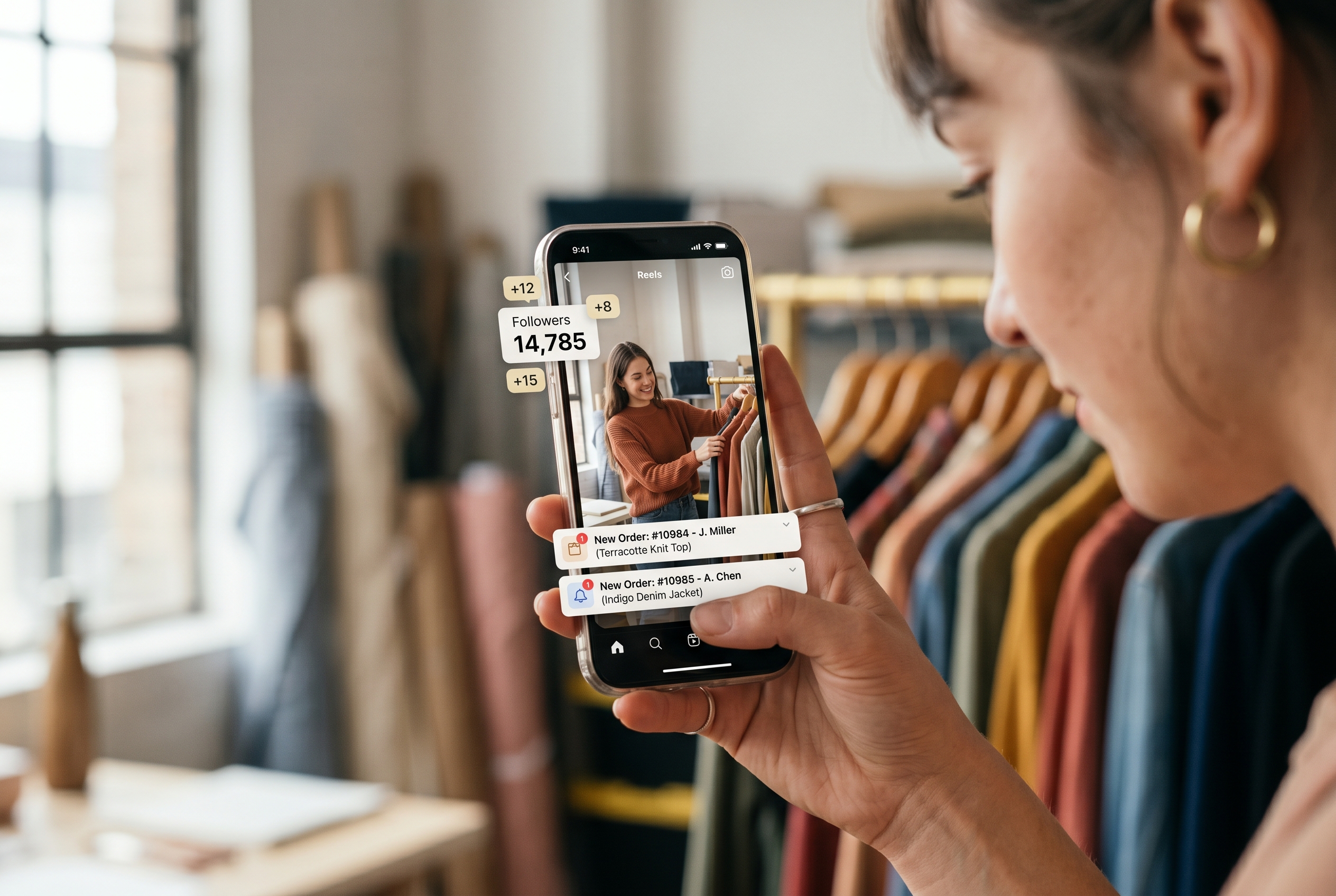
TikTok and Instagram Reels are still the cheapest distribution in fashion. Post 3–5 times a week. Show the product on real bodies, in real light, in real situations. Behind-the-scenes content — fittings, fabric arrivals, packing orders — outperforms polished campaign shots for new brands because it builds the parasocial relationship that turns viewers into buyers.
Pinterest is underrated for apparel. Search-driven, female-skewed, high-intent, long content half-life. A single pin can drive traffic for two years.
Paid ads (the fast lane, if your margins allow)
Meta Ads still dominate fashion acquisition. Start with $20–$50/day on a broad audience with strong creative. Your creative is 80% of the result — the targeting is 20%. Test five videos in the first week, kill the four that underperform, scale the one that works.
Google Shopping is worth setting up once you have 20+ SKUs and clean product data. It catches high-intent buyers who already know what they want.
Email and SMS (where the margin actually lives)
Klaviyo (or your platform's built-in email tool) should be running from launch. Three flows matter: welcome series (3–4 emails, 10–15% of revenue for most clothing brands), abandoned cart (3 emails, 5–10% of revenue), and post-purchase (review request + cross-sell, 3–5% of revenue). SMS converts harder but feels intrusive — use it for drops and back-in-stock, not weekly broadcasts.
Community and partnerships
Micro-influencers (5k–50k followers) in your exact niche convert better than big names and cost a fraction. Gifting works; affiliate codes work better. Build a list of 30 creators who already wear your aesthetic and reach out personally — not via a mass DM template.
Step 7: Measure what matters and iterate
You can't fix what you don't track. For a clothing startup, four numbers tell you almost everything.
- Conversion rate: 1.5–2.5% is normal for new fashion stores; 3%+ is good; 4%+ means something is working that you should pour fuel on.
- Average order value (AOV): track it weekly. Bundles, free-shipping thresholds, and upsells push it up.
- Customer acquisition cost (CAC): ads spend ÷ new customers. Compare to your contribution margin, not retail price.
- Repeat rate: % of customers who order a second time within 90 days. Above 20% means you have a brand. Below 10% means you have a leaky bucket.
Run a small test every week. New homepage hero. Different free-shipping threshold. New product photography style. Two subject lines on your welcome email. The brands that grow aren't smarter — they just ship more experiments.
What it actually costs to launch
Rough budgets for a realistic launch, assuming you do most of the work yourself:
| Line item | Lean ($) | Standard ($) |
|---|---|---|
| Initial inventory or samples | 1,500 | 5,000 |
| Branding (logo, type, basic identity) | 200 | 1,500 |
| Product photography | 0 (DIY) | 1,200 |
| Platform + tools (3 months) | 150 | 900 |
| Business registration + legal | 150 | 500 |
| Launch marketing budget | 500 | 3,000 |
| Total | ~2,500 | ~12,000 |
Print on demand and dropshipping can get you launched for under $500. Private label with proper samples and a small first run sits closer to $8,000–$15,000. Neither path is wrong — they're just different bets about cash, timeline, and brand ambition.
The mistakes that kill new clothing brands
Patterns repeat across thousands of failed apparel startups. The most common:
- Too many SKUs at launch. Start with 5–15 styles. Sell through. Restock the winners.
- Margin math that doesn't include returns or ads. A 50% gross margin sounds great until 20% comes back and CAC eats the rest.
- Bad product photography. Fashion is sold on the image. Underinvest here and nothing else matters.
- Launching without an email list. Spend the month before launch building a waitlist — even 200 names converts better than cold ads on day one.
- Platform bloat. Installing 12 apps to fix problems your platform should solve natively. Every plugin slows your site; every slowdown costs conversion.
- Quitting at month four. Most clothing brands need 6–12 months to find their audience. The ones that win keep posting.
Bringing it together
How to start an online apparel store in 2026 isn't a mystery — it's a sequence. Pick a real niche. Choose a business model that matches your cash. Source product where the unit economics work. Build a store that ships fast and includes the features clothing shoppers expect. Sort the legal, payment, and shipping basics. Then spend every remaining hour on content, ads, email, and iteration.
The platform you build on shapes how much of that budget gets eaten by tools versus product and marketing. If you'd rather skip the app-stack tax and launch a clothing store with abandoned cart, wishlist, loyalty, reviews, and the rest already built in, Rovela can ship your storefront from a conversation — see what's included on the pricing page or browse more operator guides on the blog. Whatever you build on, the brands that win are the ones that launched, learned, and shipped the next thing the week after. Go do that.
Further reading on the e-commerce side: Shopify pricing for the legacy platform comparison, Stripe for payments, and Klaviyo for email infrastructure once you outgrow your platform's built-in tools.