June 18, 2026
How to Start an Online Store Without Inventory
Learn how to start an online store without inventory using dropshipping, print on demand, and digital products — plus the exact steps to launch from home.

You don't need a garage full of boxes to sell online. If you've been waiting to start because you can't afford to buy stock up front, here's the good news: you can learn how to start an online store without inventory and have something live this week. Thousands of merchants sell products they never touch, store, or ship themselves. The model is proven, the tools are cheap, and the barrier to entry has never been lower. This guide walks through every realistic way to sell online without holding stock — and the exact steps to launch one from your kitchen table.

What does it mean to run a store with no inventory?
A no inventory ecommerce business sells products without buying or storing them in advance. When a customer orders, a third party — a supplier, manufacturer, or print partner — fulfills and ships the product. You never handle the physical goods.
This flips the traditional retail equation. Instead of spending thousands on stock that might not sell, you only pay a supplier after a customer has already paid you. Your cash risk drops to almost nothing. Your job becomes finding products people want, marketing them, and running a clean storefront.
There are three main ways to sell products without holding stock, and each fits a different kind of seller:
- Dropshipping — you list a supplier's products; they ship directly to your customer.
- Print on demand — you upload designs; a partner prints them on apparel, mugs, or posters only when ordered.
- Digital products — you sell files, courses, or templates that deliver instantly with zero shipping.
None of them require a warehouse, a forklift, or a single shipping box at home. That's why this model is the most common entry point for anyone who wants to start an ecommerce store from home with limited capital.
The three best models to sell online without inventory
Picking the right model matters more than picking the right product. Each one has different margins, different effort, and different risks. Here's how they stack up.
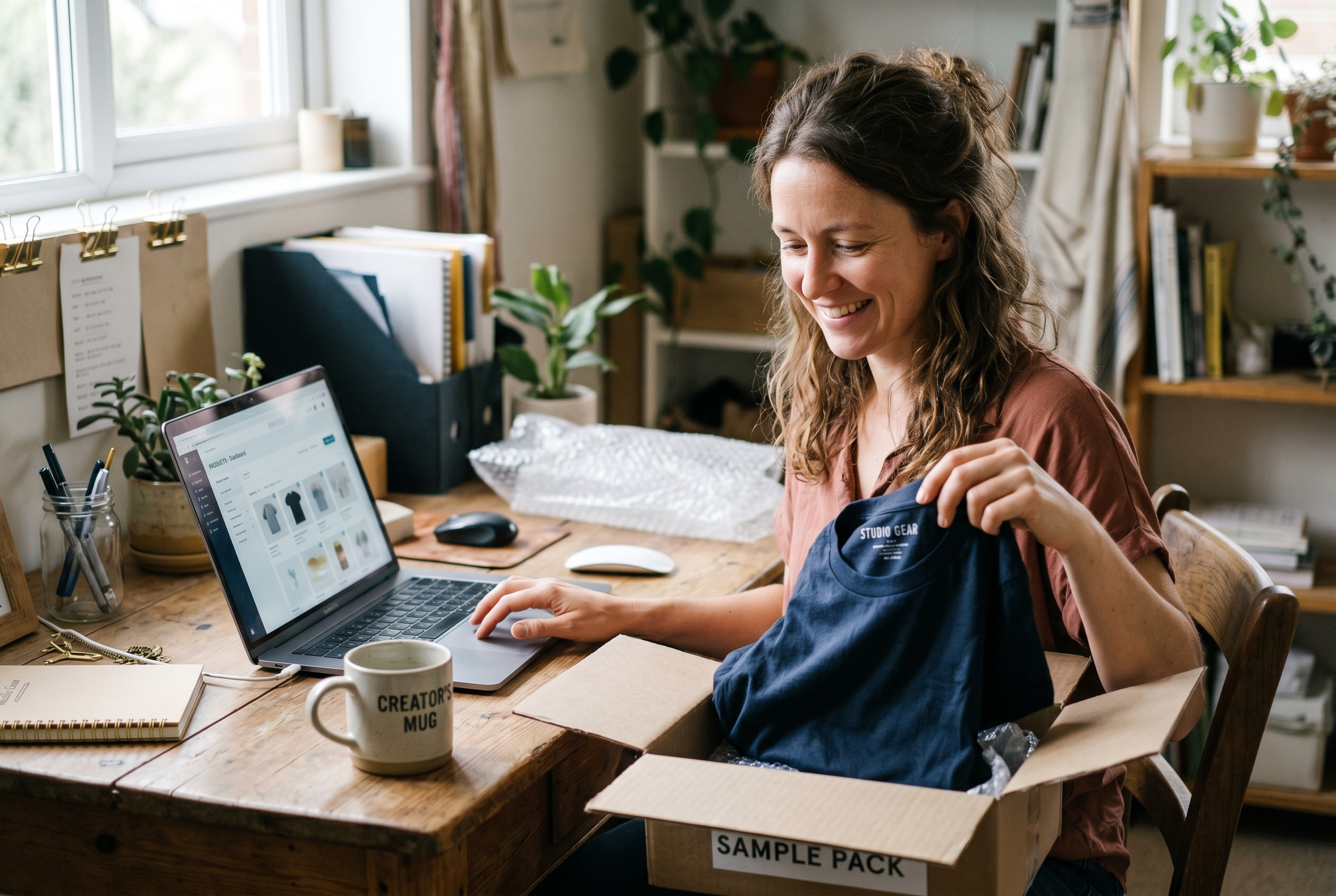
1. Dropshipping
Dropshipping is the most popular way to sell online without inventory. You import products from a supplier, set your own price, and the supplier ships each order under your brand. Your margin is the gap between what the customer pays and what the supplier charges.
The upside: almost zero upfront cost and a near-infinite catalog. The downside: thin margins (often 15–30%), long shipping times if you source overseas, and quality you can't control directly. If you want to learn how to start a dropshipping store, expect to spend most of your time on marketing and supplier vetting rather than fulfillment.
2. Print on demand
A print on demand store sells custom-designed merchandise — t-shirts, hoodies, mugs, tote bags, wall art. You upload artwork, and a print partner like Printful or Printify produces the item only when someone buys it. No minimum orders, no leftover stock.
Print on demand suits creators, artists, and niche communities. Margins are better than generic dropshipping because you're selling design and brand, not a commodity. The catch is that you need original artwork that people actually want to wear.
3. Digital products
Selling digital goods is the highest-margin version of a store with no inventory. Ebooks, Notion templates, Lightroom presets, online courses, stock photos, software — none of it ships. You create the file once and sell it unlimited times at nearly 100% margin.
The trade-off is that you have to make the product yourself, and digital piracy is real. But if you have expertise or a creative skill, this is the cleanest online store without inventory you can run.
| Model | Upfront cost | Typical margin | Best for |
|---|---|---|---|
| Dropshipping | Very low | 15–30% | Marketers, trend hunters |
| Print on demand | Low | 20–40% | Artists, creators, niche brands |
| Digital products | Time only | 85–100% | Experts, educators, makers |
How to start an online store without inventory in 7 steps
Once you've chosen a model, the launch process is the same. Follow these steps in order and you'll have a working storefront — checkout included — without ever buying stock.

Step 1: Pick a niche, not a product
Don't start with "I'll sell phone cases." Start with an audience: dog owners, home bakers, remote workers, plant parents. A niche gives you a customer to market to and a reason for your store to exist. Use Google Trends and basic keyword research to confirm people are searching for what you want to sell.
Step 2: Validate demand before you build
Check whether the market is real. Look at search volume, scan competitors, and read reviews to find gaps. According to Statista, global ecommerce keeps climbing past $6 trillion a year — but "the market is big" isn't validation. Proof that your specific audience buys is.
Step 3: Find a reliable supplier or print partner
This step makes or breaks a dropshipping or print on demand operation. Order samples before you list anything. Check shipping times, packaging quality, and return policies. A slow or sloppy supplier will generate refunds and one-star reviews you can't fix after the fact.
Step 4: Build your storefront
You need a storefront with a product catalog, secure checkout, customer accounts, and order management. Historically this meant wrestling with templates and a stack of paid apps. Today you can describe your business in plain words and have a complete store generated for you — design, catalog, Stripe checkout, and admin dashboard included. That's exactly what platforms like Rovela were built to do.
Step 5: Set prices that leave room to profit
Add up every cost: supplier price, shipping, payment processing, and your marketing spend per sale. Then price so there's real margin left over. The most common mistake new sellers make is pricing for volume they don't have yet and going broke on ad costs.
Step 6: Set up payments and shipping rules
Connect a payment processor so you can actually collect money — Stripe and PayPal are the standards. Define your shipping zones and rates clearly. Customers abandon carts when shipping is a surprise at checkout, so be upfront.
Step 7: Launch and drive your first traffic
A live store with no visitors sells nothing. Start with one channel you can sustain — short-form video, SEO content, a niche community, or paid ads with a small daily budget. Track what converts and double down. Your first ten sales teach you more than ten weeks of planning.
How much does it really cost to start from home?
The whole appeal of a no inventory ecommerce business is that you skip the biggest cost in retail: the stock itself. But "no inventory" doesn't mean "no cost." Here's where your money actually goes.
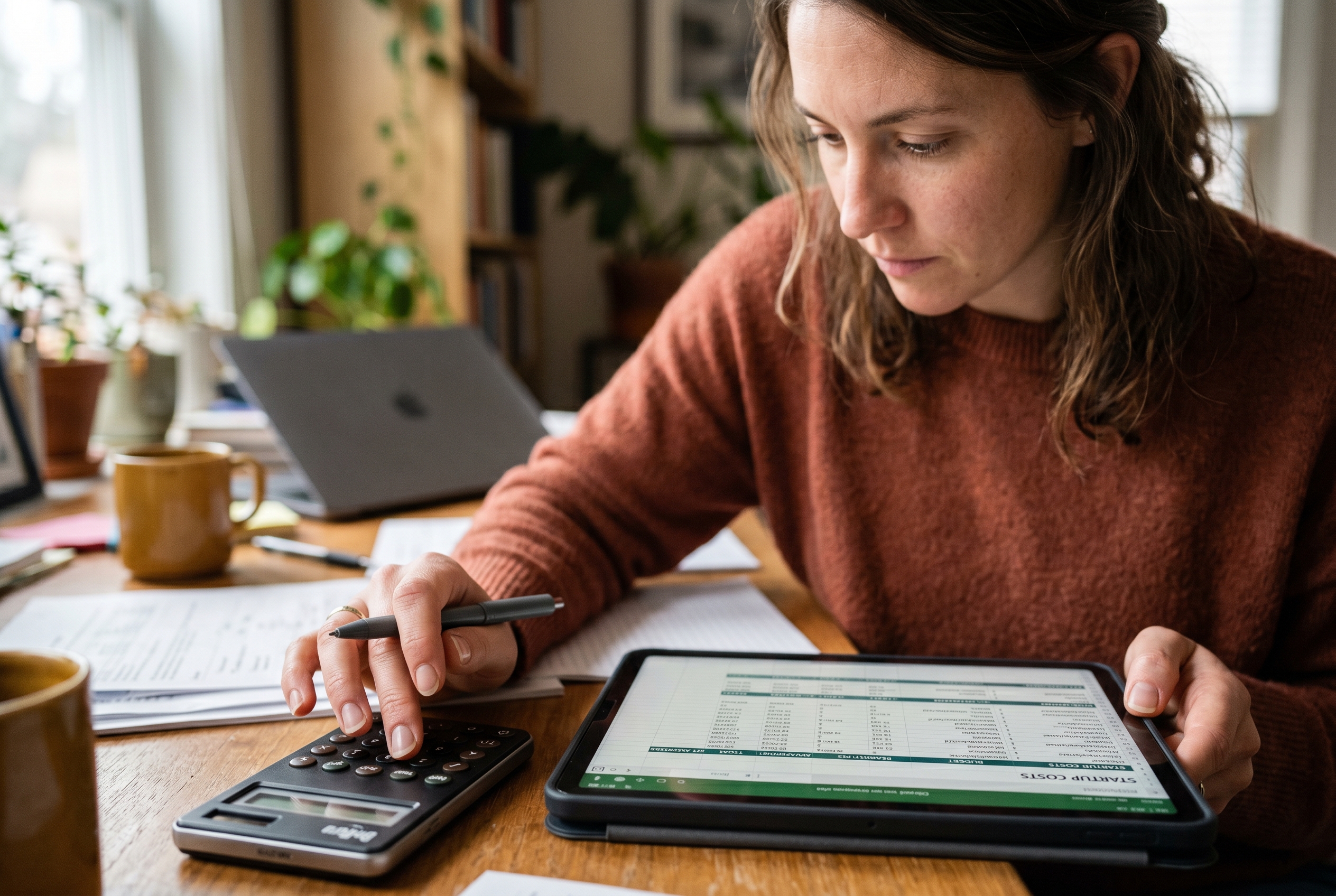
Your real expenses fall into a few buckets:
- Platform subscription — the software that runs your store. This is your most predictable monthly cost.
- Apps and plugins — on traditional platforms, essentials like abandoned cart recovery, wishlists, and reviews are paid add-ons. The average store runs six apps, and those bills stack up fast.
- Transaction fees — payment processing (around 2.9% + 30¢) plus, on some platforms, an extra cut of every sale.
- Marketing — almost always your largest variable cost, especially with paid ads.
- Samples — a small one-time spend to verify product quality.
This is where platform choice quietly drains profit. A typical Shopify setup runs $39–$399 a month for the base plan, then another $50–$200 in apps to unlock features that should be standard, plus per-sale transaction fees on top. For a brand-new store with thin dropshipping margins, that overhead can swallow your profit before you've sold a thing.
The smarter approach is a platform where the essentials — abandoned cart, wishlist, loyalty, reviews, customer Q&A, and marketing automations — are included by default with no per-app billing and no commission on your sales. Merchants who consolidate this way commonly save $5,000+ a year on platform and plugin costs. When you're learning how to sell online without inventory, every dollar of overhead you cut is a dollar of margin you keep.
Common mistakes that sink no-inventory stores
Most no-inventory stores fail for the same handful of reasons. Knowing them in advance is half the battle.
- Choosing oversaturated products. If every other store sells the same gadget, you compete on price and lose. Pick a niche angle nobody else owns.
- Ignoring shipping times. Customers who wait three weeks for an item file chargebacks. Set clear expectations or source faster suppliers.
- Building a slow, app-bloated site. Every plugin you stack adds load time. Slow stores rank worse on Google and convert worse on mobile.
- Spending on ads before the store converts. Fix your product pages and checkout first. Paid traffic only amplifies what's already working.
- Neglecting SEO. Free organic traffic compounds. A store that's search-ready from day one keeps earning long after ad budgets dry up.
The thread connecting all of these is speed and focus. A fast, well-built store in a tight niche with honest shipping promises beats a sprawling catalog every time.
Frequently asked questions
Can you really start a store with no money?
Almost. You can build a store and import products for free or close to it, but plan for a small budget — a platform subscription, sample orders, and a little marketing spend. True zero-dollar launches exist but grow painfully slowly without any promotion budget.
Is dropshipping still worth it?
Yes, if you treat it like a real brand instead of a get-rich-quick scheme. The sellers who win build a niche audience, vet suppliers carefully, and price for sustainable margins. Those chasing random trending products with cheap ads mostly don't last.
How long until a no-inventory store makes money?
Realistically, a few weeks to a few months. The store itself can go live in hours. Profit depends on how fast you find products people want and a traffic channel that converts. Expect to test, adjust, and reinvest early revenue before you see steady income.
Your next move
Starting a store without inventory is the lowest-risk way into ecommerce that exists. Choose a model that fits you — dropshipping for catalog flexibility, a print on demand store for creative control, or digital products for the fattest margins. Pick a real niche, validate demand, vet your suppliers, and launch a fast, clean storefront without burning your budget on stock or a pile of plugins.
If you'd rather skip the technical setup entirely, Rovela builds your complete store — catalog, checkout, dashboard, and 100+ features included — from a simple conversation, with no apps to assemble and no commission on your sales. Compare what's included on the pricing page, or browse the blog for more guides on building an online business from home. The hardest part of selling without inventory was always the setup. That part's solved now — so go find your first ten customers.