June 20, 2026
How to Start an Online Boutique on Instagram (2026 Guide)
A step-by-step guide to start an online boutique on Instagram — set up your shop, source inventory, turn DMs into sales, and scale without losing revenue.
Learning how to start an online boutique on Instagram is one of the cheapest ways to test a product idea without renting a shop, hiring a developer, or spending a dollar on inventory you can't sell. You already have the storefront in your pocket. Instagram reports roughly 2 billion monthly active users, and according to its own commerce data, around 130 million people tap a shopping post every month — many of them buying clothes, jewelry, and home goods straight from a feed. The catch? Most boutique owners hit a ceiling fast — manual DMs, no checkout, no way to track who bought what. This guide walks you through the full setup, from sourcing your first stock to closing sales, then shows you exactly when to stop running your business out of a chat thread.
Why Start an Online Boutique on Instagram First?
Instagram is where buying decisions for fashion and lifestyle products actually happen. A 2025 Statista survey found that nearly half of Gen Z and Millennial shoppers have discovered a product on the platform and gone on to buy it. People discover brands through Reels, save outfits to collections, and tag friends in comments. For a brand-new boutique with no audience and no budget, that built-in distribution is gold.
You can sell on Instagram for free with nothing but a phone and a few good photos. No website, no monthly fee, no design skills. That low barrier is exactly why so many founders test here first — you find out whether anyone wants your product before you invest in anything bigger. Fashion remains the single largest social-commerce category worldwide, which is why apparel and accessories boutiques convert so well on a visual-first app.
The trade-off is control. Instagram owns your audience, not you. An algorithm change or a flagged account can erase your reach overnight. So treat the platform as a launchpad, not a permanent home. The goal of social media boutique selling is to build proof, then move that proof somewhere you own.
Sourcing Inventory and Pricing Your First Products
Before you take a single order, decide how you'll get your stock — because your sourcing model shapes your margins, your shipping times, and your cash flow.
- Wholesale. Buy in bulk from a supplier or marketplace and hold the inventory yourself. You typically get the best margins (often 50–60% on apparel) but you pay upfront and carry the risk of unsold stock.
- Dropshipping. You list products and a third party ships each order when it sells. Zero upfront inventory cost, but thinner margins (often 15–30%) and less control over quality and delivery speed.
- Print-on-demand or handmade. Best for original designs. Slower to produce, but no minimum order and a built-in story that helps with social media boutique selling.
On pricing, a common boutique rule of thumb is to set retail at 2.2x to 2.5x your landed cost (the product plus shipping and any fees). That cushion has to absorb returns, Instagram and payment processor fees, and your own time. If your numbers only work at a 2x markup, you have no room to run a sale — and discounts are one of the biggest levers in social-commerce selling. Map this out in a simple spreadsheet before you post a single price.
How to Start an Online Boutique on Instagram: Setup Step by Step
Here's the practical sequence to get an instagram boutique business live and taking orders. None of this requires money upfront.
- Switch to a Business or Creator account. Go to Settings, then Account type. This unlocks insights, contact buttons, and shopping features.
- Nail your bio. One line on what you sell, who it's for, and how to buy. Add a link — even a free link-in-bio page works at the start.
- Pick a niche and stick to it. "Affordable linen dresses for tall women" beats "clothing store." Specific niches grow faster because the algorithm knows exactly who to show you to.
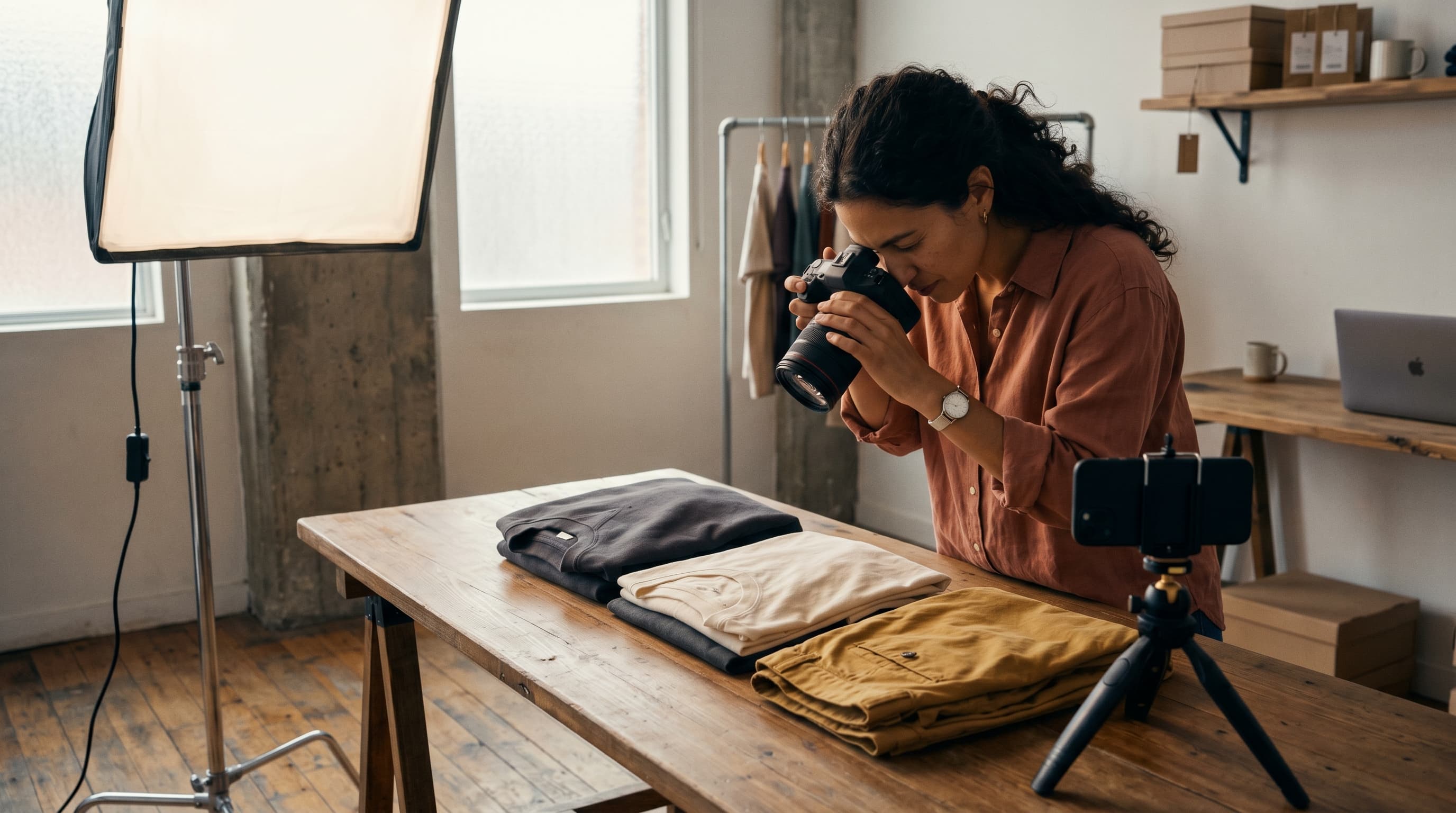
- Photograph your products well. Natural light, clean background, multiple angles. Show the item on a real body when you can.
- Use a focused hashtag strategy. Mix a few broad tags (#boutiquefashion), a cluster of mid-size niche tags (#linendress, #tallgirlfashion), and a couple of local or branded tags. Aim for 5–10 highly relevant hashtags rather than stuffing the maximum of 30 — relevance beats reach. Save your best-performing sets so you can reuse them.
- Post consistently. Mix Reels, carousels, and Stories. Reels reach new people; Stories convert your existing followers.
- Set up a simple ordering flow. Whether it's DMs, a form, or a checkout link, make the next step obvious in every caption.
For Instagram Shopping features like product tags and a native shop tab, you'll eventually need a connected product catalog and an approved commerce account. Approval isn't instant: you have to meet the commerce eligibility requirements — a supported market, a website domain that sells the products, and compliance with Instagram's merchant agreement — and review can take a few days. That's a useful upgrade, but you don't need it to make your first sale.
How to Sell Clothes on Instagram and Turn DMs Into Sales
Most first sales happen in the inbox. The DM to sale boutique model is how thousands of brands started: someone comments "price?", you reply, they pay by transfer or payment link, you ship. It works — until volume makes it painful.
Take Lagos-based boutique founder Aisha, a frequently cited example in social-commerce circles: she sold her first 200 dresses entirely through Instagram DMs and a single WhatsApp number before she ever built a website. Her story is the template thousands of founders follow — and it shows both the power and the eventual limits of the inbox.
To make how to sell clothes on Instagram actually convert, tighten three things:
- Speed. Reply within minutes, not hours. Saved replies let you answer "price" and "size" instantly without retyping. Studies of social-commerce chats consistently show response time is the single biggest predictor of whether a "how much?" turns into a sale.
- Trust. Post real customer photos, reviews, and packing videos in Stories. Social proof closes hesitant buyers.
- Friction. Send a payment link, not your bank details. Fewer steps means fewer abandoned conversations. Common processor options include Stripe, PayPal, and Paystack, each charging roughly 1.5–3.5% per transaction depending on your region.
The hidden cost of the DM model shows up around 20–30 orders a week — the point where, in practice, most solo founders can no longer reliably remember who paid, who's owed a refund, and which sizes are left from memory alone. There's no abandoned-cart recovery, no automatic receipts, no real analytics. For context, even a modest abandoned-cart email flow recovers an average of 3–5% of otherwise-lost orders, according to e-commerce benchmark reports — revenue a DM-only setup simply can't capture. That's the moment to think about instagram shop setup backed by an actual store, not just a chat thread.
Instagram vs Online Store: When to Make the Jump
The instagram vs online store debate isn't either/or — it's about timing. Instagram is the front door. A real store is the cash register, warehouse, and accountant rolled into one. Here's how the two compare once you're past the testing phase.
| Capability | Instagram Only | Dedicated Online Store |
|---|---|---|
| Cost to start | Free | Low monthly subscription |
| Checkout | Manual DM / link | Automated, secure |
| Abandoned cart recovery | None | Built in |
| Inventory tracking | Manual | Automatic |
| Customer accounts | None | Yes |
| You own the audience | No | Yes |
| SEO / Google traffic | None | Yes |
The math gets obvious fast. Baymard Institute research puts the average documented cart abandonment rate at roughly 70%, and a store with abandoned-cart recovery, wishlists, and reviews wins back a chunk of those sales an Instagram-only setup leaves on the table. Merchants who add those features typically see meaningful revenue lifts — and they stop losing hours to manual admin every week.
You also keep your customer list. When you start a boutique on social media and move buyers to your own store, every email and order belongs to you. If Instagram changes the rules, your business keeps running.
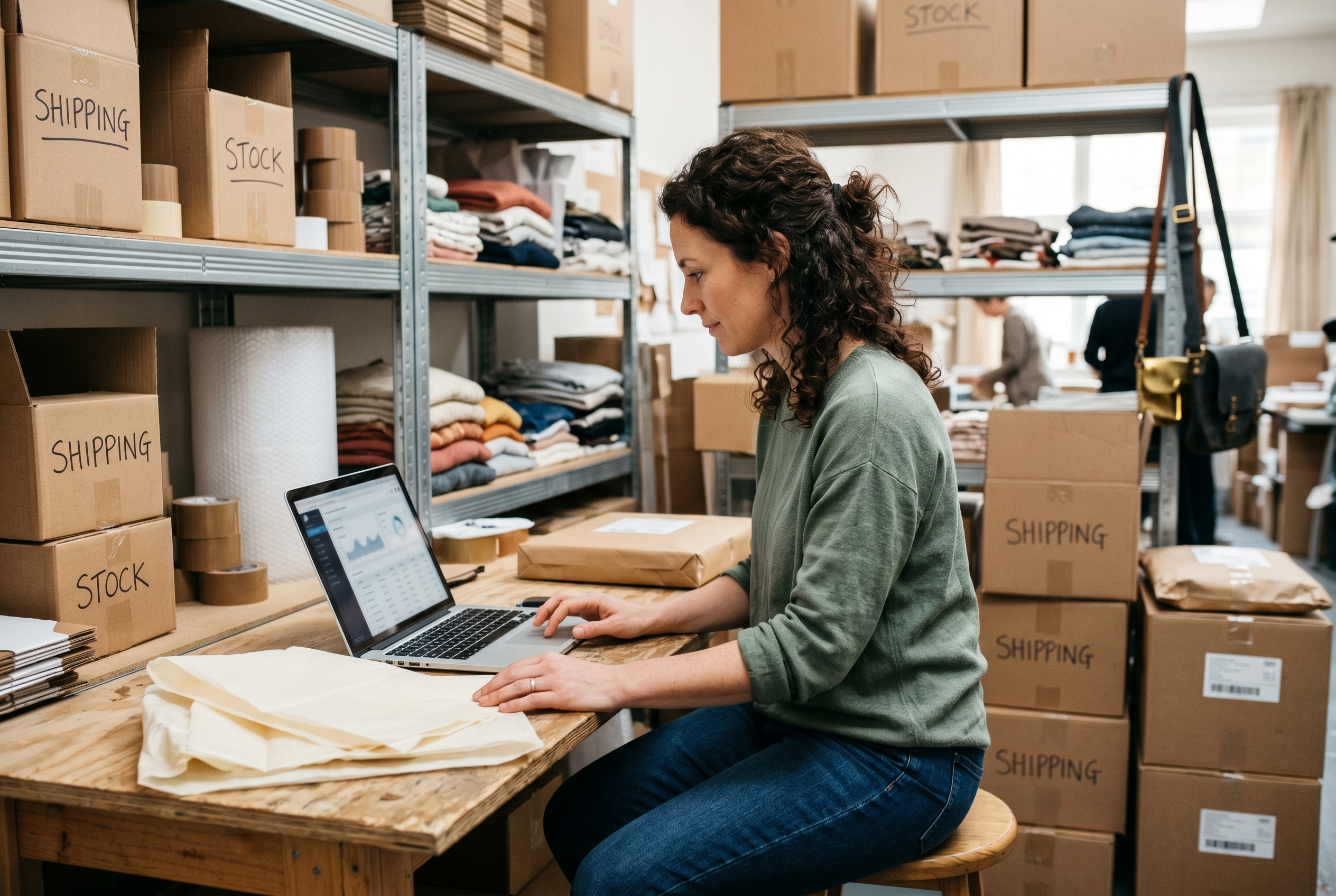
The Easiest Way to Launch a Real Store From Your Phone
The old objection to building a real store was that it took weeks, a designer, and a developer. That's no longer true. Tools like Rovela's store builder create a complete store from a plain-language conversation — you describe your boutique, and the platform ships a storefront, catalog, Stripe checkout, customer accounts, and analytics in hours instead of weeks.
What used to require a stack of paid apps comes built in: abandoned cart recovery, wishlists, loyalty, reviews, customer Q&A, and marketing automations. You're not assembling plugins or paying surprise app bills on top of a subscription. For a boutique owner who just wants to sell, that's the difference between running a business and babysitting software.
If you've already been social media boutique selling through DMs, migration is quick — your branding, catalog, and customers carry over, often in well under an hour. Then you keep posting on Instagram exactly as before, but the "link in bio" now points to a checkout that works while you sleep. If you want a deeper look at the trade-offs, our guide on moving from social selling to a dedicated store breaks the decision down further.
Compared with assembling a Shopify plan plus a handful of apps, an all-in-one approach saves both the monthly plugin bills and the setup headache. You can review Rovela's transparent pricing plans before you commit, and there's no commission taken on your sales.
Common Questions About Starting an Instagram Boutique
Do I need a business license to sell on Instagram?
Requirements vary by country and state. In most places, selling regularly counts as a business and you'll eventually need to register and handle sales tax. Check your local rules early — it's cheaper to do it right than to fix it later.
How many followers do I need before I can sell?
Zero. Your first customers often come from friends, local hashtags, and Reels that reach beyond your follower count. Focus on a clear niche and consistent posting, not a follower milestone.
Can I really start a boutique for free?
Yes — you can sell on Instagram for free using your phone, free photos, and DMs. The free phase is for proving demand. Once orders are steady, a low-cost store pays for itself by recovering lost sales and saving you admin time.
Wholesale or dropshipping for my first boutique?
If you have a little cash and want better margins and quality control, start with a small wholesale order in your tightest niche. If you want to validate demand with zero inventory risk, dropship a handful of test products first, then reinvest profits into wholesale stock once you know what sells.
Your Path From First Post to Real Business
Starting an online boutique on Instagram is the smartest, cheapest way to find out if people want what you're selling. Source a tight starter range, set up a business account, pick a clear niche, shoot great photos, post consistently, and close your first sales in the DMs. That's the whole playbook for week one.
The mistake is staying there too long. Once orders are steady, manual selling caps your growth and quietly leaks revenue. Moving to a real store gives you checkout, abandoned-cart recovery, inventory, and a customer list you own — without giving up the Instagram audience you worked to build.
If you're ready to turn your instagram boutique business into something that scales, Rovela builds your full store from a single conversation and migrates an existing one in well under an hour. Browse more boutique and e-commerce growth guides on our blog, or describe your boutique and watch your store come to life.