July 4, 2026
How Much Does a Restaurant Website Cost in 2026?
A clear breakdown of what a restaurant website really costs — from DIY builders to online ordering systems — plus how to skip the plugin bills.

So you want a website for your restaurant, and the first question is the obvious one: how much does a restaurant website cost? The honest answer is that it ranges from about $30 a month to $15,000 upfront — and the gap between those numbers is where most owners get burned. A pretty homepage is cheap. A site that takes orders, handles payments, and doesn't crash on a Friday night is where the real spending happens. This guide breaks down every line item so you know exactly what you're paying for and where the money quietly leaks.

How much does a restaurant website cost on average?
A basic restaurant website costs $500 to $3,000 to build and $20 to $100 per month to maintain. Add online ordering, delivery, and reservations and the total climbs to $5,000–$15,000 upfront or $200–$500 per month once you factor in apps, plugins, and transaction fees.
The wide range comes down to three choices: who builds it, what platform runs it, and how many features you bolt on. A single-location taco spot that only needs hours, a menu, and a phone number sits at the low end. A three-location group that wants online ordering, loyalty points, and gift cards sits at the high end.
Here's the part most quotes hide — the sticker price is rarely the real restaurant website cost. Monthly plugin fees, payment processing cuts, and the developer you'll call every time you change your brunch menu add up faster than the build itself.
The real cost to build a restaurant website, line by line
Let's split the cost to build a restaurant website into the pieces that actually show up on your invoice. Every route pays for the same jobs — design, hosting, a way to update the menu, and (usually) a way to take orders. They just package it differently.

Design and build
- DIY builder (Wix, Squarespace): $0–$200 in your own time, plus the monthly plan.
- Freelancer: $500–$3,000 for a template-based build.
- Agency: $5,000–$15,000+ for a custom design with online ordering.
Hosting and domain
- Domain name: $10–$20 per year.
- Hosting: $10–$50 per month for shared hosting, more if traffic grows.
- SSL certificate: often free, sometimes $50–$100 per year on older setups.
Online ordering and payments
This is where the online ordering system cost surprises people. Third-party marketplaces like DoorDash or Uber Eats charge 15–30% per order — that's not a fee, it's a slice of every plate you sell. A branded ordering system on your own site runs $50–$300 per month plus payment processing of around 2.9% + $0.30 per transaction.
Ongoing maintenance
Menus change. Prices change. Someone has to update the site, patch security holes, and fix the plugin conflict that broke checkout. Budget $50–$500 per month if you're paying a developer, or the price of your own weekends if you're not.
Platform comparison: what restaurant ecommerce pricing really looks like
Below is a realistic view of restaurant ecommerce pricing across the popular options. These figures include the base plan plus the typical add-ons a food business actually needs — because the base price alone is fiction.
| Option | Upfront | Monthly (all-in) | Order fees |
|---|---|---|---|
| DIY builder (Wix/Squarespace) | $0 | $30–$120 | Add-on apps |
| Shopify + ordering apps | $0–$500 | $120–$400 | 0.5–2% + app fees |
| WooCommerce (self-hosted) | $500–$3,000 | $80–$500 | Plugin + processing |
| Custom agency build | $5,000–$15,000 | $200–$1,000 | Processing only |
| Third-party marketplaces | $0 | $0 | 15–30% per order |
Notice the pattern. The cheapest upfront options — marketplaces and free builders — cost the most over a year once fees and add-ons pile on. On Shopify's own pricing page the base plans look reasonable, but 87% of Shopify stores run paid apps, averaging six per store. Each one is a separate monthly bill, and each one is a fresh chance for something to break.
WooCommerce sits on WordPress, which is free to download but expensive to maintain — plugin conflicts, security patching, and hosting all become your problem. Roughly one in five self-hosted stores shuts down within six months because the upkeep outweighs the savings.

Hidden fees that inflate your food business website price
The quoted number is never the real food business website price. These are the costs that show up after you've signed:
- App and plugin subscriptions. Online ordering, reservations, loyalty, reviews, and email each become a separate $10–$60 monthly charge. Five apps quietly become $200 a month.
- Transaction and marketplace cuts. A 20% fee on a $40 order is $8 gone — every single order.
- Developer retainers. Every menu tweak or seasonal promo becomes a support ticket at $75–$150 an hour.
- Speed penalties. Stacked plugins slow your site down. Slow sites lose mobile customers and rank lower on Google — a cost you never see on an invoice but pay in lost orders.
- Re-platforming. Outgrow a cheap builder and you'll rebuild from scratch. That's the cost to build a restaurant website paid twice.
This is exactly why a restaurant website with ordering cost is so hard to pin down. You're not buying one product — you're assembling a dozen, and each one bills you separately, forever.
How to get a restaurant website with ordering without overpaying
You don't need to choose between a cheap site that can't take orders and an expensive one that eats your margins. The trick is picking a setup where the essentials are already included instead of sold as add-ons.
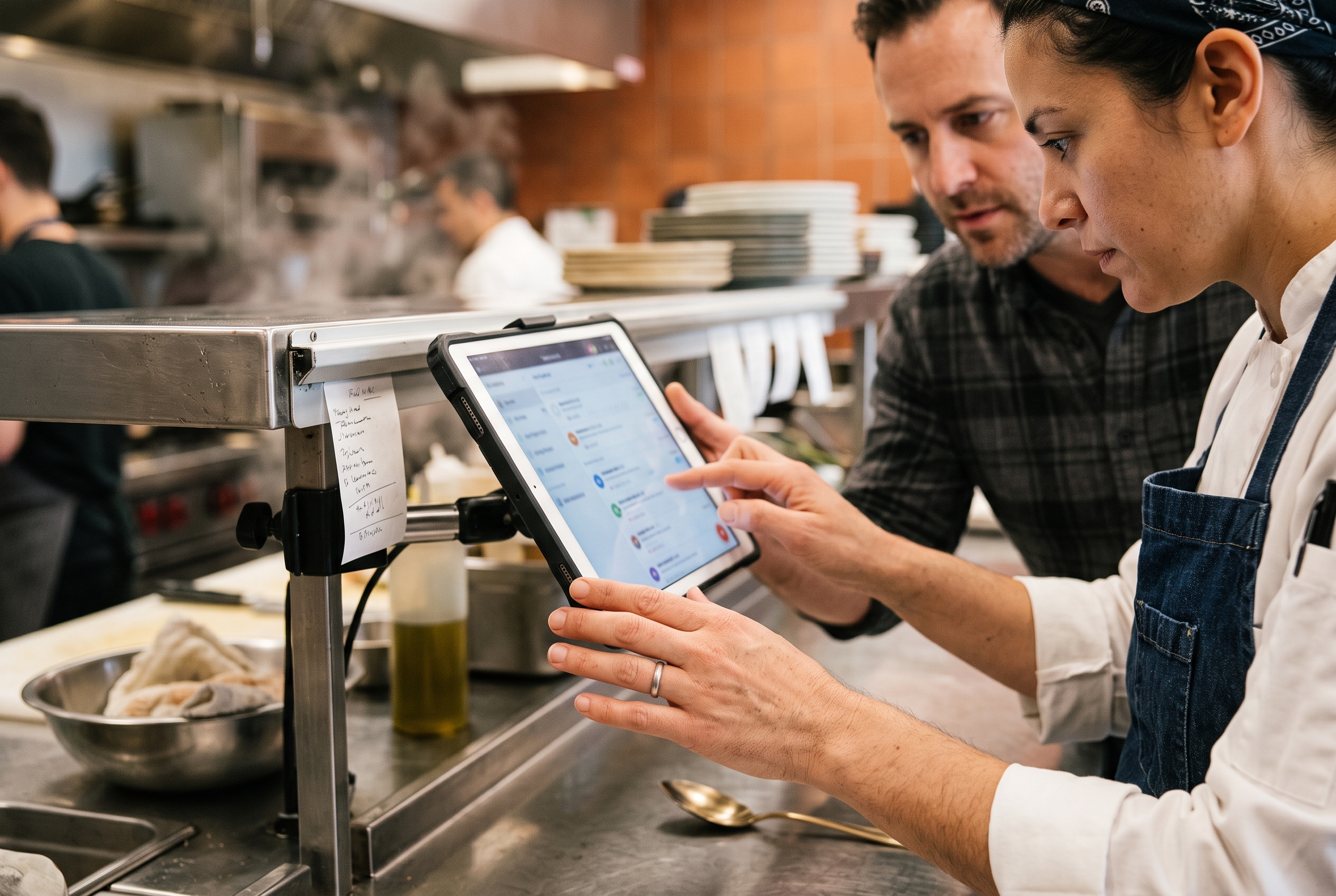
Here's what to check before you commit to any platform:
- Is online ordering built in? If it's a paid app, add that to your real monthly number.
- Are there per-order commissions? A flat fee beats a percentage the moment you get busy.
- Can you update the menu yourself? If a price change needs a developer, that's a recurring cost.
- Is it fast on mobile? Most restaurant traffic is phones at 7 p.m. Speed is revenue.
- Do you own the code? If you can export your site and hand it to any developer, you're never trapped.
Newer AI-built platforms answer most of these by default. Rovela builds a complete store from a plain-language conversation — menu, online ordering, Stripe checkout, customer accounts, and marketing tools all included in one flat subscription, with no per-app billing and no commission on orders. You describe your restaurant, and the store ships in hours instead of weeks. Because it runs on standard Next.js code you can download, you're never locked in. That matters for the numbers: merchants moving off an app-heavy stack typically save more than $5,000 a year on platform and plugin costs. If you're weighing a transparent monthly price against a pile of separate subscriptions, do the full-year math — not the base-plan math.
So what should you actually budget?
If you're a single location that mainly needs to be found, expect $30–$120 per month and you're done. If you want a proper restaurant website with ordering, budget $150–$400 per month all-in — and demand that ordering, payments, and menu control come included rather than as extras.
Avoid two traps. First, the "free" marketplace that takes 20–30% of every order — that's the most expensive channel you'll ever use. Second, the cheap restaurant website builder that looks great until you need it to actually sell, then charges for every real feature.
The smartest spend in 2026 is a single platform where the essentials are already built in, the price is one flat line, and you can update everything yourself. That's how you turn a website from a cost center into a channel that pays for itself. Want to see a full ordering-ready store built for your restaurant before you spend a cent on developers or plugins? Start a conversation with Rovela and watch it get built in minutes, or browse the Rovela blog for more on cutting e-commerce costs.