June 22, 2026
Print on Demand vs Manufacturing Clothing: Which Wins?
Print on demand vs manufacturing clothing — compare costs, margins, and risk to pick the right way to source apparel for your online store.
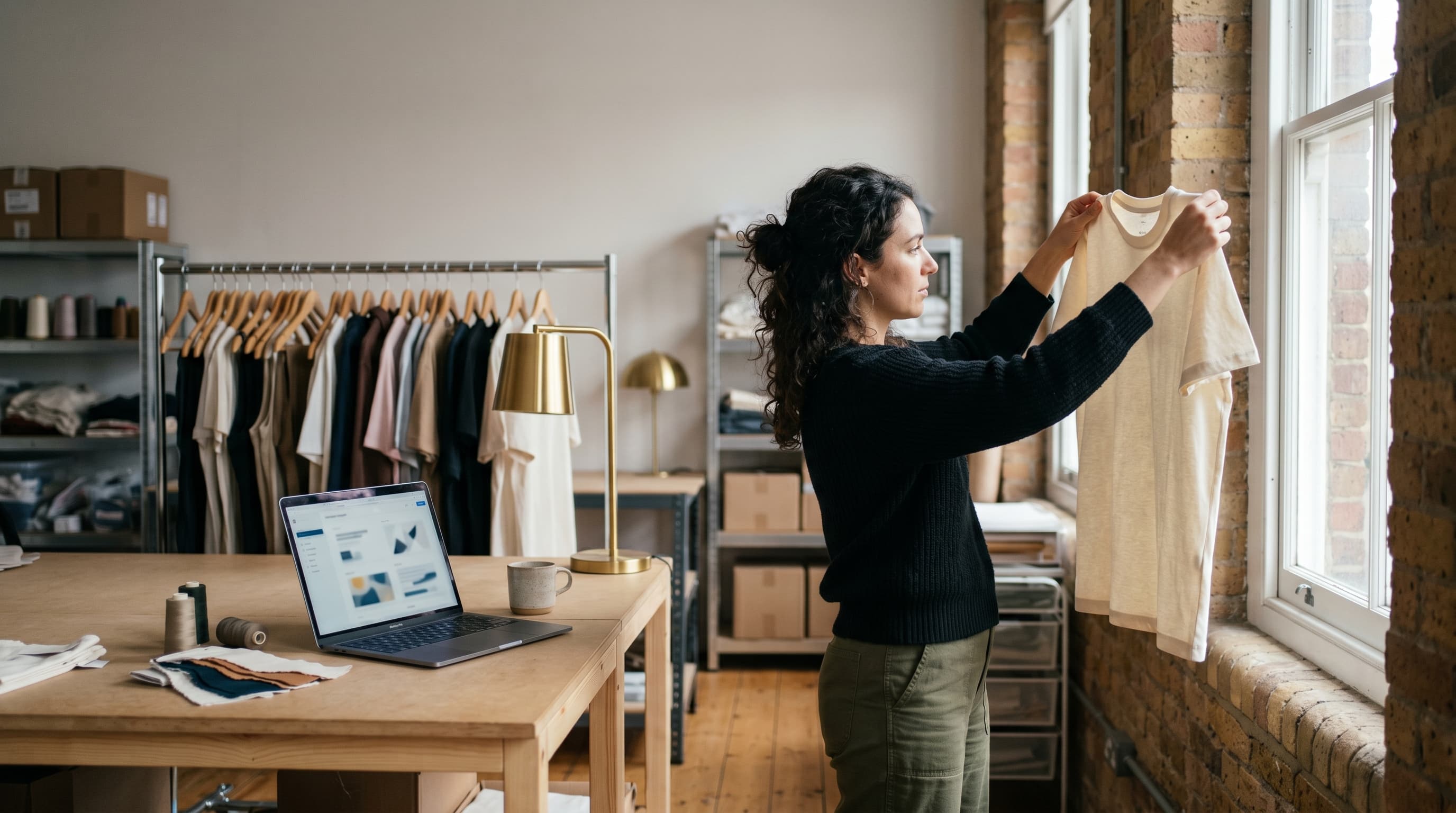
Deciding between print on demand vs manufacturing clothing is the first real fork in the road for any apparel brand. One path lets you launch with zero inventory and near-zero risk. The other unlocks fat margins and full control over quality — but asks for cash up front and a leap of faith. Pick wrong and you either bleed money on stock that never sells or hand most of your profit to a fulfillment partner. This guide breaks down the trade-offs with real numbers, so you can choose the best way to source clothing for your online store before you spend a dollar.

Print on demand vs manufacturing clothing: the core difference
The split comes down to when you produce. With print on demand (POD), nothing gets made until a customer buys. A partner like Printful or Printify prints your design on a blank garment, then ships it directly to the buyer. You hold no stock and pay only after the sale.
Manufacturing flips the order. You commit to a production run — say 300 hoodies — pay for them up front, store them, and ship as orders come in. You own the inventory, the quality, and the risk. You also own the upside.
Neither model is "better" in the abstract. The right answer depends on your stage, your budget, and how much you care about margins versus speed. Here's the short version before we go deep:
- Print on demand wins on speed, risk, and testing new designs.
- Clothing manufacturing wins on per-unit cost, quality control, and brand differentiation.
- Most successful brands start with POD and graduate to manufacturing once a design proves itself.
Print on demand clothing pros and cons
POD is the lowest-friction way to start selling apparel. You upload a design, connect a storefront, and you're live the same day. But that convenience comes at a cost that shows up in your margins. Here's an honest look at the print on demand clothing pros and cons.

The advantages of print on demand
- No upfront inventory cost. You don't pay for a garment until someone buys it. Launch a 20-design collection without spending on stock.
- Zero dead stock risk. A design that flops costs you nothing but the time to make it.
- Test fast. Drop ten designs, see which two sell, kill the rest. POD is a research tool as much as a fulfillment one.
- Hands-off fulfillment. Your partner prints, packs, and ships. No warehouse, no packing tape.
The drawbacks of print on demand
- Thin margins. A blank tee costs the platform $8–$12, and you'll pay most of that. After the product price and shipping, print on demand clothing margins often land at 20–30% — versus 60%+ for manufactured goods.
- Limited control. You're stuck with the blanks your partner stocks. Custom cuts, special fabrics, woven labels, and unique packaging are usually off the table.
- Slower shipping. Each item is made to order, so delivery runs 5–10 days — longer than customers expect in 2026.
- Inconsistent quality. Print position and color can drift between orders because you don't see the product before it ships.
POD is the right move when you're validating an idea, running a content-driven brand, or selling to an audience that values the design over the garment. It's the best way to source clothing for an online store in month one. It's rarely the way to build a durable, high-margin brand by year two.
Clothing manufacturing vs print on demand: cost and margin breakdown
When people debate clothing manufacturing vs print on demand, they usually argue about risk. But the real story is in the math. Let's put real numbers on a single $35 t-shirt sold at retail.
| Factor | Print on Demand | Manufacturing |
|---|---|---|
| Cost per unit | $18–$24 | $6–$11 |
| Upfront investment | $0 | $1,500–$6,000 |
| Gross margin on $35 tee | ~25% | ~65% |
| Minimum order | 1 unit | 50–300 units |
| Inventory risk | None | High |
| Shipping speed | 5–10 days | 1–3 days |
| Quality control | Limited | Full |
The margin gap is the whole game. On 1,000 shirts sold, POD might net you about $8,750 in gross profit. Manufacturing the same run nets roughly $22,750 — even after you subtract the upfront production cost. That difference funds ads, hires, and your next collection.
The catch sits in that clothing manufacturer minimum order quantity row. Most factories won't touch a run under 50 units per style, and the good per-unit pricing only kicks in around 100–300. So manufacturing rewards you for volume — which is exactly why it's dangerous before you have proof a design sells.

How to source clothing for a brand at each stage
The smartest founders don't pick one model forever. They sequence them. Here's how to source clothing for a brand as it grows from a hunch to a real business.
Stage 1: Validate with print on demand
Start with POD. Your only goal here is to find out which designs people actually pay for. Launch a small range, run a little paid traffic, and watch the data. Spending $0 on inventory while you learn is the single biggest advantage of this stage. Don't optimize margins yet — optimize for signal.
Stage 2: Move winners to bulk wholesale or small-batch manufacturing
Once a design clears a consistent sales threshold — say 20–30 units a month — it's earned a production run. This is where the wholesale vs print on demand apparel question comes in. Buying blank garments wholesale and decorating them locally (screen printing or embroidery) cuts your per-unit cost dramatically while keeping order minimums modest. It's a clean middle step before full custom manufacturing.
Stage 3: Custom manufacture your hero products
For the styles that define your brand, go custom. This is where you choose your own fabric, cut, fit, labels, and packaging. Your margins jump to 60–70%, and your product becomes genuinely yours instead of a print on a blank anyone can buy. Domestic factories give you speed and easier quality control; overseas factories give you the lowest cost at higher minimums and longer lead times.
This staged approach is how the operators behind brands doing real volume actually work. You de-risk with POD, prove demand, then reinvest profits into the margins that make a clothing business sustainable. It's the difference between a hobby and a company.
Wholesale vs print on demand apparel: the hybrid most brands miss
The debate usually gets framed as POD against full manufacturing, but the most practical path for early brands sits in between. Buying blanks wholesale and decorating them yourself — or through a local printer — splits the difference on cost and risk.
Here's why the hybrid works so well:
- Lower minimums than manufacturing. You can buy 50 blank tees from a wholesaler instead of committing to a 300-unit custom run.
- Better margins than POD. A wholesale blank runs $3–$6; decorating it adds $2–$4. You land near $7 all-in instead of $20.
- Faster shipping. You hold stock, so you ship same-day instead of waiting on print-to-order.
- Quality you can inspect. You see every garment before it goes out the door.
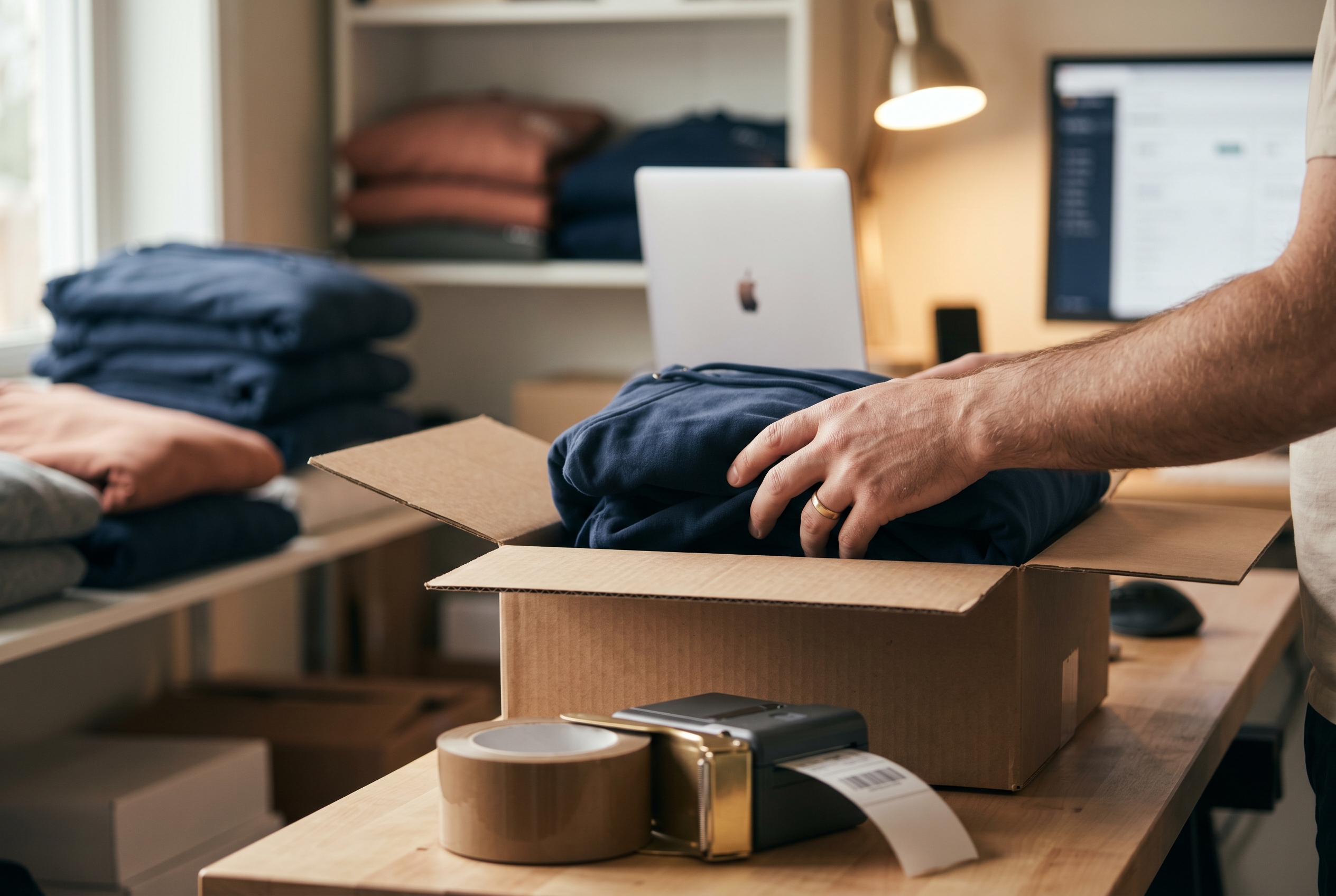
The trade-off is that you take on light inventory and handle fulfillment yourself. For most brands crossing from validation into real revenue, that's a fair price for doubling your per-unit profit. Treat it as a bridge — not a destination.
Which model is right for your store?
Use this quick decision filter. It cuts through the noise in the print on demand vs manufacturing clothing debate and points you to a clear next step.
- Choose print on demand if you're launching, testing designs, have little capital, or sell a wide range of low-volume styles. Accept thinner margins as the price of zero risk.
- Choose wholesale + decoration if a few designs are selling steadily and you want better margins without a big inventory bet.
- Choose manufacturing if you have proven demand, enough cash to cover a clothing manufacturer minimum order quantity, and you want to own your fabric, fit, and brand.
Whatever you choose, your storefront has to keep up. Sourcing decisions mean nothing if your checkout leaks sales, your product pages load slowly, or you can't recover abandoned carts. The platform you sell on shapes your margins just as much as the garment you sell.
That's where having the right foundation matters. Rovela builds a complete online store from a plain-language conversation — full storefront, Stripe checkout, abandoned cart recovery, wishlists, reviews, and over 100 features included by default. No app stack, no plugin bills eating into the margins you fought to protect. Whether you start on POD or jump straight to manufacturing, you can connect your catalog and go live in hours, then refine anything just by asking in chat.
The verdict: start lean, scale into margin
There's no universal winner in print on demand vs manufacturing clothing — there's only the right model for your stage. POD removes risk so you can find out what sells. Manufacturing rewards proven demand with margins that actually build a business. The mistake isn't picking one; it's picking one and never moving.
Start with print on demand to validate. Bridge through wholesale to grow your margins. Manufacture your winners once the data tells you to. That sequence keeps your downside small and your upside open — the way every durable apparel brand gets built.
When you're ready to sell, give your products a home that won't tax your margins. Explore Rovela's flat pricing with every selling feature included, or browse the Rovela blog for more guides on launching and scaling your online store. Your store can be live before your first production run even ships.
Want to compare platform costs before you commit? Check the Shopify pricing page, then look at what's actually included versus paid add-ons. The blank you print on is only one piece of your real cost.