By El Ghali Bennis · Published
PayPal Seller Protection Online Store: What's Really Covered
PayPal seller protection for your online store: what it covers, what voids it, and how holds and limits work. See a real-numbers example first.
PayPal seller protection for an online store covers you against unauthorized payments and "item not received" claims, but only when you ship to the address on the transaction, keep valid proof of shipment, and sell eligible physical goods. Many orders fall outside it, so you need to know the exclusions before a dispute lands.
Most new sellers assume that accepting PayPal means every sale is safe. It doesn't. Protection is conditional, and PayPal decides case by case. Below you'll find the rules in plain language, a worked example with real numbers, a named case study, the mistakes that void coverage, and what to do when PayPal puts a payment on hold or limits your account. Eligibility details change by country and over time, so always confirm against PayPal's seller protection policy page for your region. The figures below are examples from PayPal's US user agreement and seller protection policy as last reviewed for this article; yours may differ, and PayPal can update them without notice.
What Does PayPal Seller Protection Actually Cover?
PayPal seller protection covers eligible transactions where a buyer claims they didn't receive the item or says the payment was unauthorized. If you qualify, PayPal can keep the money in your account even when the buyer wins the claim.
The two covered situations are worth separating:
- Item not received (INR): The buyer says the package never arrived. You're protected if you can prove delivery to the address on the transaction details.
- Unauthorized transaction: Someone used a stolen account or card. You're protected if you shipped as required and met the other conditions.
What it does not cover is "significantly not as described" claims. If a buyer says the jacket is the wrong color or the quality is poor, you can lose the dispute and the funds even with perfect shipping records. That's the gap that surprises most small shops.
A Worked Example: Two Orders, Two Outcomes
Here is how the same dispute can go differently. Imagine you sell candles and receive two $120 orders on the same day.
- Order A: You ship with USPS tracking to the address on the PayPal transaction and add the tracking number that day. The buyer claims the parcel never arrived. Tracking shows "Delivered" to that address. PayPal rules for you, and you keep the $120.
- Order B: The buyer messages you to ship to their office instead. You do, with tracking. Later they open an "item not received" claim. Because the address doesn't match the transaction details, protection is void. You lose the $120, the candles, and possibly a $20 chargeback fee, so the loss is closer to $140 plus the product cost.
The difference isn't the product or the buyer. It's one address change. That is why the address rule is the one to enforce without exception.
Case study: a composite candle shop
Consider "Ember & Oak," a hypothetical three-person candle shop built from patterns common among small sellers. In its first month it made 140 PayPal sales averaging $48, about $6,700. Eleven buyers opened disputes. Seven were "item not received" claims, and the shop had tracking uploaded on all seven, so it kept those funds. Two were "not as described" claims about scent strength, which seller protection doesn't cover, so the shop refunded $96. The last two involved buyers who asked for a different delivery address, and the shop lost $96 plus fees. Result: about $192 lost, around 2.9% of revenue, and almost all of it traceable to two avoidable rules: address changes and vague scent descriptions. After rewriting product pages and refusing address changes, the next month's losses fell to under $50.
PayPal Seller Protection Requirements You Must Meet
The PayPal seller protection requirements come down to eligible items, the right address, timely shipping and provable delivery. Miss one and the coverage goes away for that order.
Under PayPal's US policy, you need to:
- Sell a tangible, physical item. Digital goods, services and custom-made items are generally excluded.
- Ship to the address on the PayPal transaction details page. If a buyer asks you to ship somewhere else, you lose protection. Don't do it, however polite the request.
- Ship within the stated timeframe. PayPal's US seller protection terms have referenced shipping within 7 days of payment, or earlier if your listing promises it.
- Keep proof of shipment or delivery. More on this below.
- Respond to PayPal's requests quickly. PayPal's dispute process typically gives sellers 10 days to respond, so check the deadline shown in your Resolution Center.
- Keep the payment and refund in PayPal. Don't refund through another channel while a dispute is open, or you may end up paying twice.
Also, the sale has to go through a PayPal-eligible checkout, with the buyer's and seller's countries on PayPal's eligibility list. Check that list if you sell cross-border.
Proof of Shipment: What PayPal Accepts
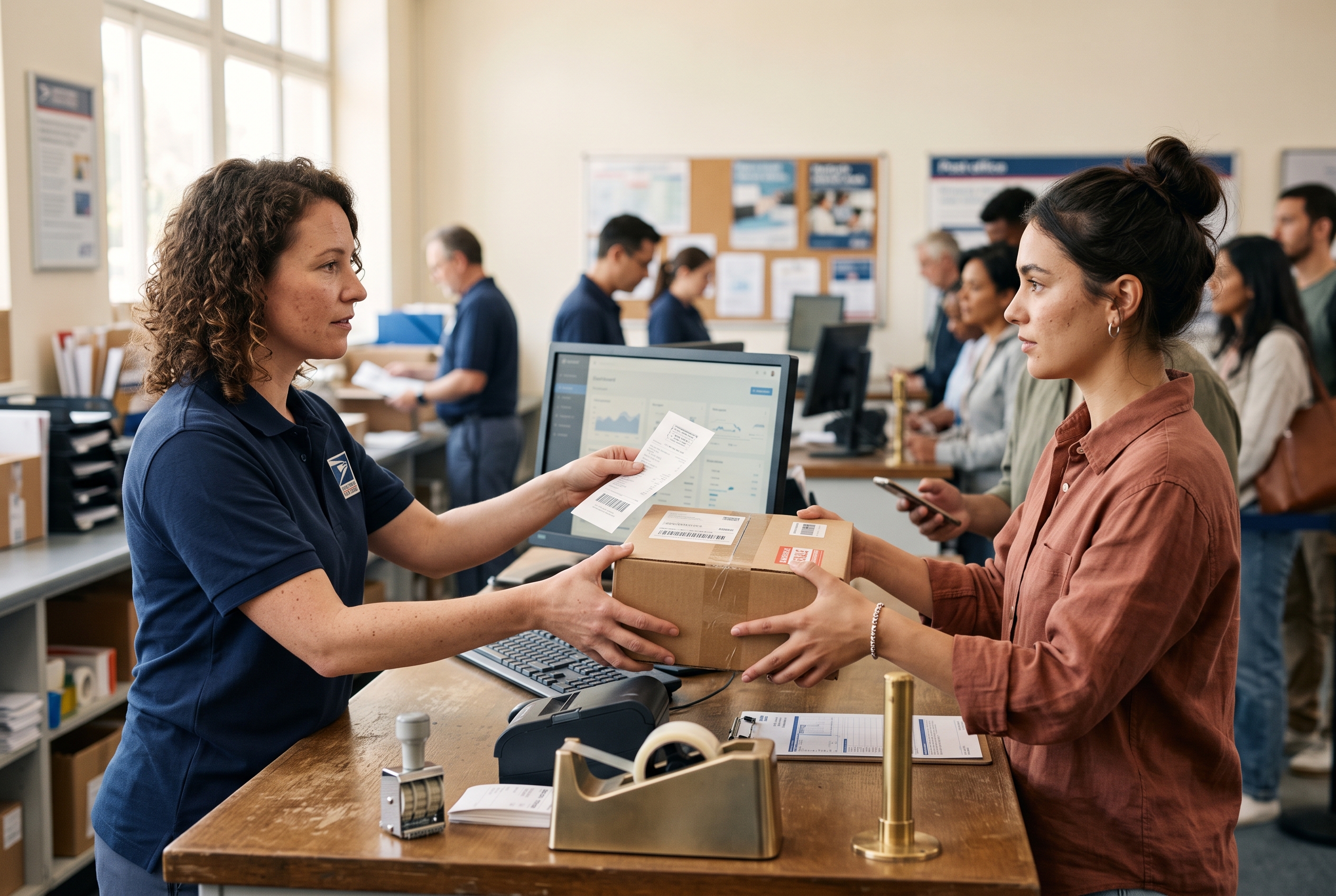
PayPal proof of shipment means an online tracking number that shows the package reached the buyer's address. Handwritten receipts and photos of the box don't count for protection.
For eligible sales, PayPal wants tracking that is uploaded or visible on the transaction, with a status showing delivery. Delivery confirmation tied to the transaction address is the strongest evidence. PayPal's US seller protection terms have required signature confirmation for orders of $750 or more, but thresholds vary by country and change, so verify yours on the policy page. Signature confirmation from a carrier such as USPS typically costs a few dollars, which is cheap against a $750 loss.
A simple evidence routine
- Add the tracking number to the PayPal transaction the day you ship.
- Use a carrier that PayPal recognizes, such as USPS, UPS, FedEx, DHL or Royal Mail.
- Screenshot the delivered status and save it with the order.
- Buy signature confirmation on anything at or above your country's threshold.
- Photograph the packed item and the label for "not as described" disputes.
That last photo won't unlock seller protection, but it helps your case when you argue a dispute on the merits.
PayPal Seller Protection Exclusions to Know
PayPal seller protection exclusions include digital goods, services, in-person pickups, items shipped to a different address, and claims of "not as described." Knowing these upfront saves you from false confidence when you run a PayPal seller protection online store.
| Situation | Usually protected? | Why |
|---|---|---|
| Physical item shipped with tracking to transaction address | Yes | Meets core requirements |
| Buyer says item is "significantly not as described" | No | Not covered by seller protection |
| Digital download or software | No | Not tangible |
| Services or bookings | No | Not tangible |
| Item shipped to a different address than PayPal shows | No | Address mismatch voids coverage |
| Local pickup | No | No shipment proof |
| Payment taken by manual entry, such as a virtual terminal | Often no | Not an eligible checkout flow |
| Delivered without required signature on high-value order | Often no | Missing signature evidence |
Also watch for "pending" statuses. A payment that isn't fully completed can't be shipped against safely, so wait until funds clear before you pack the order.
PayPal Dispute vs Chargeback: How Each Works
On a PayPal chargeback vs dispute question, the difference is who the buyer goes to. A dispute is opened with PayPal. A chargeback is filed with the buyer's bank or card issuer, which pulls the money back through the card network such as Visa's dispute process.
How a PayPal dispute for sellers plays out
When a buyer opens a dispute, PayPal may freeze the disputed amount in your balance. You then have a short window to respond with tracking, photos or messages. If the buyer escalates to a claim, PayPal reviews the evidence and rules. If you meet the seller protection requirements, you keep the money. If not, you lose the sale amount and may also lose the item.
When a chargeback hits instead
A chargeback bypasses PayPal's dispute process. PayPal handles the bank response for you, but it still decides based on the evidence you supply. PayPal's published US fee schedule has listed a chargeback fee of about $20 per case for standard sellers, and it can apply even if you win when the transaction isn't covered, so check the current PayPal merchant fees page for your country. For a deeper walkthrough of evidence and prevention, read our guide on how to handle chargebacks as an online store owner.
Why PayPal Holds Funds and Limits Seller Accounts
PayPal holds funds on new sellers because it has no sales history to judge risk against. It can also limit an account after a spike in disputes, unusual volume or missing documents.
PayPal holds funds for new sellers
If you've just launched, expect PayPal to hold some payments. PayPal's user agreement allows holds, and sellers commonly report holds of up to 21 days or until the buyer receives the item, depending on risk profile. That's a normal paypal payment on hold situation, not necessarily a penalty. Uploading tracking promptly often shortens the hold. For the broader picture of how this compares with card processors, see Shopify Payments vs PayPal: fees, payouts and holds compared.
If your PayPal account is limited
A paypal account limited seller notice usually means PayPal wants more information or sees risk. Typical triggers include:
- A sudden jump in sales far above your normal volume, such as going from $500 to $5,000 in a week
- A high ratio of disputes or refunds
- Unverified identity or business details
- Selling restricted or high-risk products
- Logging in from unusual devices or locations
To resolve it, open the Resolution Center, upload what PayPal asks for (ID, business proof, invoices, tracking) and reply fast. Slow answers extend the limit.
How to Protect Your Online Store Beyond PayPal
The safest approach is to not depend on PayPal protection alone. Treat it as one layer, because it excludes "not as described" claims and can leave you exposed on digital and service sales.
- Offer more than one checkout. If PayPal freezes funds, a card option keeps cash flowing. Our best payment gateway for a small online store comparison shows the main alternatives.
- Write precise product descriptions. Specific sizes, materials and photos cut "not as described" claims at the source.
- Automate tracking uploads. Manual entry is where evidence goes missing.
- Keep a clear returns policy. Many buyers choose a return over a dispute when it's easy.
- Watch your dispute rate. Card networks such as Visa and Mastercard run monitoring programs that flag merchants whose dispute rate climbs toward roughly 1% of transactions. Thresholds differ by program, so treat that as a rule of thumb and keep yours well below it.
If you haven't connected PayPal yet, the guide to adding PayPal to an online store covers setup. If you're also weighing fees, Stripe vs Square for an online store shows how card processors compare. Rovela includes PayPal as a built-in integration, alongside Stripe checkout, so you can offer both without buying an extra plugin.
Common Questions About PayPal Seller Protection
Is PayPal seller protection automatic?
It's applied automatically to eligible transactions, but you only keep it by meeting the requirements on each order. Eligibility shows on the transaction details page.
Can I lose money even with tracking?
Yes. Tracking won't help if the claim is "not as described," if the item was digital, or if you shipped to a different address.
How long does a PayPal dispute take?
Disputes commonly resolve in weeks, depending on how quickly both sides respond. Funds stay frozen in the meantime.
Does PayPal protect international sales?
Sometimes. Coverage depends on both countries being on PayPal's eligibility list, so check before you promote cross-border shipping.
Next Steps for Safer PayPal Sales
PayPal seller protection helps, but only on eligible physical orders with tracked delivery to the right address. Add tracking the day you ship, avoid address changes, and plan for holds when you're new. Don't let a single processor control your cash flow.
If you're launching a store and want PayPal, Stripe and the other essentials already wired in, Rovela builds a complete store from a plain-language conversation, with abandoned cart, reviews and PayPal integration included in one flat subscription. See the pricing page to compare it with your current stack.