July 5, 2026
How to Start a Skincare Subscription Box: Step-by-Step
A step-by-step guide to starting a skincare subscription box: niche, sourcing, pricing math, recurring billing, fulfillment, and cutting churn.
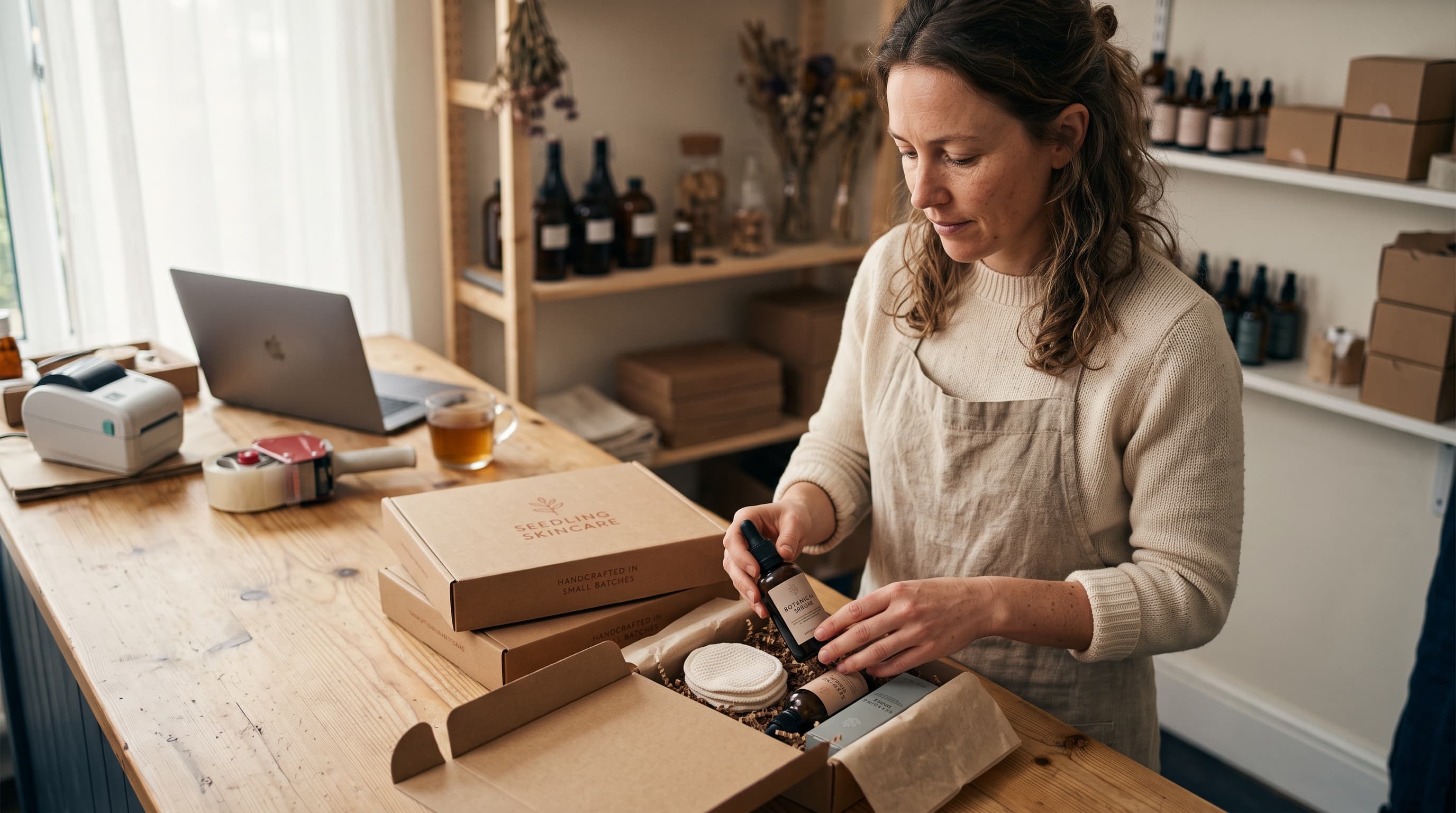
Learning how to start a skincare subscription box is less about picking pretty products and more about building a machine that bills the same customer month after month without friction. Get the model right and you turn a one-time $40 sale into a $480 annual relationship. Get it wrong — clunky checkout, surprise churn, a website that can't handle recurring orders — and you'll spend more on refunds than you make on shipments. This guide walks through every decision, from what goes in the box to the tech that charges cards on autopilot, so your beauty subscription box business starts on solid ground.

What a skincare subscription box actually is
A skincare subscription box is a recurring shipment of products a customer signs up for once and receives on a set schedule — usually monthly or every 60 days. The customer is billed automatically each cycle until they cancel. That recurring revenue is the whole point: predictable cash flow instead of chasing new buyers every day.
There are three common formats, and picking one shapes everything else you build.
- Curation boxes — a rotating mix of full-size or sample products, often themed. Birchbox built its name here, mailing sample-size discoveries; Ipsy scaled the same model to millions of "Glam Bag" members. Great for discovery, harder on margins because your catalog changes constantly.
- Replenishment boxes — the same core products shipped on repeat, timed to when they run out. This is subscription replenishment skincare at its purest: a cleanser, a serum, an SPF, refilled every 30 or 45 days.
- Personalized boxes — a short quiz matches products to skin type and concerns, then ships a tailored set. Curology and Function of Beauty popularized this quiz-to-formula approach in skincare and haircare. Higher perceived value, more operational complexity.
Replenishment is usually the easiest to start and the stickiest to keep. When someone relies on your serum every night, skincare auto-replenishment removes the reorder decision entirely — and removing decisions is how you fight churn.
How to start a skincare subscription box in 7 steps
Here's the short version before we go deep: pick a niche, source or formulate products, price for margin plus retention, build a skincare subscription website with recurring billing, set your fulfillment flow, launch to a small list, then optimize churn. Each step below expands on that.

1. Pick a niche narrow enough to own
"Skincare for everyone" competes with Sephora and loses. "Fragrance-free routines for sensitive, eczema-prone skin" competes with almost no one. A tight niche makes your marketing cheaper, your curation obvious, and your word-of-mouth faster. Other strong angles: menopausal skin, teen acne, K-beauty minimalists, or clean beauty for pregnancy.
2. Source or formulate your products
You have three sourcing paths. White-label — buy pre-made formulas from a manufacturer and put your brand on them (fastest, lowest cost). Private-label with tweaks — customize scent, actives, or packaging (more control, higher minimums). Full custom formulation — work with a cosmetic chemist (slowest, most expensive, most defensible).
Whatever you choose, confirm the manufacturer meets FDA cosmetics regulations and can supply the safety and labeling documentation you'll need. Skincare is regulated; skipping this creates liability you don't want on a recurring product touching people's faces.
3. Price for margin and retention — with a worked example
Subscription math is different from one-off retail. You need enough margin to absorb churn, shipping, payment fees, and the free-shipping or welcome-gift incentives that drive signups. A rough target: your box should cost you 30-40% of the retail price so the rest covers acquisition, fulfillment, and profit.
Here's how that breaks down on a $45 box priced with a 35% cost of goods:
- Product cost (COGS): ~$15.75 (35% of $45)
- Box, tissue, and insert: ~$2.50
- Shipping (US domestic, poly-mailer or small box): ~$6.00
- Payment processing (~2.9% + $0.30): ~$1.60
- Fulfillment/pick-pack (self or 3PL): ~$3.00
- Gross left for acquisition + profit: ~$16.15
That remaining ~$16 has to cover your customer acquisition cost (CAC). If paid ads cost you $30 to land a subscriber, you don't break even until roughly month two — which is exactly why churn in the first two cycles can quietly sink the business. Price so that a subscriber who stays three to four months is clearly profitable.
4. Build the website and recurring billing engine
This is where most first-timers stall — more on the tech below, because it's the make-or-break piece.
5. Set up fulfillment and inventory
Decide whether you pack boxes yourself, use a third-party logistics provider (3PL), or dropship from your manufacturer. Small brands often self-fulfill until they cross ~200 subscribers, then outsource. Either way, sync your shipping cutoffs to your billing dates so cards charge before boxes go out — never after.
If you outsource, subscription-savvy 3PLs like ShipBob, ShipMonk, and Whitebox handle recurring kitting. Expect rough US costs of $0.20-$0.50 per unit for pick-and-pack, $1-$3 per box for kitting (assembling multiple items into one package), plus monthly storage in the $20-$40 per pallet range. Kitting fees add up fast on multi-item boxes, so negotiate a per-box assembly rate once your volume is predictable rather than paying per-item indefinitely.
6. Launch to a waitlist, not the whole internet
Collect emails for 4-6 weeks before you open. Offer founding-member pricing. A warm list of 300 converts far better than cold ads on day one, and it gives you real subscribers to learn from before you scale spend.
7. Measure churn and optimize relentlessly
Churn is the silent killer of any subscription model for cosmetics. For context, subscription-box businesses commonly see monthly churn in the 8-12% range, and industry surveys have found roughly 40% of subscribers eventually cancel — often after the first or second box. Track your own rate monthly from your first shipment and treat every cancellation as data, not just a lost sale.
The tech behind a skincare subscription website
When people ask how to start a skincare subscription box and then quit, it's almost always the technology that beat them. Recurring billing, dunning (retrying failed cards), self-serve pause and skip, and subscription-aware inventory are not features you bolt on later — they're the foundation. Here's what a working beauty subscription ecommerce stack has to do.

- Recurring billing for your beauty store — charge cards automatically on each customer's cycle, handle proration, and email receipts.
- Smart dunning — when a card fails (and roughly one in ten will), retry it on a schedule and prompt the customer to update it. Failed payments cause more involuntary churn than actual cancellations.
- Self-serve subscriber portal — let customers pause, skip a month, swap products, or change frequency without emailing you. Every support ticket you remove is margin.
- Auto-replenishment logic — tie shipment timing to product size so refills arrive right as the last bottle empties.
- Abandoned cart and win-back flows — recover the signups that stall at checkout and re-engage cancelled members.
On Shopify's subscription setup, most of this lives in paid apps stacked on top of your base plan — a subscriptions app, a dunning app, a portal app, an email tool — and those apps can conflict with each other and slow the site down. On WooCommerce, you're wiring plugins together and patching them yourself. Both work, but both add cost and maintenance to a business that hasn't made its first dollar yet.
Newer AI-built platforms take a different approach: the recurring billing, subscriber portal, abandoned cart recovery, and email automations ship built in, so you describe the store you want and it's assembled for you. Rovela's AI store builder bundles 100+ features — including the ones a subscription needs — under one flat subscription with no per-app billing and no commission on sales.
Comparing your platform options
The platform you choose determines your monthly cost, how fast you launch, and how much of your week disappears into admin. Here's how the common paths stack up for a beauty subscription box business.
| Approach | Typical monthly cost | Recurring billing | Time to launch |
|---|---|---|---|
| Shopify + subscription apps | $39-$399 base + $50-$200 apps + fees | Paid app required | 1-3 weeks |
| WooCommerce + plugins | $30-$100 hosting + plugins + dev | Plugin, self-maintained | 2-6 weeks |
| Wix / Squarespace | $17-$399 base | Limited depth | 1-2 weeks |
| AI-built store (Rovela) | Single flat subscription, no per-app fees | Built in, native | Hours |
The numbers matter more in subscriptions than in regular retail because your platform fees and app bills recur too. Every dollar in monthly plugin cost is a dollar you re-pay forever, against margins you're already stretching to fund retention incentives.
Keeping subscribers: the part that decides if you win
Acquiring a subscriber is expensive. Keeping one is where the profit hides. The average box gets abandoned once the novelty fades, so your job is to make staying easier than leaving — and to make the product genuinely worth the recurring charge.

A few tactics that move retention in the right direction:
- Nail the unboxing. The first box sets the churn rate for the next twelve. Thoughtful packaging, a handwritten note, and a small extra sample all raise perceived value cheaply.
- Let people skip, don't force them to cancel. A "skip this month" button saves relationships a hard cancel would end. Someone who skips is still a subscriber.
- Add loyalty and reviews. Points for staying, and social proof from happy members, both reduce the urge to churn. These belong in your skincare subscription website from launch.
- Watch payment failures. Involuntary churn from expired cards is invisible unless you're tracking it. Good dunning recovers a real share of it automatically.
- Survey cancellers. Ask one question on the way out. "Too expensive," "too many products," and "using it too slowly" each point to a different fix — often a smaller box or a longer cycle.
Many merchants selling on a subscription model for cosmetics report meaningful lifts once billing, portal, and win-back flows are working together rather than fighting each other. Consolidating those tools also frees up hours each week — time you'd otherwise spend reconciling apps instead of talking to customers.
How to start a skincare subscription box without an app stack
Everything above assumes the technology is working for you rather than against you. That's the hard part when you learn how to start a skincare subscription box the traditional way: you become a part-time systems integrator, gluing a billing app to a portal app to an email tool and hoping an update doesn't break checkout on a billing day.
The alternative is a platform where recurring billing, the subscriber portal, auto-replenishment timing, and win-back flows are native rather than bolted on. That means fewer failure points, one bill instead of five, and a launch measured in hours rather than weeks. For a first-time founder stretching margins to fund retention, removing the app stack removes both a cost and a category of things that can silently break.
Common questions before you launch
How much does it cost to start a beauty box service?
You can start a beauty box service for as little as $500-$2,000 if you white-label products, self-fulfill, and use a platform with built-in recurring billing. Costs rise with custom formulation, larger inventory buys, and paid acquisition. Keep first-batch inventory small until you validate demand.
Do I need a license to sell skincare subscriptions?
Requirements vary by country and state, but in the U.S. you generally need a business license, sales tax registration, and compliant product labeling. If you're selling others' products under your brand, confirm your manufacturer's compliance documentation. Consult a professional for your specific jurisdiction.
How do I handle recurring payments?
Use a platform with native recurring billing for your beauty store connected to a processor like Stripe Billing. It should charge cards automatically each cycle, retry failed payments, and give subscribers a portal to update their card, skip, or cancel on their own.
Your next move
Starting a skincare subscription box comes down to four things done well: a niche you can own, products people re-order without thinking, pricing that survives churn, and a beauty subscription ecommerce setup where recurring billing, auto-replenishment, and win-back flows just work. Nail those and the recurring revenue compounds quietly in the background.
If you'd rather describe the store you want and have the subscription features, checkout, and admin built for you in hours instead of assembling an app stack, Rovela's AI store builder handles the whole build — with recurring billing and 100+ features included by default. Compare what's built in on the subscription pricing and features page, or browse more ecommerce launch guides before you commit to a platform.