July 4, 2026
How to Start a Clothing Line: A Step-by-Step Guide
Learn how to start a clothing line the smart way — from niche and budget to sourcing, pricing, and getting your first sale online.
Everyone thinks the hard part of learning how to start a clothing line is designing the clothes. It isn't. The hard part is everything around the clothes — picking a niche people actually buy, pricing so you don't lose money on every order, finding a manufacturer who won't ghost you, and building a store that turns browsers into buyers. Do those well and the designs take care of themselves. This guide walks through the whole thing, in order, with real numbers so you know what you're signing up for before you spend a dollar.
Before You Design Anything: Nail Your Niche and Plan
The clothing market is enormous and brutally competitive. That's not a reason to quit — it's a reason to get specific. Broad brands ("we sell cool streetwear") die because nobody feels spoken to. Narrow brands win because a small, obsessed audience will pay full price and tell their friends.
Start by choosing an audience before a product. "Sustainable activewear for postpartum moms" is a business. "T-shirts" is a hobby. When you're starting a clothing business, the tighter your niche, the cheaper your marketing and the stronger your margins, because you're not competing on price against every generic label online.
Writing a Clothing Brand Business Plan That Actually Helps
You don't need a 40-page document for a bank. You need a working clothing brand business plan that forces you to answer the questions that sink most new labels. Keep it to a few pages and revisit it every quarter.
- Who is your customer? Age, income, the exact problem your clothing solves, where they already shop.
- What's your product mix? Start with 3–5 hero pieces, not a full seasonal collection.
- What's your price point? And does it leave you a 60%+ gross margin after landed cost?
- How will people find you? Organic content, paid ads, marketplaces, or a mix.
- What's your break-even? How many units per month cover your costs.
Validate demand before you produce inventory. Post your designs on social, build a simple waitlist page, or run a small pre-order. If nobody signs up when it's free to express interest, they won't buy when it costs $45.
How to Start a Clothing Line on a Realistic Budget
Let's talk money honestly, because "start a clothing line for $0" content is a lie. Your clothing line startup costs depend entirely on your production model. The three common paths have wildly different price tags and trade-offs.
The Three Production Models Compared
| Model | Upfront cost | Margin | Best for |
|---|---|---|---|
| Print-on-demand | $0–$500 | Low (15–30%) | Testing designs with zero inventory risk |
| Private label / small-batch | $2,000–$10,000 | Medium (40–55%) | A real brand with control over quality |
| Cut-and-sew (custom made) | $10,000–$50,000+ | High (55–70%) | Original patterns and premium positioning |
Most founders should launch a clothing line with print-on-demand or a small private-label run to prove the concept, then reinvest profit into custom production. Don't sink your savings into 500 units of an untested hoodie.
Beyond production, budget for the pieces people forget: product photography (or a decent phone and softbox), a logo and brand identity, your online store, sample orders, packaging, and a marketing budget. A lean but legitimate launch usually lands between $2,000 and $8,000 all-in. You can go lower with print-on-demand, but expect thinner margins.
Common Startup Costs Checklist
- Samples and initial inventory — your biggest variable line item
- Brand assets: logo, colors, labels, hang tags
- Product photography and lifestyle images
- Your e-commerce store and domain name
- Business registration and (if applicable) trademark filing
- A starter ad or content budget to get the first sales
Sourcing, Samples, and Building the Product
This is where a lot of people learning how to create a clothing brand get stuck. Finding a manufacturer feels intimidating, but it's a process, not a lottery.
For domestic and small runs, directories like Maker's Row help you find US-based factories. For overseas manufacturing at scale, Alibaba is the standard starting point — but treat it as a shortlist, not a checkout. Always order samples from at least three suppliers before committing to a bulk run.
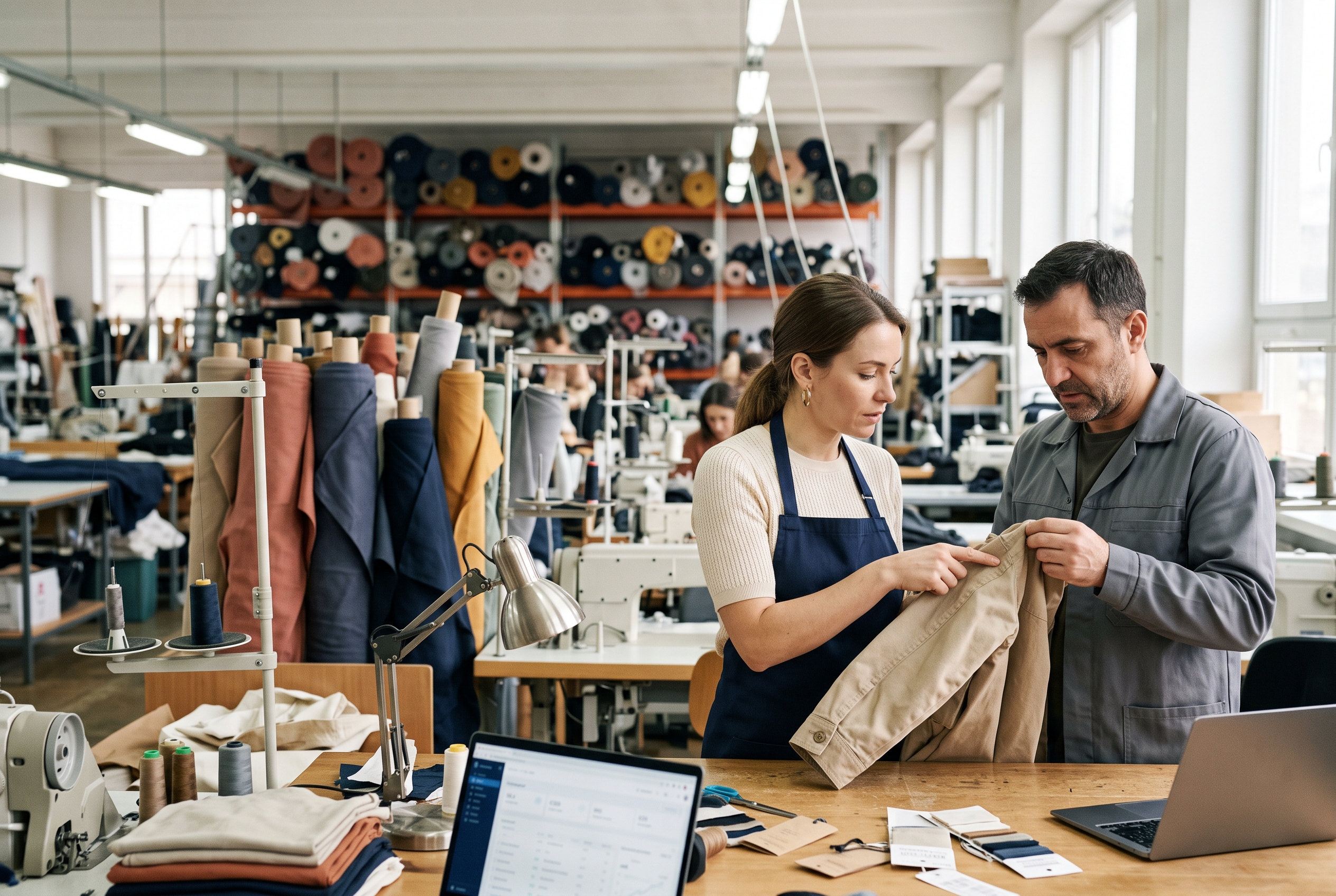
Getting Samples Right
Samples are non-negotiable. Wash them, wear them, stretch them, check the seams after a few cycles. The difference between a brand people re-order from and one they refund is almost always fabric weight and stitching — details you can only judge in your hands.
When you evaluate a supplier, look past price alone:
- Minimum order quantity (MOQ) — can you start at 50–100 units instead of 500?
- Communication speed — a slow, vague supplier now becomes a nightmare at volume.
- Sample quality and consistency — order the same item twice and compare.
- Lead times — factor in production plus shipping and customs.
- Ethical and compliance standards — increasingly a selling point, not just a nice-to-have.
Design Even If You Can't Draw
You don't need to be a designer. You need clear tech packs — a spec sheet with measurements, materials, colors, and placement — that a factory can follow. Freelance designers on platforms like Fiverr or Upwork can turn your idea into a production-ready tech pack for a few hundred dollars. That single document prevents most manufacturing mistakes.
How to Start a Clothing Brand Online and Sell Clothes
Once you have product, you need a place to sell it. If you want to start a fashion brand online and actually keep your margins, your store is the engine — so choose the setup carefully. Marketplaces like Etsy or Amazon give you traffic but take a cut and own the customer relationship. Your own store keeps the margin, the data, and the brand.
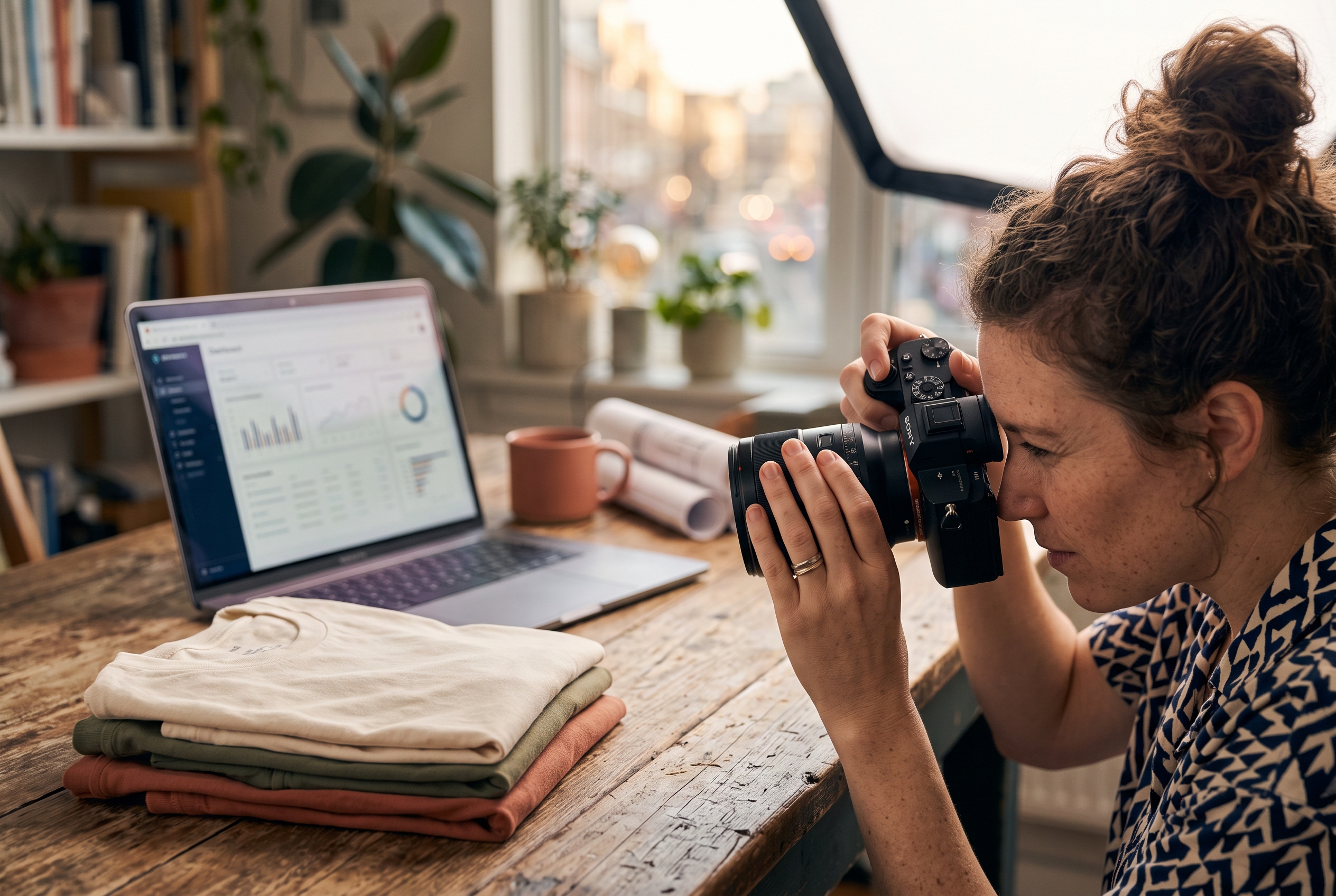
The old default was Shopify plus a stack of paid apps. That works, but it adds up fast. A typical Shopify apparel store runs $39–$399/month for the base plan, then another $50–$200/month in apps for the features you'd assume come standard — abandoned cart recovery, wishlists, reviews, loyalty. You can check the current plans on Shopify's pricing page. For a new brand, that plugin bill is real money before you've made a sale.
There's a newer path. Rovela builds a complete store from a plain-language conversation — you describe your clothing brand and it ships a storefront, catalog, Stripe checkout, customer accounts, and the marketing features baked in, so you're not assembling and paying for an app stack. A store goes live in hours instead of weeks, which matters when you'd rather spend your time on product than on setup. Compare that flat, everything-included approach on the Rovela pricing page.
What Your Store Needs to Convert
Whichever platform you pick, these features move the needle for clothing specifically:
- Fast, mobile-first pages — most fashion shopping happens on phones, and slow load times kill conversion.
- Abandoned cart recovery — apparel has high cart abandonment; automated reminders recover real revenue.
- Reviews and photos — social proof is the closest thing to a fitting room online.
- Clear sizing guides — vague sizing is the number one cause of returns.
- Wishlist and loyalty — repeat buyers are cheaper than new ones.
Set up your product pages with rich descriptions, multiple angles, and lifestyle shots. Then make sure your titles and copy include the words people actually search — "oversized organic cotton tee" beats "Model 04." Being search-ready from day one is how you sell clothes online without paying for every click.
Launching, Marketing, and Getting Your First 100 Sales
A launch isn't a button you press. It's a runway you build. The brands that sell out their first run started marketing weeks before product arrived, so demand was waiting on launch day.
Build an Audience Before You Launch
Document the process. Show the sketches, the sample fails, the factory visit, the packaging decisions. People buy from brands they feel part of. A pre-launch content strategy on Instagram, TikTok, or Pinterest costs nothing but time and builds the email list you'll rely on to launch a clothing line to actual customers instead of crickets.
- Collect emails early with a waitlist and a small launch discount.
- Seed products to micro-influencers in your niche — 5,000 engaged followers beats 500,000 random ones.
- Run a tight pre-order or drop to create urgency and validate demand before mass production.
- Lean on user content — repost every customer photo; it's free, trusted marketing.
After Launch: Turn Buyers Into Repeat Customers
Getting the first sale is expensive. Getting the second is where the profit lives. Set up automated flows — a welcome series, an abandoned cart reminder, a post-purchase check-in, a win-back for lapsed buyers. According to email marketing benchmarks, owned channels consistently outperform paid ads on return, and they're the asset you control when ad costs spike.
Track the numbers that matter: cost to acquire a customer, average order value, and repeat purchase rate. If your customer acquisition cost is higher than your first-order profit, you need repeat buyers to make the math work — which is exactly why loyalty and email matter so much in apparel.
What It Really Takes: A Quick Reality Check
Learning how to start a clothing brand is less about talent and more about sequencing. Do it in this order and you'll avoid the mistakes that stall most first-timers:
- Pick a specific niche and validate demand before spending.
- Write a lean business plan and confirm your margins work.
- Choose a production model that matches your budget and risk tolerance.
- Order samples, compare suppliers, and lock in quality.
- Build a fast, feature-complete store that's ready to sell.
- Market before you launch, then optimize for repeat buyers.
Every successful label you admire started exactly here — small, focused, and slightly terrified. The ones that made it treated it like a business from day one, not a hobby they hoped would pay off.
If you're ready to sell clothes online without stitching together a dozen tools or bleeding margin to plugin bills, that's the part Rovela handles for you — describe your brand and get a complete, fast store built to convert, so you can spend your energy on the clothes and the customers. Browse more launch guides on the Rovela blog when you're ready for the next step.