June 7, 2026
How to Sell Pet Products Online: A 2026 Guide
A practical, step-by-step guide to selling pet products online in 2026 — from sourcing and pricing to building a store that converts pet owners into repeat buyers.

Pet owners spend like the animals are family — because to them, they are. If you want to learn how to sell pet products online, you're stepping into one of the most reliable, repeat-purchase markets in all of e-commerce. People buy food every month, treats every few weeks, and a new toy the moment the old one gets shredded. That rhythm is gold for a small store. This guide walks through every step, from picking what to sell to building a storefront that actually converts, so you can start a pet supply business online without guessing your way through it.

Why selling pet products online is a smart bet in 2026
The pet care market keeps climbing while plenty of other categories flatten out. Owners treat food, supplements, and grooming as non-negotiable spending — closer to groceries than to luxury. That makes demand steady through good months and slow ones alike.
The repeat-purchase math is what makes an online pet supply business so attractive. A customer who buys a 30-day bag of kibble comes back roughly twelve times a year if you keep them happy. Win them once, serve them well, and you've got a year of orders instead of a single sale.
There's also room to be specific. You don't need to compete with giant general retailers on everything. Niche down — grain-free cat treats, eco-friendly dog toys, supplements for senior pets — and you become the obvious choice for a focused group of buyers who'll pay a premium and tell their friends.
- High repeat rate: consumables drive monthly reorders.
- Emotional buyers: owners spend more for quality and trust.
- Niche-friendly: small specialists win loyal audiences.
- Subscription-ready: food and treats fit "auto-ship" perfectly.
Step one: choose what pet products to sell
Your product choice shapes everything else — margins, shipping costs, marketing, and how often people reorder. Start by deciding whether you want consumables (high repeat, lower margin) or durables like toys and accessories (lower repeat, higher margin). The strongest stores blend both.

Popular categories that sell well
- Food and treats: the backbone of repeat revenue. If you want to sell cat treats online or sell dog products online, treats are an easy, low-friction entry point.
- Toys and enrichment: chew toys, puzzle feeders, catnip kickers — high margin, frequent replacement.
- Grooming and wellness: shampoos, supplements, dental chews; great for upsells.
- Accessories: collars, leashes, beds, carriers — strong for brand-building.
- Specialty diets: grain-free, raw, or prescription-style food for owners who research obsessively.
How to validate demand before you buy stock
Don't order a pallet on a hunch. Check search volume with free tools like Google Trends to confirm interest is steady or rising. Scan marketplaces to see what's already selling and read the one- and two-star reviews — every complaint is a gap you can fill with a better product.
Then test small. Order a modest batch, list it, and run a tiny ad budget or post in pet communities. Real orders beat any forecast spreadsheet. Once a product sells through twice, scale it.
Step two: source inventory and set prices that profit
How you source determines your margins and your risk. There are three common routes, and many sellers mix them as they grow.
| Sourcing model | Upfront cost | Margin | Best for |
|---|---|---|---|
| Wholesale + hold stock | High | High | Proven sellers, fast shipping |
| Dropshipping | Low | Low–medium | Testing products with no inventory |
| Private label / handmade | Medium–high | Highest | Building a defensible brand |
If you want to learn how to sell pet food online specifically, note that food carries extra rules. Pet food and treats are regulated — in the U.S., the FDA and state feed-control officials set labeling and safety standards. Check requirements for ingredient lists, guaranteed analysis, and any state registration before you list a single bag.
Pricing for repeat-purchase math
Price to cover product cost, shipping, payment fees, and a healthy margin — then think in lifetime value, not single sales. A customer worth $300 a year lets you spend more to acquire them and still profit. Build in margin for free shipping thresholds, since "free shipping" lifts conversion more than almost any discount.
Bundle to raise order value. A "new puppy starter kit" or a "treat sampler" nudges buyers past your free-shipping line and introduces them to more of your range in one go.
Step three: build your online pet store
This is where most first-time sellers stall — and where the wrong choice costs you money for years. You have three real options when you start a pet supply business online: a marketplace, a traditional store builder, or an AI-built store.

Marketplaces vs. your own store
Selling on a marketplace gets you in front of traffic fast, but you rent that audience. Fees stack up, you can't build a brand, and you don't own the customer relationship — which kills the repeat-purchase advantage that makes pet products so profitable. A store you control lets you collect emails, run loyalty programs, and bring buyers back on your terms.
What every pet store actually needs
Whatever platform you pick for your pet product ecommerce guide checklist, make sure these essentials are covered:
- Secure checkout with cards, wallets, and PayPal.
- Abandoned cart recovery — most stores lose 70%+ of carts; recovery emails win a chunk back.
- Product reviews and Q&A — pet owners want proof before they trust their animal's health to you.
- Wishlist and loyalty tools to drive reorders.
- Subscriptions / auto-ship for food and treats.
- Fast mobile pages — slow load times tank both SEO and conversion.
On Shopify and similar builders, most of those essentials are paid add-ons. The average store runs six apps on top of its subscription, and those plugin bills and conflicts add up to thousands a year. That's the trade-off worth understanding before you commit.
A newer route is describing your store in plain words and letting AI build it. Rovela ships every store with abandoned cart, wishlist, loyalty, reviews, Q&A, and Stripe checkout included by default — no app stack to assemble. A new store can go live in hours, and you can see what a single flat plan covers instead of stacking plugin fees. Whichever path you take, the principle holds: own your store, own your customers.
Step four: market your store and keep customers coming back
A built store doesn't sell on its own. The good news for pet sellers is that the audience is passionate, social, and easy to reach if you show up where they already are.
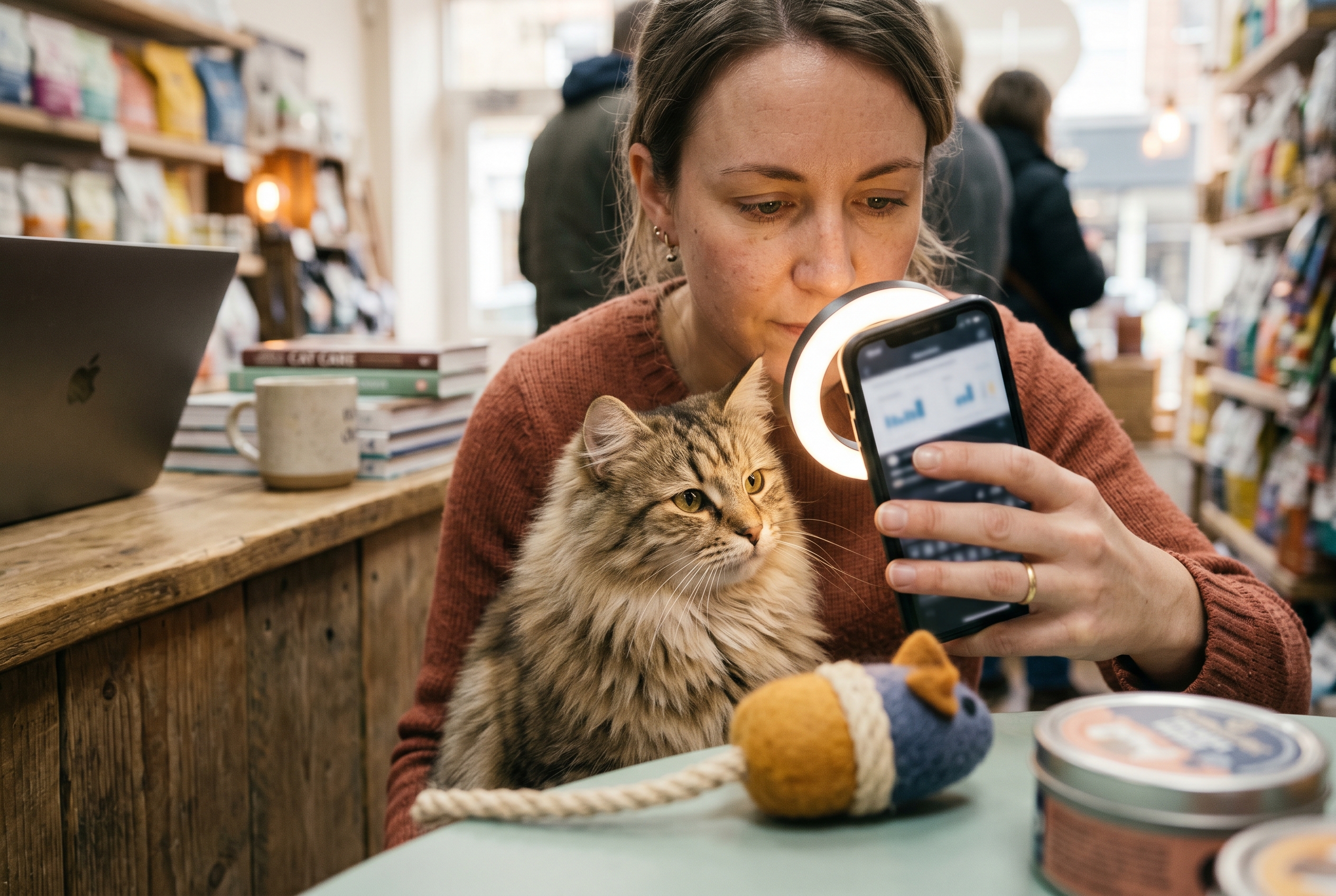
Get found and get traffic
- SEO: write helpful content — "best treats for senior dogs," "how to introduce a new diet" — to capture buyers searching for answers.
- Social proof: real pets using your products is the most shareable content there is. Encourage customers to tag you.
- Influencers: micro pet accounts on Instagram and TikTok convert well and cost little.
- Paid ads: start small, target by pet type and breed interests, and scale what works.
Turn first orders into lifelong customers
Acquisition is expensive; retention is where the profit lives. When you sell pet supplies online, your edge is that people have to reorder — your job is to make sure they reorder from you.
- Email and SMS flows: welcome series, "time to restock" reminders timed to the food bag's lifespan, win-back offers.
- Loyalty points: reward every purchase to nudge the next one.
- Subscriptions: auto-ship removes the decision entirely and locks in recurring revenue.
- Real Q&A and support: fast answers about ingredients and sizing build the trust that pet owners reward with loyalty.
Track repeat-purchase rate as closely as you track new sales. A 30% repeat rate versus a 50% repeat rate is the difference between a side hustle and a real business.
Common questions about selling pet products online
How much does it cost to start a pet supply business online?
You can start lean. Dropshipping needs almost no inventory cash, while holding stock might mean $500–$3,000 for a first order. Beyond product, budget for your store platform, a domain, and a small marketing test. Many sellers launch for under $1,000 total.
Is it legal to sell pet food online?
Yes, but pet food and treats face labeling and safety rules from the FDA and state feed officials. Get your labeling compliant and check whether your state requires registration before you list. Toys, accessories, and grooming items generally face lighter requirements.
What sells best for beginners?
Treats and toys are the easiest entry points — low shipping cost, high repeat rate, and impulse-friendly price tags. Sell dog products online or sell cat treats online first to learn your audience, then expand into food, supplements, and accessories.
Your next step
Selling pet products online rewards focus and consistency more than any clever trick. Pick a niche with proven demand, source products that earn healthy margins, build a store that owns the customer relationship, and pour your energy into bringing buyers back month after month. The repeat-purchase nature of pet supplies does a lot of the heavy lifting once your foundation is solid.
If you'd rather skip the app-stack headache and get a complete store — checkout, abandoned cart, loyalty, reviews, and subscriptions included — built from a simple conversation, Rovela can have your pet store live in hours. Browse more store-building guides when you're ready to grow, and start turning pet owners into loyal repeat customers.