June 12, 2026
Free Online Store for Handmade: Best Options 2026
Compare the best free online stores for handmade goods — real fees, hidden costs, and the platform features makers actually need to keep more of every sale.
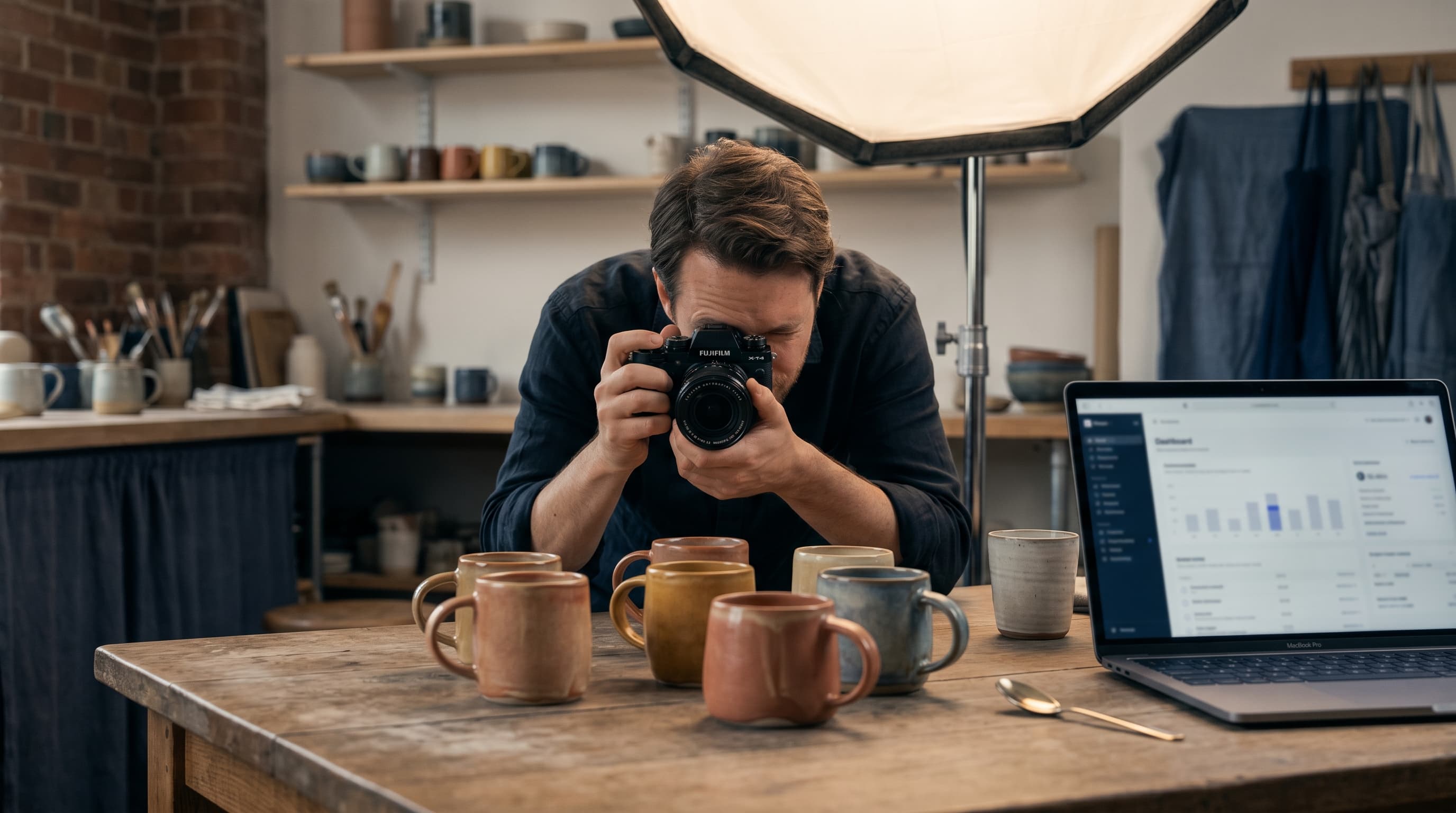
Setting up a free online store for handmade goods sounds simple until you read the fine print. Most platforms advertise "free" and then charge listing fees, transaction cuts, or lock the features you actually need behind a paid tier. If you make candles, jewelry, ceramics, knitwear, or anything you sell one stitch at a time, the platform you choose decides how much of every sale you keep. This guide breaks down the real options — what's genuinely free, what's not, and how to pick a shop that won't punish you the moment you start growing.
What "free" actually means for a handmade store
The word "free" hides a lot. When you're hunting for a free craft selling website, you'll run into three different versions of the promise, and only one of them keeps money in your pocket.
- Free to list, paid to sell. Marketplaces let you post products at no cost but take a commission and listing fee on every order.
- Free trial, then a subscription. Store builders give you 14–30 days, then bill you monthly whether you've made a sale or not.
- Free tier, limited features. You get a storefront but no abandoned cart recovery, no custom domain, or a hard cap on products.
None of these are wrong — they're just different trade-offs. A hobbyist selling five items a month wants something different from a maker doing $2,000 in monthly orders. The goal is matching the cost structure to your stage so you don't overpay early or hit a wall later.
Watch the math on fees especially. A free store with no listing fees can still be expensive if it skims 6–8% off every transaction. At $1,000 in monthly sales, that's $60–$80 gone before you've paid for materials. Always read the total cost, not the headline.
A real example of how fees stack up
Consider a candle maker selling 80 orders a month at an average of $24 — about $1,920 in monthly revenue. On Etsy, the math looks like this: $0.20 per listing across roughly 40 active listings ($8), a 6.5% transaction fee on the $1,920 in sales ($124.80), plus payment processing at around 3% + $0.25 per order ($77.60), and the optional but near-mandatory Offsite Ads or listing renewals most sellers end up paying. That's roughly $210 a month — over 10% of revenue — gone before materials, shipping, or her own time.
Move that same maker to a store she owns, charging only standard Stripe processing (about 2.9% + $0.30), and her platform cost drops to roughly $74 a month — a saving of around $1,600 a year. The trade-off is that she has to drive her own traffic instead of borrowing Etsy's, which is exactly why most makers run a hybrid: a marketplace to get discovered and an owned store to keep the customers who buy.
The best free options to sell handmade online free
Here's an honest look at where crafters actually set up shop, and what each one costs once you read past the marketing. Use it to figure out which path fits the way you work.
Etsy and marketplace alternatives
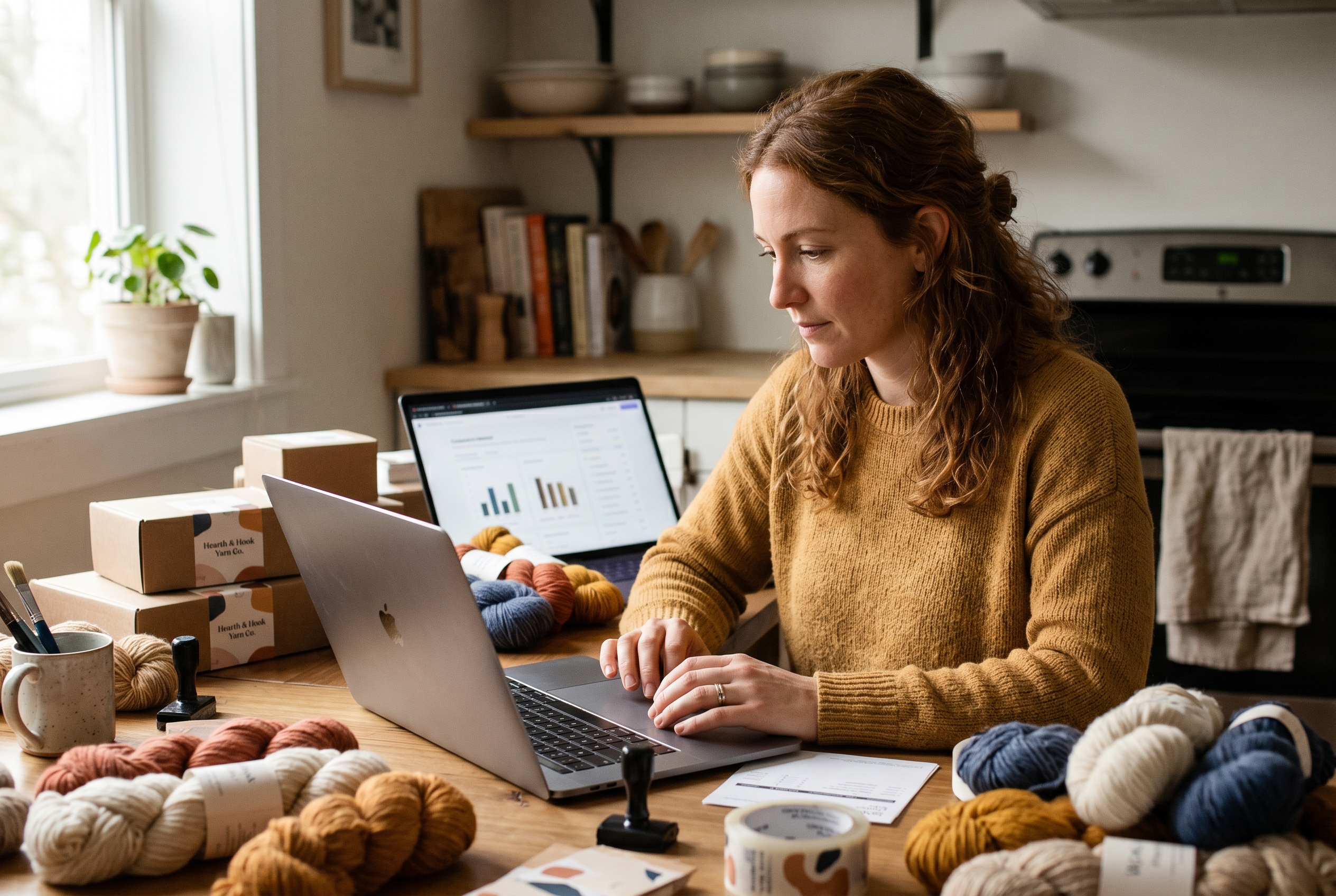
Etsy is where most makers start. It's free to open a shop, but each listing costs $0.20, and Etsy takes a 6.5% transaction fee plus payment processing on every sale. For a maker doing 100 orders a month, those fees stack up fast — and you're renting an audience you never own. If a competitor shows up next to your listing, there's nothing you can do.
That's why so many sellers search for an etsy alternative free of per-listing charges. The most common options worth weighing:
- Folksy. A UK-focused handmade marketplace. The free "Basic" plan caps you at three listings and still takes a 6% commission plus processing; the paid Plus plan unlocks unlimited listings. Good niche reach in Britain, but the same "tenant" problem as Etsy.
- Big Cartel. Free for up to five products with no listing fees and no commission — only payment processing. Genuinely free, but the five-product cap and thin built-in marketing tools mean you outgrow it quickly.
- Storenvy. Free to open a store and free to list, but the marketplace side surfaces your products next to competitors, and you don't fully own the customer relationship.
- Bonanza. No listing fees and a low final-value fee, but traffic skews toward resellers and vintage rather than handmade, so discovery for makers is hit-or-miss.
Across all of these, the pattern holds: marketplaces avoid (or cap) listing fees but still rely on someone else's traffic and rules. You're a tenant, not an owner — and the cheapest entry point can become the most expensive place to grow.
Free store builders for makers
A dedicated free shop builder for makers gives you your own domain, your own brand, and your own customer list — the things a marketplace never lets you keep. Tools in this category range from website builders with a shopping add-on to full e-commerce platforms with a free starting tier.
The catch is feature depth. Many free tiers ship a pretty storefront but skip the tools that actually drive repeat sales: wishlist, reviews, customer Q&A, and abandoned cart recovery. According to the Baymard Institute, which aggregates dozens of studies, the average documented online cart abandonment rate sits at roughly 70% — so a shop with no recovery email is leaving real money on the table every week.
Social selling channels
Instagram and TikTok Shop let you sell handmade online free with no upfront cost. They're great for discovery and impulse buys. But you don't control the algorithm, you can't export your customers, and a single policy change can wipe out your storefront overnight. Treat social channels as a top-of-funnel, not your home base.
Comparing free store options for handmade products
The table below lines up the most common choices a crafter weighs. "Real fees" means what you actually lose per sale once you account for listing and transaction cuts.
| Option | Upfront cost | Real fees per sale | You own the customer? | Built-in selling tools |
|---|---|---|---|---|
| Etsy | Free to open | 6.5% + $0.20 listing + processing | No | Reviews only |
| Big Cartel | Free (up to 5 products) | Processing only | Partially | Minimal |
| Folksy | Free (3 listings) | 6% + processing | No | Basic |
| Facebook/Instagram Shop | Free | Processing only | No | Minimal |
| Shopify Starter | $5/mo (not free) | Processing + app costs | Yes | Add-ons paid |
| Rovela (free build) | Free to build | Processing only, no commission | Yes | 100+ included |
A few patterns jump out. Marketplaces are cheap to enter but expensive to grow on, and you never own your audience. Website builders hand you a domain but make you assemble — and pay for — the selling tools piece by piece. The strongest position is a store where you own the customer list and the conversion features come built in.
For a free online store for small business owners who plan to keep growing, that ownership matters more than any single month's fee. Re-platforming later — moving your catalog, customers, and SEO to a new system — is the kind of headache that stalls a maker for weeks.
What to look for in a free craft selling website
The flashy storefront is the easy part. What separates a hobby page from a shop that actually sells comes down to a handful of features most "free" options quietly leave out.
- Abandoned cart recovery. An automatic email that nudges shoppers who left items behind. Industry case data from email platforms like Klaviyo shows recovery flows can claw back roughly 10–15% of otherwise-lost orders.
- A custom domain. yourshop.com builds trust and SEO far better than a subdomain with the platform's name in it.
- Reviews and customer Q&A. Handmade buyers want proof. Social proof on the product page lifts conversion.
- Mobile speed. Most handmade browsing happens on phones. A slow store loses sales and ranks worse on Google.
- Real ownership. Can you export your customers and your store? If not, you're building on rented land.
One more thing makers underestimate: the time cost. The Shopify model, for example, often means stacking multiple paid apps to get those features. App-market analyses from research firms like BuiltWith consistently find that the large majority of active Shopify stores run several third-party apps each — and every app is another monthly bill and another thing that can break. A platform that includes the essentials by default saves both money and the hours you'd rather spend making.
Here's how that compounds for a real shop. Take a jewelry maker who wants reviews, a wishlist, abandoned cart recovery, and a loyalty program. On a builder where those are add-ons, she might pay $15 for a reviews app, $10 for wishlist, $20 for cart recovery, and $25 for loyalty — roughly $70 a month, or $840 a year, on apps alone, on top of her base plan. The same features included by default cost her nothing extra, and there's no integration to maintain when one app updates and breaks another.
Watch the total cost of ownership
"Free" upfront and "free forever" are different animals. Map out what your store costs at 10 sales a month, then at 100. If the answer balloons because of transaction fees, app subscriptions, or a forced upgrade, the cheap option wasn't cheap. The best free store for handmade products is the one whose costs stay flat as your orders climb.
How to choose the right path for your handmade shop
There's no single winner — there's a winner for your stage. Match the choice to where you are right now, with one eye on where you're headed.
- Testing an idea, under 10 sales a month? Start on a social shop, Etsy, or Big Cartel's free tier. Validate that people will pay before investing in infrastructure.
- Selling consistently and want your own brand? Move to a free store for crafters with a custom domain so you own the relationship and stop paying per-listing fees.
- Growing past a few thousand a month? Prioritize a platform with built-in marketing tools and no sales commission, so growth doesn't get taxed.
The trap to avoid is choosing something you'll outgrow in six months. Migrating a catalog, customer accounts, and search rankings is painful, and a surprising number of small stores stall during the move. Pick a foundation that scales from your first sale to your thousandth without a rebuild. If you're weighing specific platforms, our guide to Etsy alternatives for makers breaks down each option in more detail.
This is the gap Rovela was built to close. You describe your handmade business in plain words, and the platform builds a complete store — storefront, Stripe checkout, customer accounts, and over 100 features like abandoned cart, wishlist, reviews, and loyalty already switched on. No app stack to assemble, no commission on your sales, and you can download the standard Next.js code and own it outright. Built by operators who ran $15M+ in real sales and the team behind 400,000+ PrestaShop merchants, it's an e-commerce platform made by people who actually sell things.
Frequently asked questions
Can I really sell handmade online free?
Yes — social shops and several marketplaces (Big Cartel up to five products, Storenvy, Bonanza) are free to open and list. But "free to open" rarely means free to sell. Watch for per-listing charges, transaction commissions, and feature paywalls. The cheapest path long-term is usually your own store with no sales commission.
What's the best etsy alternative free of listing fees?
For a quick free test, Big Cartel's five-product plan charges no listing or commission fees. For a real brand, any platform where you own the storefront avoids per-listing charges entirely — a dedicated store builder gives you a custom domain, your customer list, and built-in selling tools, so you keep more of every sale and aren't competing inside someone else's marketplace.
Do free store builders include a free store with no listing fees?
The good ones do. Owning your own store means there's no listing fee at all — you only pay standard payment processing. Compare that to a marketplace skimming 6–8% per order, and the savings add up quickly: our earlier candle-seller example saved roughly $1,600 a year just by moving off marketplace commissions.
The best free online store for handmade goods isn't the one with the loudest "free" banner — it's the one that keeps the most money in your pocket as you grow, hands you your own customers, and doesn't make you assemble a pile of paid tools just to recover a lost cart. Start where you are, but choose a foundation you won't have to abandon. If you want a store that's genuinely free to build, takes no commission on your sales, and ships with the features makers actually need, see how Rovela's pricing compares or read our complete guide to selling handmade online before you commit to a platform.