By El Ghali Bennis · Published · Updated
Beauty Store Website Builder: 2026 Buyer's Guide
Compare Shopify, Wix, WooCommerce, BigCommerce and AI-native beauty store website builders on real cost, conversion features and time to launch.
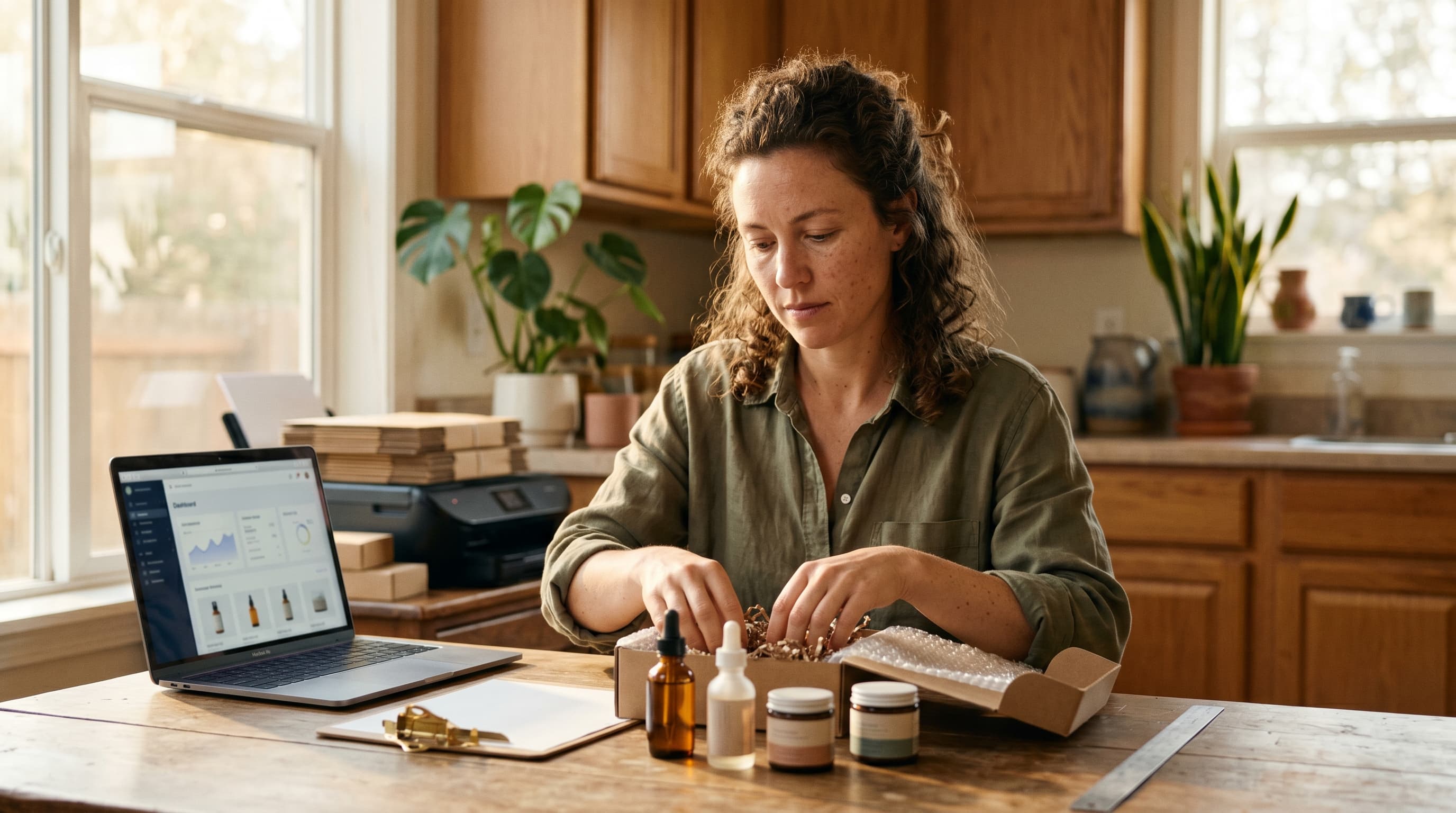
Launching a skincare line or cosmetics label is hard enough without spending three weekends wrestling with themes, app subscriptions and checkout plugins. The right beauty store website builder should let you focus on formulation, packaging and customer love — not on whether your wishlist plugin conflicts with your reviews app. This guide compares the main options for beauty founders, what each one costs once you're actually selling, and which features genuinely move the needle for skincare and cosmetics brands.

What a beauty store website builder actually needs to do
Beauty isn't fashion and it isn't electronics. Customers buy on trust, ingredients, social proof, and routine-building. A generic page builder won't cut it. Before you pick a platform, make sure it handles the things beauty shoppers expect by default.
- Rich product pages with ingredient lists, "how to use" steps, skin-type filters and before/after galleries.
- Reviews and customer Q&A — PowerReviews research shows more than 95% of shoppers consult reviews before buying, and beauty over-indexes on that behavior.
- Wishlist and abandoned cart recovery — the Baymard Institute puts the average online cart abandonment rate at around 70%, and beauty sits at the high end.
- Subscriptions and refills for serums, supplements and consumables.
- Loyalty and referral — repeat rate is where beauty brands actually make margin.
- Fast mobile load times — Statista consistently shows beauty traffic skewing 70–80% mobile.
- Klaviyo, Meta and Google Ads integrations baked in, not bolted on.
If a platform makes you pay extra for any of these, factor that into the true monthly cost. That's where most comparison articles quietly mislead you.
The main beauty store website builder options compared
Here's how the five platforms most beauty founders consider actually stack up once you add the apps you'll need on day one.
| Platform | Base price | Realistic monthly cost | Beauty features built in | Time to launch |
|---|---|---|---|---|
| Shopify | $39–$399 | $150–$600 with apps | Some native, most via apps | 1–3 weeks |
| WooCommerce | $30–$100 hosting | $200–$800 with plugins + dev | Depends on plugins | 2–6 weeks |
| Wix / Squarespace | $17–$159 | $80–$250 with add-ons | Limited e-commerce depth | 1–2 weeks |
| BigCommerce | $39–$399 | $120–$500 | Moderate | 1–3 weeks |
| AI-native (e.g. Rovela) | Flat subscription | Same as base — no apps | 100+ included by default | Hours |

Shopify for beauty brands
Shopify dominates with millions of live stores and powers plenty of nine-figure beauty labels — Kylie Cosmetics, Glossier and ILIA all run on it. Since the 2023 Editions updates, Shopify has improved on this front: Shop Pay, native subscriptions via the Shopify Subscriptions app, Checkout Extensibility, Shopify Magic for product copy, and Shopify Collabs for creator/influencer programs are now first-party. That closes part of the historical app gap.
The trade-off remains: advanced reviews (Yotpo, Junip, Okendo), ingredient/INCI tabs, sophisticated wishlist, loyalty (Smile, LoyaltyLion), bundles, quizzes and page builders still mostly live in paid apps. According to the Shopify App Store, the average store runs six or more apps, and plugin conflicts routinely slow mobile sites — which hurts both SEO and conversion.
WooCommerce
Maximum control, maximum maintenance. WooCommerce powers roughly a quarter of all online stores per W3Techs, but it leans on you for hosting, security patches, plugin updates and PHP version bumps. You'll need a developer on retainer or strong technical chops. Brands like Pai Skincare have run on Woo successfully — but they have engineering support. Great if you've already got a tech partner. Painful if you don't.
Wix and Squarespace
Both look beautiful out of the box and are tempting for a skincare brand website built on aesthetic. The catch: e-commerce depth is thin. Abandoned cart and subscription tooling are limited, inventory features are basic, and the app ecosystems are small. Fine for a brochure site with a small product line. Frustrating once you scale past a few hundred orders a month — most growing brands re-platform to Shopify or an integrated builder within 12–24 months.
BigCommerce
BigCommerce has a stronger native feature set than Shopify on paper: built-in faceted search, multi-storefront, B2B tooling and no transaction fees at any tier. For beauty brands, that means filters for skin type, concern or ingredient work out of the box, and you can run a DTC store and a wholesale portal from one back end — useful if you sell into spas or salons.
The downsides: a smaller app marketplace than Shopify, fewer beauty-specific themes, and a tighter pool of agencies that know the platform. Notable beauty brands on BigCommerce include Skullcandy-adjacent and indie cosmetics labels, but you'll find fewer plug-and-play templates. It's a reasonable middle path for brands that want fewer plugins, prefer no variable transaction fees, and expect to customize their storefront heavily with a developer.
AI-native beauty store builders
A newer category: AI beauty store builder tools that generate the entire storefront, catalog, checkout and admin from a plain-language conversation. Instead of picking a theme and assembling 12 apps, you describe your brand — "clean skincare for sensitive skin, 8 SKUs, refill subscriptions, French and English" — and the store ships with the beauty-specific features already wired in.
The category is still young. Tools like Shopify Magic add AI features on top of Shopify, Wix's ADI generates a site from a brief, and platforms like Rovela, Mixo and Durable attempt a fully AI-native build. The depth varies sharply: most "AI builders" just generate marketing pages, while a few (Rovela being one) ship the storefront, checkout, admin, subscriptions and integrations together. Validate any AI-native option against the feature checklist below before committing.
How much a beauty ecommerce website really costs
Sticker price isn't the number that matters. Total cost of ownership is. Here's what a typical indie beauty founder pays in year one once they're actually selling:
- Shopify path: $39 base + ~$180/month in apps (reviews, advanced subscriptions, loyalty, wishlist, page builder, email) + 2% transaction fees on a non-Shopify Payments setup. Around $3,000–$5,000/year before any agency help.
- WooCommerce path: $40 hosting + $100 plugins + $300–$2,000/month developer retainer. Easily $6,000–$25,000/year.
- Wix path: $40 base + $60 add-ons. Cheaper, but you'll likely re-platform within 18 months when limits bite.
- AI-native flat subscription: One bill. Every beauty-relevant feature included. Rovela merchants typically report saving $5,000+/year on previous platform and plugin costs (based on Rovela's internal merchant survey, 2026).
The hidden cost most founders underestimate is their own time. Two hours a week reconciling apps, debugging plugin conflicts, or chasing a developer adds up to 100+ hours a year. That's a launch campaign you didn't run.
Features that actually convert for skincare and cosmetics

If you're evaluating a cosmetics online store builder, score every option against this checklist. These are the features that correlate with higher AOV and repeat rate in beauty specifically.
- Ingredient transparency blocks — INCI lists, "free from" badges, sourcing notes.
- Skin quiz or routine builder — Function of Beauty and Curology built entire brands on this. Quiz-driven personalization can lift AOV meaningfully when paired with a relevant bundle recommendation.
- Subscription + refill flows with skip, swap and pause.
- Reviews with photo uploads and skin-type tagging.
- Bundle and sample logic — "add a 7-day sample for $5".
- Loyalty points and referral codes built into the account area, not a popup app.
- Abandoned cart email + SMS — Klaviyo's benchmark report shows beauty abandoned cart flows routinely recover 8–15% of lost revenue.
- Klaviyo sync with full product, order and customer attributes.
On most platforms, each of those is a separate paid app and a separate integration headache. On an integrated beauty store website builder, they ship together and stay fast because they share one codebase rather than eight third-party scripts.
How to choose the right beauty brand website builder
Use this short decision tree. It maps neatly to the three founder profiles we see most often.
You're pre-launch or under $10K/month
Speed and total cost matter more than customization. Skip the app stack. Pick a flat-fee option that includes reviews, subscriptions and loyalty out of the box. You can always migrate later — but most founders never need to, because integrated platforms now scale into seven figures. Compare your shortlist against our Shopify alternatives for beauty brands rundown before committing.
You're doing $10K–$500K/month
You need conversion optimization, not feature shopping. Audit which apps you actually use. If you're paying for six and only three drive results, an integrated skincare ecommerce builder probably saves you four figures a month and improves site speed. Our guide to ecommerce conversion rate optimization walks through the audit framework.
You're above $500K/month
At this stage, beauty-specific concerns kick in: handling thousands of UGC reviews and photo moderation, managing batch numbers and expiration dates for regulated markets (EU CPNP, UK SCPN), running multi-country tax and ingredient compliance, and supporting flash launches that 10x traffic for a few hours. Look for a platform that exports clean code you can own — so a developer can extend the quiz, the subscription logic or the PDP without fighting a closed system. Rovela ships standard Next.js code any developer can take over; most legacy platforms don't.
Compare your shortlist on the total monthly cost including apps, not the headline base price. That's the single change that clarifies most decisions.
Where Rovela fits in
Rovela was built by operators — a CEO who scaled stores past $15M in GMV and a co-founder who ran PrestaShop for 400,000+ merchants. The platform is designed to build a beauty store online from a conversation: describe your brand, your products and your customer, and the store ships with the storefront, Stripe checkout, admin, customer accounts, shipping, analytics and 100+ features already wired in. Reviews, wishlist, abandoned cart, loyalty, Klaviyo, Meta and Google Ads — included, not paywalled.
Self-reported results from Rovela's merchant cohort (internal survey, 2026): +15% revenue uplift, +22% margin improvement, $5,000+/year saved on previous platform and plugin costs, and roughly two hours a week back. Your mileage will vary — those numbers reflect merchants who fully migrated from a Shopify-plus-apps stack. And because the output is standard Next.js code you can download and own, you're never locked in.
The bottom line
The best beauty store website builder for your brand depends on where you are. Shopify is the safe default with a real cost tail. WooCommerce gives you control if you have a developer. Wix and Squarespace are fine for very early or very small. BigCommerce is a solid middle path if you sell wholesale or need built-in faceted search. AI-native platforms like Rovela are the new option worth a serious look — especially if you want every beauty-relevant feature included, a faster site, and your weekends back.
If you'd rather describe your beauty brand in plain words and watch the store get built around it, try Rovela or browse more comparisons on our blog. Either way, the right platform should let you spend more time on your formulas and your customers, and less on plugin invoices.